| |

| Piú votate - After One-Thousand Soles... |
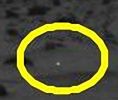
SOL1037-2F218432324EFFAS42P1212R0M1-05.jpgBright object near Spirit (extra-detail mgnf)80 visitenessun commentoMareKromium
(7 voti)
|
|

OPP-SOL1099-1P225751618ESF790EP2139R1M1-4.jpgIce or Diamond? - Sol 1099 (EDM - Enhanced Natural Colors; credits for the add. process. and color.: Dr Paolo C. Fienga/LXTT/IPF)194 visitenessun commentoMareKromium
(6 voti)
|
|

OPP-SOL3466-PIA17585-PCF-LXTT-IPF.jpgOn the Outer Rim of Endeavour Crater (Image-Mosaic - Absolute Natural Colors; credits for the additional process. and color. Dr Paolo C. Fienga/Lunar Explorer Italia/Italian Planetary Foundation)95 visiteThis is an image-mosaic that shows us the lower reaches of an area of Meridiani Planum (please, remember that we are now very close to the Outer Rim of the large Endeavour Crater) that is informally known as "Murray Ridge". The individual images that were used to create this mosaic were all acquired during the 3466th Sol (such as October, 24, 2013 on Earth) of exploration of the Martian peri-Equatorial Region of Meridiani Planum, by using the Navigation Camera (or "NavCam", for short) that is onboard the NASA - Mars Exploration Rover (MER) - "Opportunity".
This Ridge, as we mentioned herebefore, is part of the Outer Rim of Endeavour Crater and it has been identified by the Opportunity's Science Team as an important Site for scientific exploration. The Ridge has been (so far) informally named "Murray Ridge" to honor the late Dr Bruce Murray, who made fundamental advances in Mars Science and who led the NASA's Jet Propulsion Laboratory through a period of great challenges and achievements.
This frame (which is an Original NASA - Mars Exploration Rover (MER) - "Opportunity" Original b/w image published on the NASA - Planetary Photojournal and identified by the ID n. PIA 17585) has been additionally processed (where the additional processing has been based on the assumption that the Atmospheric Opacity - "TAU" - of the pictured area was LOW), Gamma corrected and then colorized in Absolute Natural Colors (such as the colors that a normal - meaning "in the average" - human eye would actually perceive if someone were on the Surface of Mars, near the NASA - Mars Exploration Rover (MER) - Opportunity, and then looked ahead, towards the Surface, Horizon and Sky over Endeavour Crater), by using an original technique created - and, in time, dramatically improved - by the Lunar Explorer Italia Team.
Note: please consider that the Martian Sky (as it has been colored and represented in this picture) appears extremely dark because quite a few of the frames used to make the mosaic were taken during the hours of the Martian Middle/Late Afternoon, such as during that period of the day when the luminosity of the Martian Sky itself (better yetç: that porton of it which is not near, around and/or right above the Sun's disk) drops rapidly and dramatically.MareKromium
(6 voti)
|
|

OPP-SOL3355-PIA17271-PCF-LXTT-IPF-2.jpgSouthward View (Absolute Natural Colors; credits for the additional process. and color.: Dr Paolo C. Fienga/Lunar Explorer Italia/Italian Planetary Foundation)57 visiteThis very suggestive picture shows us some of the Terrain that the NASA - Mars Exploration Rover (MER) Opportunity is crossing in a (always relatively speaking) flat area of Endeavour Crater, called "Botany Bay", and located on the way toward "Solander Point," which is visible on the horizon.
The NASA - Mars Exploration Rover (MER) Opportunity used its Rear Hazard-Identification Camera (or HazCam, for short) to record this Southward view at the end of a drive covering about 387 feet (such as a little less than 118 meters) and which took place on the 3.355th Martian Day (or Sol) of Opportunity's work on Mars (such as July, 2nd, 2013 on Earth). Rover planners have been driving Opportunity in reverse, with the aim of to mitigatating a little bit the normal wearand tear on the Front - and so-called - "Wheel Actuators". For scale, the distance between the two Rear Wheels visible in the foreground is about 3,3 feet (a little more than 1 meter). The underside of Opportunity's Deck is visible at the top of the image. The Surface that the Rover (MER) Opportunity is driving upon, while crossing Botany Bay, is a Mosaic Pavement of fractured, light-toned Bedrock (---> the so-called "Martian Paving" of Meridiani Planum). A mixture of dark-toned Basaltic Soil and small Spherules - nicknamed "Blueberries" - fills-up most of the Cracks existing between the Bedrock pieces and, here and there, also thinly covers some of the Bedrock itself.
This frame (which is an Original NASA - Mars Exploration Rover (MER) "Opportunity" b/w image published on the NASA - Planetary Photojournal and identified by the ID n. PIA 17271) has been additionally processed, magnified and then colorized in Absolute Natural Colors (such as the colors that a normal - meaning "in the average" - human eye would actually perceive if someone were on the Surface of Mars, near the NASA - Mars Exploration Rover (MER) Opportunity, and then looked ahead, towards the Horizon and Sky over Endeavour Crater), by using an original technique created - and, in time, dramatically improved - by the Lunar Explorer Italia Team.MareKromium
(6 voti)
|
|
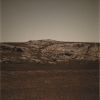
OPP-SOL3043-GB-LXTT.jpgStill on the Edge of Endeavour - Sol 3043 (Absolute Natural Colors; credits for the additional process. and color.: Dr Gianluigi Barca/Lunar Explorer Italia/Italian Planetary Foundation)90 visitenessun commentoMareKromium
(6 voti)
|
|
OPP-SOL3019-GB-PCF-LXTT-IPF-1.jpgLooking Around... - Sol 3019 (RAW Absolute Natural Colors; credits for the additional process. and color.: Drr Gianluigi Barca and Paolo C. Fienga - Lunexit Team)87 visitenessun commentoMareKromium
(6 voti)
|
|
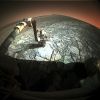
OPP-SOL2998-EB-MF-LXTT-IPF-2.jpgBright Sun, Dark Sky - Sol 2998 (Natural Colors; credits for the additional process. and color.: Elisabetta Bonora and Marco Faccin - Lunar Explorer Italia/Italian Planetary Foundation)116 visiteWe said that in the past and we have to say it again: how many times have we already read (here, there and everywhere...), that the Martian Sky should be "Blue" (actually, "Light Blue", according to the "Raleigh Scattering" Model)? Certainly a thousand times (at least!) and, well, maybe some time ago, the question could have made some sense.
But now, after so many Natural and Absolute Colorizations of the NASA - MER Spirit and Opportunity's Original b/w Frames, how could we keep doubting? Color, brightness, nuances of the Martian Sky... Let's see if we can make a little step forward, once in a while...
Among many other things (and forgetting the color of the Martian Sky for a moment), the NASA People often told us that the Sky of Mars is "bright" and we wish to say that, perhaps, at certain Latitudes and during certain times of the Martian Year (as well as at certain - and given - daytime hours), such a statement could even be reasonable.
Said that, we honestly believe that, first of all, the Martian Sky is not particularly bright at all. In fact, we believe that the Martian Sky should really (if not extremely) be dark.
Second, we believe that the Sun, even though its diameter is over one-third smaller than the one which we can see from Earth, shines VERY brightly over the Martian Landscapes: especially, we think, starting from the late morning hours (let's say 09:00/09:30 Mars Local Solar Time) and until, probably (and during the Martian Summer), 16:00 or 17:00 (always Mars Local Solar Time).
Furthermore, and according to what we have speculated in the past, the portion of the Sky visible near the Martian Horizon, should slightly be brighter than the rest of the Sky. In other words: if you were on Mars, near the Rover and looking at the Horizon of Meridiani Planum, you should see a relatively bright (lower portion of the) Sky that, the more you rise your look, the darker it will get.
Talking about the color of the Martian Sky, instead, since (and of course...) we haven't been on Mars (yet!) we cannot be one-hundred-percent certain of anything but, after so many years of studying and processing images from the Red Planet, it seems to us quite reasonable and believable to say that the Martian Sky is NOT blue, nor light-blue at all.
The Martian Sky, most likely, can show itself in quite a few different colors, but its "natural" one, should be a light-orange. Near the Sun, probably, the NASA People are correct when they say that it should be kind of pale-blue and white; but most of it - in any case and for most part of the day - is and should (almost) always be of a light white/orange color (we repeat: near the horizon), and then (as we look over and above the horizon itself), of an orange/yellowish color that the more we look towards the Zenith (or the Nadir), the darker it should get.
It is also possible that the Martian Sky might show - at certain conditions - some yellow and pink nuances: this depending on the specific time of the day that we consider, as well as on the Atmospheric Opacity - or TAU - existing at that time, on the Martian Season and on the given Martian Latitude.
In this beautiful frame, processed in Natural Colors, we can see that the Sky near the Horizon is actually (yet quite dimly) bright, while the rest of the visible Sky is dark. Almost black (we should say that its color looks like a VERY dark orange, which tends to the brown). But the Sun, that is shining (relatively) high in the Sky, is VERY bright! So bright that the Martian Paving where NASA - MER Opportunity is rolling on, appears, to the Electronic Eyes of the Rover, of a bright and sharp white color, with some light-blueish nuances (these nuances being probably caused by the blue cristals that seem to be dispersed all over the place).
In the end, and just to draw some conclusions, the Martian Sky, in our opinion - as IPF (and no matter what we often see - or think to see... - in the frames that come to us from the Red Planet) -, is usually dark (VERY dark during the Late Fall and through the entire Martian Winter), but the Sun (except during the massive Sand Storms that, sometimes, darken the whole Planet) always shines very bright, particularly during the months corresponding to the Late Spring and Summer of the Red Planet. But a bright Sun, in our opinion, does not mean AT ALL a bright Daytime Sky! And please, forgive us, if, one day, we might be proven wrong...
This frame has been colorized in Natural Colors (such as the colors that a perfect human eye would actually perceive if someone were near the NASA - MER Opportunity and then looked towards the Martian Horizon), by using an original technique created - and, in time, dramatically improved - by the Lunar Explorer Italia Team.MareKromium
(6 voti)
|
|
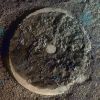
OPP-SOL3001-MF-EB-LXTT-IPF.jpgCloser than ever: Particulate, Dust and, maybe, Sylvinite Cristals? - Sol 3001 (Credits for the additional process. and color.: Elisabetta Bonora and Marco Faccin - Lunar Explorer Italia/Italian Planetary Foundation)106 visitenessun commentoMareKromium
(6 voti)
|
|

OPP-SOL2971-1N391940652EFFBRNAP0605L0M2.jpgHorizon - Sol 2971 (Absolute Natural Colors; credits for the additional process. and color.: Dr Paolo C. Fienga - Lunexit Team) 93 visitenessun commentoMareKromium
(6 voti)
|
|
OPP-SOL2971-1N391940615EFFBRNAP0605L0M1.jpgHorizon - Sol 2971 (Absolute Natural Colors; credits for the additional process. and color.: Dr Paolo C. Fienga - Lunexit Team) 89 visitenessun commentoMareKromium
(6 voti)
|
|
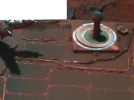
OPP-SOL2939-MF-EB-LXTT-IPF.jpgColors - Sol 2939 (Natural Colors; credits for the additional process. and color.: Elisabetta Bonora and Marco Faccin - Lunexit Team) 120 visitenessun commentoMareKromium
(6 voti)
|
|
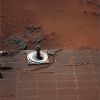
OPP-SOL2855-PCF-LXTT.jpgWaiting for the Winter... - Sol 2855 (Absolute Natural Colors; credits for the additional process. and color: Dr Paolo C. Fienga - Lunexit Team)212 visitenessun commentoMareKromium
(6 voti)
|
|
| 2388 immagini su 199 pagina(e) |
|
|
|
|
|
19 | |
|
|
|
|
|
|





