| Piú votate - After One-Thousand Soles... |

OPP-SOL1385-1P251136364EFF8800P2407R1M1.jpgEffects of dusty "color/filters" on the "color vision" (5 - MULTISPECTRUM; credits: Lunexit)64 visitenessun commentoMareKromium
(2 voti)
|
|

OPP-SOL1160.jpgSmall Ejecta Crater near Victoria - Sol 1160 (Absolute Natural Colors; credits for the additional process. and color.: Dr Marco Faccin)72 visitenessun commentoMareKromium
(2 voti)
|
|
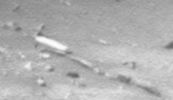
OPP-SOL1349-1P247946805EFF8788P2266L5M1-2.jpgUnusual Surface Feature inside Victoria Crater (extra-detail mgnf) - Sol 134961 visiteIl detail mgnf che ci viene proposto dal bravissimo Dr Gianluigi Barca non risolve i nostri dubbi, anzi...li alimenta! Che cosa stiamo guardando? Una sorta di spezzone di tubo arrivato da chissà dove? Una roccia affusolata la cui forma ed albedo la rendeno simile ad una sorta di "colonna" di marmo?
Oppure è solo un semplice rilievo il quale, ai nostri occhi ed in ragione della particolare inquadratura adottata dal Rover, ci sembra "misterioso" mentre invece misterioso non lo è affatto?
Domande, ancora una volta...
Ed un grande "BRAVO", come sempre, al Dr Barca (per l'occhio, la passione e la - enorme - pazienza che ci dimostra già da un paio d'anni).MareKromium
(2 voti)
|
|
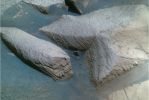
OPP-SOL1341-Sol1341B_P2594_1_False_L257.jpg"Wishing You Were Here" from Mars (false colors; elab. NASA) - Sol 134187 visiteCaption NASA:"If you were a scientist studying Mars and sharing your progress with family and friends, perhaps you would send back digital postcards showing them where you've been. Earthlings have now received a record 200.000 such postcards from NASA's 2 Mars Rovers!
The images enable us to study changes on the Red Planet, such as subtle variations in color and texture shown here in a ring of rocks inside Victoria Crater.
The light-colored rocks are interesting because scientists think they may be the original surface before a meteor formed the crater and splattered debris onto it".MareKromium
(2 voti)
|
|

OPP-SOL1338-1P246971817EFF8788P2391L2M1.jpgThe "Inner Paving" and the "Red Sands" of Victoria - Sol 1338 (red-orange filter OFF - possible natural colors - elab. Lunexit)60 visitenessun commentoMareKromium
(2 voti)
|
|
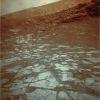
OPP-SOL1313-1N244745138EFF8700P1945R0M1-1.jpgFrom inside Victoria: the Beautiful Martian Paving (2) - Sol 131398 visitenessun commentoMareKromium
(2 voti)
|
|
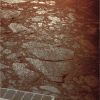
OPP-SOL1308-1P243064411EFF86JZP2365R1M1-3.jpgVictoria's Paving (interpret. n° 4 - possible natural colors; elab. Lunexit) - Sol 130861 visitenessun commentoMareKromium
(2 voti)
|
|
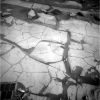
OPP-SOL1305-1N244039323EFF8700P1913R0M1.jpgVictoria's Paving (2 - original b/w NASA frame) - Sol 1305122 visitenessun commentoMareKromium
(2 voti)
|
|

OPP-SOL1298-1N243420123EFF86L0P1909L0M1.jpgFrom inside Victoria: the Beautiful Martian Paving (again!) - Sol 1298 (False Colors; credits: Lunar Explorer Italia)62 visiteCome mai? Probabilmente il motivo maggiore deve essere ricondotto alla diversa dimensione, struttura e composizione dell'impactor che creò i due Crateri (se crediamo che si tratti, in entrambi i casi, di crateri da impatto). Se invece la Teoria dei Crateri da Impatto non piace, allora potremmo anche trovare diverse spiegazioni al perchè i dintorni di Victoria sono alquanto "mossi" mentre i dintorni di Endurance non lo sono.
Ma ne parleremo - forse - in futuro.
Per adesso speriamo solo che l'idea di far entrare Opportunity all'interno di Victoria non sia stata - come noi temiamo - un'idea davvero pessima...MareKromium
(2 voti)
|
|

OPP-SOL1274-1P241281469ESF8600P2143L5M1-2.jpgThe "Breathing Lungs" of Mars - Sol 127461 visitePer il commento relativo a questo frame Vi suggeriamo di leggere l'ultimo articolo del Dr Paolo C. Fienga pubblicato su TruePlanets e dal titolo "I Polmoni di Marte".
Buona lettura!MareKromium
(2 voti)
|
|
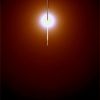
OPP-SOL1255-1N239597006EDN85W0P1550L0M1.jpgThere's still a "dark reddish sky" over Opportunity... - Sol 125567 visiteElaborazione in colori naturali del Cielo di Marte così come potrebbe e dovrebbe apparire ai nostri occhi durante questi giorni di "oscurità" (rectius: di elevatissima Opacità Atmosferica).
MareKromium
(2 voti)
|
|
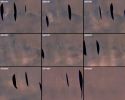
OPP-SOL1235-PIA-00937.jpgSeries of Storms Shrouds Mars in Dust (2) - NASA/JPL/Malin Space Science Systems61 visiteThis sequence of Mars Reconnaissance Orbiter (MRO) Mars Color Imager (MARCI) daily mosaics shows some of the dust storm activity that occurred near the Mars Exploration Rover (MER) Opportunity landing site between 21 June 2007 and 18 July 2007. The Opportunity rover is located near the martian prime meridian and equator. The top and middle rows of images show the first six days of dust storm activity near the rover site as dust advanced from the west to the south and passed south of the rover over the course of a week. By the end of that first week, storm activity strengthened and continued to move east, eventually passing over nearly half of the martian southern hemisphere. Other storms spawned by this atmospheric disturbance affected the MER Spirit rover on the other side of the planet, while new storms developed, approached, and affected Opportunity. The bottom three images show dust activity over the MER Opportunity site on 3, 14, and 18 July. By 19 July, most of the martian surface was obscured by the dust lofted from these storms. As with previous large dust-raising events on Mars, once the active storms die down, many weeks to months will pass before the dust settles out and the atmosphere clears. The white circle indicates the location of the Opportunity landing site, the black gaps are caused by slewing the spacecraft east or west to image specific science targets, and north in each picture is toward the top, west is to the left.
MareKromium
(2 voti)
|
|
| 2387 immagini su 199 pagina(e) |
 |
|
|
|
|
189 | |
|
|
|
|





