| Piú votate - After One-Thousand Soles... |
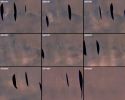
OPP-SOL1235-PIA-00937.jpgSeries of Storms Shrouds Mars in Dust (2) - NASA/JPL/Malin Space Science Systems54 visiteThis sequence of Mars Reconnaissance Orbiter (MRO) Mars Color Imager (MARCI) daily mosaics shows some of the dust storm activity that occurred near the Mars Exploration Rover (MER) Opportunity landing site between 21 June 2007 and 18 July 2007. The Opportunity rover is located near the martian prime meridian and equator. The top and middle rows of images show the first six days of dust storm activity near the rover site as dust advanced from the west to the south and passed south of the rover over the course of a week. By the end of that first week, storm activity strengthened and continued to move east, eventually passing over nearly half of the martian southern hemisphere. Other storms spawned by this atmospheric disturbance affected the MER Spirit rover on the other side of the planet, while new storms developed, approached, and affected Opportunity. The bottom three images show dust activity over the MER Opportunity site on 3, 14, and 18 July. By 19 July, most of the martian surface was obscured by the dust lofted from these storms. As with previous large dust-raising events on Mars, once the active storms die down, many weeks to months will pass before the dust settles out and the atmosphere clears. The white circle indicates the location of the Opportunity landing site, the black gaps are caused by slewing the spacecraft east or west to image specific science targets, and north in each picture is toward the top, west is to the left.
MareKromium
(2 voti)
|
|
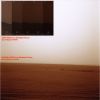
OPP-SOL1235-1P237817092EFF85W0P2689L6M1-00.jpgDark Skies? Clear Skies? Where's the truth?!?100 visiteNel riquadro superiore (scurissimo, quasi nero), l'evoluzione della luminosità del Cielo di Marte nei Soles andanti dal 1205 al 1235. Nel Sol 1235, praticamente, alle 10:53 a.m. sembra notte. Però...
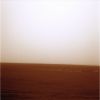
Però in un frame originale NASA relativo al medesimo Dark-Sol - il Sol 1235 - e da noi rielaborato in colori naturali, la situazione appare DECISAMENTE e RADICALMENTE DIVERSA!!!
Come mai?
Forse il MER Opportunity ha fatto uso di filtri "fendipolvere" (anti A.O.) per il frame che abbiamo ingrandito a colorizzato noi, oppure è stato "eccessivo" il darkening adottato per colorizzare il frame-composite NASA (evidentemente elaborato - male - "a tavolino" da qualche Addetto un pò troppo pessimista sullo stato attuale della visibilità su Marte, Regione di Meridiani Planum?).
Voi che dite?
Caption NASA:"NASA's Opportunity rover is literally seeing some of its darkest days. Both Mars Exploration Rovers have been riding out a regional dust storm for several weeks. Conditions became particularly dreary in the Meridiani Planum region where Opportunity sits, perched on the edge of "Victoria Crater."
This image is a time-lapse composite where each horizon-survey image has been compressed horizontally (but not vertically) to emphasize the sky. The relative brightness and darkness of the sky from sol to sol (over a 30-sol period beginning June 14, 2007) is depicted accurately in these images, which view roughly the same part of the plains southwest of the rover. The images are approximately true color composites, generated from calibrated radiance data files using the panoramic camera's 601-nanometer, 535-nanometer and 482-nanometer filters.
The rovers' atmospheric science team is concerned that smaller, regional dust storms could expand into a larger, globe-encircling storm. That could extend the time the sun stays obscured, challenging the capability of Opportunity's solar panels to produce enough electricity for the rover to function.
Fortunately, as of July 19, 2007, the Opportunity site is clearing slightly. When the storm ends, atmospheric scientists hope to review data from the rovers that will help them determine what sort of dust was being lifted and distributed.
The numbers across the top of the image report a measurement of atmospheric opacity, called by the Greek letter tau. The lower the number, the clearer the sky. Both Opportunity and Spirit have been recording higher tau measurements in July 2007 than they had seen any time previously in their three and a half years on Mars. The five sol numbers across the bottom correspond (left to right) to June 14, June 30, July 5, July 13 and July 15, 2007".MareKromium
(2 voti)
|
|
OPP-SOL1235-1P237817044EFF85W0P2689L4M1.jpgThe pale Sky over Meridiani (1 - natural colors, elab. Lunexit)69 visitenessun commentoMareKromium
(2 voti)
|
|
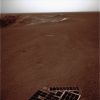
OPP-SOL1232-1N237560239EFF85W0P1993R0M1.jpgClearing Skies over Meridiani... (1) - Sol 123259 visitenessun commentoMareKromium
(2 voti)
|
|
OPP-SOL1232-1N237560276EFF85W0P1993L0M1.jpgClearing Skies over Meridiani... (2) - Sol 123254 visitenessun commentoMareKromium
(2 voti)
|
|
OPP-SOL1225-1P236931182EFF85R9P2629L5M1.jpgDark Skies over Opportunity (2) - Sol 122556 visitePictures from the orbiter's Mars Color Imager show the storm is regional in extent, and includes several local areas of especially high dust activity. The storm has been moving Eastward and toward Mid-Latitudes, and is now also causing an increase in atmospheric dust at Spirit's location, on the opposite side of the Planet, at Gusev Crater.
Dust levels at Gusev remain much lower than at the Opportunity site, however.
Both rovers take daily measurements estimating the amount of dust in the atmosphere. The less dust the better, because it means more sunlight reaches the rover's solar panels, which power the vehicles. In the last week, Opportunity has broken its dust record, with the opacity level rising from 1.0 to 3.3. Solar array energy on Opportunity dropped from 765 watt-hours to 402 watt-hours over the same period of time.MareKromium
(2 voti)
|
|
OPP-SOL1225-1P236931207EFF85R9P2629L6M1.jpgDark Skies over Opportunity (3) - Sol 122555 visite"While this only represents enough dust to coat the planet to about the thickness of a human hair, it is enough to decrease the brightness of the noon sun by 96% compared to a completely clear atmosphere", said Steve Squyres, Principal Investigator, Cornell University, Ithaca, N.Y.
"Of course, the solar arrays also receive light that is scattered from the dust, so the decrease in power is not nearly that great".
"We have not seen dust measurements this high on either rover before. If the dust levels were to increase further and stay elevated for several days, there is a risk to how well Opportunity could continue to work in this darkened environment", said Callas".MareKromium
(2 voti)
|
|
SOL1238-2P236266234EFFAUATP2629L6M1.jpgMartian Morning Mist... - Sol 123854 visitenessun commentoMareKromium
(2 voti)
|
|
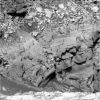
OPP-SOL1213-1P235878503EFF85MYP2442L2M1.jpgThe Inner Wall of Victoria - Sol 121355 visitenessun commentoMareKromium
(2 voti)
|
|
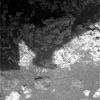
SOL1232-2M235735230EFFAU00P2956M2M1.jpgInteresting Soil... (5) - Sol 123254 visitenessun commentoMareKromium
(2 voti)
|
|
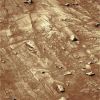
SOL1218-2P234480875EFFATF3P2558L7M1.jpgHome Plate's floor (natural colors) - Sol 121861 visitenessun commentoMareKromium
(2 voti)
|
|
SOL1205-2M233342549EFFATEEP2936M2M1.jpgClose views (1) - Sol 120554 visitenessun commentoMareKromium
(2 voti)
|
|
| 2388 immagini su 199 pagina(e) |
 |
|
|
|
|
188 | |
|
|
|
|





