| Piú votate - After One-Thousand Soles... |

OPP-SOL1978-MF-00.jpgWork in Progress! - Sol 1978 (by Dr M. Faccin)55 visiteUn "Mosaico Incompiuto"?
No.
Questo è un "Tributo", creato dal nostro sempre eccezionale Marco Faccin, al Lavoro che deve essere svolto per poter offrire al Pubblico di Lunexit un prodotto finale "VALIDO".
Ma lasciamo parlare Marco:"...intanto si può vedere che siamo noi a creare i mosaici senza scopiazzare quelli già fatti (per giunta male) dalla NASA; poi notiamo come per ogni frame - a seconda dell'Angolo di Incidenza Solare proprio di ciascuno - la sua luminosità relativa cambi e quindi, alla fine, il tutto debba essere ricalibrato; idem dicasi per le diverse gradazioni di colore - che variano notevolmente da frame a frame - e per la risoluzione dell'immagine finita in rapporto alle singole risoluzioni dei singoli frames che servono a comporla.
Insomma, quando offriamo un mosaico completo al Pubblico, il Lettore deve (almeno provare a) comprendere quanto lavoro c'è dietro e come ogni frame debba essere collocato nel mosaico in maniera da assecondare una geometria visuale perfetta considerato l'angolo iniziale di ripresa.
Quanta fatica ci vuole? Tanta!
Quanto tempo? Tanto.
Mi faccio un mazzo enorme ma, lo ammetto, mi piace così: anche quando il risultato finale è comunque imperfetto, certo. Imperfetto, ma sempre migliore di alcuni mosaici fatti dalla Nasa (che peccano parecchio sulla geometria...).
Io credo che se qualcuno guarderà questo "mosaico incompiuto" con un pizzico di pazienza e cura per il dettaglio, gli sarà facile comprendere il livello al quale siamo arrivati...".
Si. Questo lo auspichiamo davvero. Tutti.MareKromium
(2 voti)
|
|
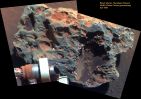
OPP-SOL1961-1249578498_17705-1_BlockIsland_VP_L257_full1.jpgBlock Island - Sol 1961 (False Colors; credits: NASA/JPL-Caltech/Cornell University)56 visiteCaption NASA:"This view of a rock called "Block Island", such as the largest meteorite yet found on Mars, comes from the Panoramic Camera (PanCam) on NASA's MER (Mars Exploration Rover) Opportunity.
Analysis of Block Island's composition using the Rover's Alpha Particle X-Ray Spectrometer confirmed that it is rich in Iron and Nickel. The rock is about 60 centimeters (approx. 2 feet) across.
This is a False-Color, red-green-blue composite view generated from images taken through the PanCam's 750-nanometer, 530-nanometer and 430-nanometer filters. The exaggeraged color is used for enhancing the visibility of differences among the types of rock and soil materials".MareKromium
(2 voti)
|
|
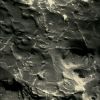
OPP-SOL1963-1M302457134IFFA5B8P2956M2F1_enh.jpgInside "Block Island" - Sol 1963 (Natural Colors; credits: Lunexit)64 visiteCaption NASA:"NASA's Mars Exploration Rover Opportunity used its Microscopic Imager to get this view of the surface of a rock called "Block Island" during the 1963rd Martian Day, or Sol, of the Rover's Mission on Mars (such as Aug., 1st, 2009).
The triangular pattern of small ridges seen at the upper right in this image and elsewhere on the rock is characteristic of Iron-Nickel meteorites found on Earth, especially after they have been cut, polished and etched.
Block Island has been identified as an Iron-Nickel meteorite based on this surface texture and analysis of its composition by Opportunity's Alpha Particle X-Ray Spectrometer. At about 60 cm (2 feet) across, it is the largest meteorite yet found on Mars.
This image shows a patch 32 by 32 millimeters (such as 1,3 by 1,3") on the surface of Block Island while the target was fully illuminated by the Sun. This target on the rock is informally named "New Shoreham". The vertical white streaks, especially near the top and bottom of the image, are artifacts caused by saturation of the camera's CCD (charge-coupled device, or image recorder) where sunlight glinted off metallic facets.
The triangular pattern in the texture of Iron-Nickel meteorites - called the "Widmanstatten Pattern" - formed more than 4.5 BY ago as the metal cooled.
In this case, one Iron-Nickel mineral, the Kamacite, formed thin layers along the surface of crystals of another mineral, the Taenite, which contains less Nickel. The two minerals differ in their resistance to either etching by acid or erosion by wind-blown sand, so those processes can make the pattern visible".MareKromium
(2 voti)
|
|
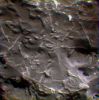
OPP-SOL1963-MIC-MF.jpgInside "Block Island" - Sol 1963 (Natural Colors; credits: Dr M. Faccin)71 visiteL'incredibile texture di "Block Island", attraverso le ottiche del Micrscopic Imager di Opportunity: come potete notare sono chiaramente visibili svariati artefatti da oversaturazione (i cd. "Effetti Goccia") i quali ci dicono che, all'interno di questa - possibile - Meteorite Marziana, dovrebbero trovarsi svariate particelle cristalline (o metalliche).
Veramente bizzarre, inoltre, ci appaiono le "stringhe" che caratterizzano la quasi totalità del dettaglio ripreso e che possono ricordare una versione "fossile" di corpi organici (sembrano, in effetti, dei "vermi" pietrificati).
Una immagine eccezionale, processata in Colori Naturali e 3D dal nostro Grande Marco Faccin, che DEVE farci pensare...MareKromium
(2 voti)
|
|
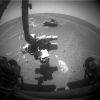
OPP-SOL1959-PIA12160.jpgApproaching Block Island: a "new" Martian Meteorite Fragment - Sol 195955 visiteCaption NASA:"This image of “Block Island” was taken on July 28, 2009, with the front Hazard-Identification Camera on NASA’s Mars Exploration Rover Opportunity.
Scientists will be testing the rock with the Particle X-Ray Spectrometer to get composition measurements and to confirm if indeed it is a meteorite".MareKromium
(2 voti)
|
|
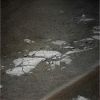
OPP-SOL1945-GB.jpgPaving and the edge of a Ripple - Sol 1945 (Natural Colors; credits: Dr G. Barca)56 visiteSolo un suggerimento: quando Vi capiterà di guardare un'immagine di Meridiani Planum (anche di Gusev Crater va bene) colorizzata dalla NASA (magari in quelli che i Ragazzi di Pasadena chiamano "approximate natural colors"), mettetela in confronto con questa e con mille altre simili processate da noi.
La differenza che noterete non è solo estetica (ci mancherebbe), ma è sostanziale: le immagini NASA postulano un mondo perennemente offuscato e con una patina di polvere arancio-rosa che si è posata su tutto, ma la Verità - se non altro a nostro parere - è MOLTO, MOLTO diversa.MareKromium
(2 voti)
|
|
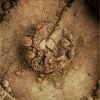
OPP-SOL1918-MI-GB-LXT.jpgDeep inside "The Mark" - Sol 1918 (Superdefinition and Natural Colors; credits: Dr G. Barca & Lunar Explorer Italia)55 visiteEd anche questa elaborazione è "Arte", a tutti gli effetti: Complimentissimi al nostro Dr Barca!MareKromium
(2 voti)
|
|
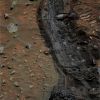
SOL1137-GB-LXT.jpgColourful Surface with Dark Rover Track - Sol 1137 (Natural Colors; credits: Dr G. Barca & Lunar Explorer Italia)55 visitenessun commentoMareKromium
(2 voti)
|
|

OPP-SOL1916-GB-LXT.jpgOn the ripple's edge... - Sol 1916 (Natural Colors; credits: Dr G. Barca & Lunar Explorer Italia)61 visitenessun commentoMareKromium
(2 voti)
|
|
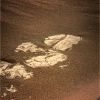
OPP-SOL1923-GB-LXT.jpgBuried in BerryLand! - Sol 1923 (Natural Colors; credits: Dr G. Barca)55 visitenessun commentoMareKromium
(2 voti)
|
|
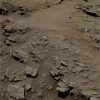
SOL1086-GB-LXT.jpgMartian Corals - Sol 1085 (Natural Colors; credits: Dr G. Barca & Lunar Explorer Italia)55 visitenessun commentoMareKromium
(2 voti)
|
|
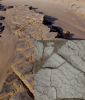
OPP-SOL1825_and_Limestone-EarthPaving.jpgThe Beautiful Martian Paving and the Limestone (or Earth Paving) of São Pedro de Moel (Portugal)85 visiteUna comparazione fra il meraviglioso (e sempre enigmatico) "Martian Paving" - che ormai ci sembra essere davvero uniformemente presente, assieme ai Martian Berries ed appena al di sotto di una leggera coltre di sabbie e polveri, nella Regione Equatoriale Marziana di Meridiani Planum - ed una spettacolare "Formazione Calcarea Pavimentata" (Limestone) emersa sulle rive dell'Atlantico, in una cittadina Portoghese dal nome di São Pedro de Moel.
Una comparazione che deve aiutarci a ricordare che Marte, in fondo, è molto più vicino a noi di quanto si possa immaginare...MareKromium
(2 voti)
|
|
| 2388 immagini su 199 pagina(e) |
 |
|
|
|
|
181 | |
|
|
|
|





