| Piú viste - SOLAR SYSTEM |

Hyperion-N00174824-N00174908-GB-LXTT.gifTumbling Hyperion (a GIF-Movie by Dr Gianluigi Barca - Lunexit Team)173 visitenessun commentoMareKromium
|
|

Enceladus-PIA14858-PCF-LXTT.jpgFountains of Light (Absolute Natural Colors; credits for the additional process. and color.: Dr Paolo C. Fienga - Lunexit Team) 173 visiteCaption NASA:"NASA's Cassini Spacecraft successfully completed its Oct. 1st Fly-By of Saturn's moon Enceladus and its Jets of Water Vapor and Ice. At its closest approach, the Spacecraft flew approx. 62 miles (about 100 Km) above the moon's Surface. The close approach was designed to give some of Cassini's instruments, including the Ion and Neutral Mass Spectrometer, the chance to "taste" the Jets themselves.
At a higher vantage point during the encounter, Cassini's high-resolution camera captured pictures of the jets emanating from the moon's South Polar Region. The latest raw images of Enceladus are online at:
http://saturn.jpl.nasa.gov/photos/raw/.
The images of the Surface include previously seen Leading-Hemisphere Terrain. However, during this encounter, multi-spectral imaging of these Terrains extended farther into the UV Region of the Spectrum than had previously been achieved at this resolution.
By looking at the Surface at UV wavelengths, scientists can better detect the difference between surface materials and shadows than they can at visible wavelengths, where icy materials are highly reflective and shadows are washed out. With both UV and Visible Light images of the same Terrain available to them, scientists will better understand how the Surface coverage of icy particles coming from the Vents and Plumes changes with Terrain type and age. Cassini's next pass of this fascinating moon will be Oct. 19, 2011, when the Spacecraft shall fly-by at an altitude of approximately 765 miles (such as about 1231 Km)".MareKromium
|
|

IMAGE069-AS16-107-17419 HR.jpgAS 16-107-17419 (HR) - Summary (labeled)172 visitenessun commento
|
|

Titan-PIA07542-PCF-LXTT.jpgTitan (Absolute Natural Colors; credits for the additional process. and color.: Dr Paolo C. Fienga - Lunexit Team)172 visitenessun commentoMareKromium
|
|

Saturn_and_Friends-EB-MF-LXTT.jpgSaturn and some "Friends" (Natural Colors; credits for the additional process. and color.: Elisabetta Bonora and Marco Faccin - Lunexit Team)172 visitenessun commentoMareKromium
|
|

Atlas,_Daphins_and_Pan-PIA21449.jpgAtlas, Daphnis and Pan172 visiteCaption NASA:"This montage of views from NASA's Cassini Spacecraft shows three of Saturn's Small Ring moons: Atlas, Daphnis and Pan at the same scale for ease of comparison.
Two differences between Atlas and Pan are obvious in this montage. Pan's Equatorial Band is much thinner and more sharply defined, and the central mass of Atlas (the part underneath the smooth Equatorial Band) appears to be smaller than that of Pan.
All of these images were taken using the Cassini Spacecraft Narrow-Angle Camera. The images of Atlas were acquired on April 12, 2017, at a distance of about 10.000 miles (approx. 16,0093 Km) and at a Sun-moons-Spacecraft angle (or Phase Angle) of 37°. All three images are oriented so that North is up".MareKromium
|
|

ZZZZ-Fausto_Spaggiari.pngIs this the "Youth" - the Future - of the Humankind?!? If so, what a tragedy... (article by Dr Fausto Spaggiari)172 visiteUn articolo non afferente all'Universo "Spaziale", bensì all'ormai efferato "Universo Pseudo-Umano". Da leggere e commentare, se volete. Io, umilmente e personalmente, condivido ogni parola. Voi?!?MareKromium
|
|

A - Saturn_s sky before the Streak (1).jpgSaturn's Sky just before the "Streak" (1) - N00008768171 visiteOggi, 5 Agosto 2004, inseriamo nella Sezione del Sito Lunar Explorer Italia dedicata a Saturno ed alle sue Lune, una serie di 5 fotogrammi ripresi dalla Sonda Cassini/Huygens che, a nostro parere, rappresenta una prova tangibile della presenza di un Oggetto Volante Non Identificato in transito nello spazio di Saturno.
Si tratta dei frames n. N00008768; N00008769; N00008770; N00008771 ed N00008772.
|
|
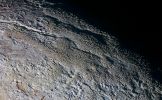
ZZ-ZZ-ZZ-ZZ-ZZ-ZZ-Pluto03-Tartarus_Dorsa.pngTartarus Dorsa171 visiteDa notare la stranissima (apparentemente) Texture e la direzionalità di questa imponente Catena Montuosa Plutoniana. Davvero suggestiva...MareKromium
|
|

ZZ-ZZ-ZZ-ZZ-ZZ-ZZ-Nix-O.jpgCrescent Nix171 visitenessun commentoMareKromium
|
|

IMAGE067-AS16-107-17419 HR.jpgAS 16-107-17419 (elab. 3) - Sunstruck, Lightstruck or UFOstruck?!? (4)170 visiteE' di poco fa la notizia che uno dei nostri Collaboratori (il Dr Foschini) aveva già provveduto ad operare (in totale autonomia) uno studio su questo frame ed il risultato, interlocutorio, ma molto interessante, è stato che:"...il frame in oggetto potrebbe rappresentare, nella sua parte nera, la mano di Charlie Duke che sta muovendosi sull'obbiettivo della camera e, nella sua parte in luce, un dettaglio del suolo ai piedi dell'Astronauta ed un dettaglio dell'Astronauta stesso (braccio? gamba?): si riconoscono, infatti, alcuni elementi della superficie della Luna (sassi, impronte) ed un pezzo della tuta di Duke). Se questa interpretazione è corretta (come io credo che sia), non siamo in presenza di un frame "sunstruck" (checchè ne dicano NASA e LPI), ma di un frame "mosso", scattato solo per errore mentre Duke stava ancora regolando la sua camera...".
Che dire? L'interpretazione ci sembra valida ed una conferma indiretta della sua attendibilità ci arriva dal frame successivo il quale ci mostra...
|
|

Dione-N00165580-82-EB-LXTT.jpgPossible Transient Luminous Phenomenon on the "Dark Side" of Dione170 visiteLa Natura del piccolo "flash" individuato nelle Regioni Equatoriali di Dione, è bene dirlo a chiare lettere, non può essere in alcun modo stabilita con certezza.
Dall'analisi di dettaglio del frame, comunque, possiamo estrapolare alcune ipotesi, che Vi elenchiamo in ordine di fondatezza/verosimiglianza (a nostro parere, come ovvio):
1) Bagliore da Impatto Meteorico - Meteor Strike's related/caused Flash;
2) Fiaccola di origine ignota (magari un outgassing?) - Flare of unknown origin (l'equivalente Dioniano di un TLP);
3) Artefatto Fotografico da perdita di segnale - image artifact due to lack of signal;
4) Artefatto Fotografico a causa indeterminata - image artifact due to an undetermined cause .MareKromium
|
|
| 4548 immagini su 379 pagina(e) |
 |
|
|
|
|
21 | |
|
|
|
|





