| Piú viste - SOLAR SYSTEM |

0-Venus.jpgVenus from Mariner 10192 visiteVenus Data and Statistics
Mass (kg) = 4.869e+24
Mass (Earth = 1) = 81476
Equatorial radius = 6.051,8 Km
Equatorial radius (Earth = 1) = 0,94886
Mean density (gm/cm^3) = 5,25
Mean distance from the Sun = 108.200.000 Km
Mean distance from the Sun (Earth = 1) = 0,7233
Rotational period (days) = 243,0187
Orbital period (days) = 224,701
Mean orbital velocity = 35,02 Km per second
Tilt of axis = 177,36°
Orbital inclination = 3,394°
Equatorial surface gravity (m/sec^2) = 8,87
Equatorial escape velocity = 10,36 Km per second
Magnitude (Vo) = - 4,4
Mean surface temperature = + 482°C
Atmospheric pressure (bars) = 92
Atmospheric composition: Carbon dioxide 96%, Nitrogen 3% and trace amounts of: Sulfur dioxide, water vapor, carbon monoxide, argon, helium, neon, hydrogen chloride and hydrogen fluoride.
|
|

007.jpgSpace Heat-Shields - The "Anomaly"191 visiteMa, dato che non c’è limite al peggio, questo secondo elemento che non quadra è avvalorato da un'ulteriore immagine 3D, sempre relativa alla stessa locazione. A distanza di pochi giorni (Sol 74) la “formazione” appare cresciuta in dimensioni e complessità, continuando però a non assomigliare neanche lontanamente al nostro "rottame spaziale" (cioè lo "Scudo Termico").
Da notare anche gli sferoidi chiari, sulla Dx dell’oggetto, che nella foto originale non potete vedere poichè coperti con lastre di pietra disegnate ad hoc (usando lo stesso procedimento impiegato per creare il finto "Heat-Shield").
La “crescita” dell’oggetto ci suggerisce una sua possibile origine organica in quanto esso, oltre a fuoriuscire dal terreno, si pare circondare di anelli particellari luminosi perpendicolari al suolo (con conseguente 'spazzolamento' discoidale a terra), forse causati da una sorta di fotosintesi eccitonica - o fenomeno analogo - apparentemente innescato dall'appendice tubolare anteriore semi-annegata nel terreno.
|
|

ZZ-ZZ-ZZ-ZZ-ZZ-ZZ-ZZ-ZZ-ZZ-ZZ-ZZ-ZZ-APOLLO 17 AS 17-136-20771 HR.jpgAS 17-136-20771 - Nosferatu191 visiteScusateci il riferimento un pò "gruesome" ma...Guardate bene questo dettaglio isolato dal Dr Barca e poi, una volta superata la sorpresa, diteci Voi stessi: questa "unusual surface feature" ricorda o non ricorda il volto di una "creatura umanoide", con la bocca aperta e dei denti aguzzi che incutono un certo timore?!?
Antropomorfizzazione, certo: ma...Nosferatu è lì, e ci sta guardando!
|
|

Jupiter-PIA21974.jpgWhat a View!191 visitenessun commentoMareKromium
|
|

Venusian_Surface-Venera_09-002.jpgVenus from Venera 9 - October, 22, 1975 - The Original Frame190 visiteEd ora qualche dato ottenuto dalle Sonde: temperatura minima al suolo: 465°C, max 485°C; pressione superficiale minima: tra le 90 e le 94 volte la press. terr. al livello del mare.
Alcuni elementi atmosferici: HCl, HF, I e Br; vento: intorno ai 3,5 Km/ora; non si sono rilevate polveri in sospensione; altezza delle nuvole dal suolo: circa 30 Km.
Un mondo decisamente diverso dal nostro e dall'ormai familiare Marte, non credete?!?
|
|

Aeneas Crater on Dione.jpgAeneas Crater on Dione190 visitenessun commento
|
|

006.jpgSpace Heat-Shields - The "Real Edge" of Bonneville and the "Anomaly"190 visite6 - L'INFORTUNIO
In ambedue le ipotesi menzionate in precedenza, la NASA avrebbe mentito ed il Cratere Bonneville non sarebbe quella "anonima depressione" che si vorrebbe far credere - un dato, per altro, piuttosto evidente dalle foto orbitali MGS.
Anche il complotto più efficiente può presentare delle falle (anche una semplice segretaria che, per errore, diffonde come wallpaper per screensaver un’immagine dell’area su cui dovrebbe stare il presunto Heat-Shield e di cui qui potete vedere un dettaglio).
Dall’angolazione si vede che l’immagine è stata ripresa tra il Sol 65 ed il Sol 68 e, al posto dello Scudo, c’è una formazione (rocciosa?!?) più piccola - circa 1 metro al di sotto dell’orlo del Cratere - che sembra essere "emersa" dalle sabbie (diremmo una sorta di "outcrop").
|
|

Comets-Comet_Hartley_2-MF-LXTT4.jpgComet "Hartley 2" (Absolute Natural Colors; credits for the additional process. and color.: Dr Paolo C. Fienga - Lunexit Team)190 visite...Come da richiesta del nostro Amico e Socio, "AndreaGG"...MareKromium
|
|

064-Vesta-Dawn_1024-PCF-LXTT.jpgFeatures of 4-Vesta (Enhanced Natural Colors; credits for the additional process. and color.: Dr Paolo C. Fienga - Lunar Explorer Italia)190 visiteCaption NASA:"Why is the Northern Half of Asteroid 4-Vesta more heavily cratered than the Southern one? No one is yet sure. This unexpected mystery has come to light only in the past few weeks since the robotic Dawn Mission became the first Spacecraft to orbit the second largest object in the Asteroid Belt between Mars and Jupiter. The Northern Half of 4-Vesta, seen on the upper left of the above image, appears to show some of the densest cratering in the Solar System, while the Southern Half is unexpectedly smooth. Also unknown is the origin of Grooves that circle the Asteroid nears its Equator, and the nature of the Dark Streaks that delineate some of 4-Vesta's Craters (for example the Crater just above the the image center). As Dawn spirals in toward 4-Vesta over the coming months, some answers may emerge, as well as Higher Resolution and color images".MareKromium
|
|

Sedna-08.jpgSedna's position in the Sky (March-April 2004)189 visiteMa dove si trova, esattamente, Sedna?
A questa domanda risponde la mappa che Vi proponiamo e che si riferisce alla posizione di Sedna nel cielo dei mesi di Marzo-Aprile 2004. E' inteso che qualora riuscissimo a trovare delle mappe più recenti, non mancheremo di proporvele!
Ed eccoVi il commento originale: "This view shows where the newly discovered planet-like body, dubbed "Sedna," would lie in the evening skies at around 8:00 p.m. Pacific Standard Time. Currently it is located in the constellation of Cetus and forms a triangle with Mars and Venus in the direction of the setting Sun. Sedna is so faint, however, that it can not be seen with the naked eye, or with telescopes typically used by amateur astronomers".
|
|
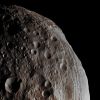
072-Vesta-Striations-PIA14678-PCF-LXTT.jpgStriations on Vesta (Absolute Natural Colors; credits for the additional process. and color.: Drr Gianluigi Barca and Paolo C. Fienga - Lunexit Team)189 visitenessun commentoMareKromium
|
|

Europa_and_Jupiter.jpgI am speechless...189 visiteC'è un luogo del Sistema Solare dove pensiamo di trovare forme di vita extraterrestri. Ha un nome molto familiare ed è uno dei satelliti di Giove: si chiama Europa. Questo mondo ha delle caratteristiche geologiche che lo rendono estremamente interessante da decenni. Fuori è coperto da una spessa crosta ghiacciata, ma dentro contiene un enorme oceano, proprio come quelli che abbiamo qui sulla Terra (vedi Nota 1).
La sua caratteristica unica suggerisce che l'acqua oceanica può "in qualche modo muoversi attraverso il guscio e raggiungere la superficie", ha affermato Alyssa Rhoden, scienziato del Southwest Research Institute in Colorado. Se l'affermazione è, in effetti, vera, "i nutrienti e l'energia possono circolare tra l'oceano, il guscio di ghiaccio e la superficie, e questo può essere benefico per la vita".
L'imminente Europa Clipper della NASA è una missione rivoluzionaria per capire di più sul corpo planetario e sul suo potenziale di abitabilità. Verrà lanciato nel 2024 e arriverà nel 2030.
NASA's upcoming Europa Clipper is a groundbreaking mission to learn more about the planetary body and its potential for habitability. It will launch in 2024 and arrive in 2030.
Rhoden said, "I started researching Europa 22 years ago and have always had the same images to work with. So, I'd say I'm EXTREMELY excited about the new datasets that Clipper will provide. As for habitability, there are probably many ways it will inform us about it, but what I'm most interested in seeing is evidence of liquid water within the ice shell."
When asked what life might be found on Europa, Rhoden quipped, "Space whales, obviously." (See Note 2.)
Note 1: This information is over 28 years old;
Note 2: If this lady is a "scientist," then it's really over...MareKromium
|
|
| 4548 immagini su 379 pagina(e) |
 |
|
|
|
|
16 | |
|
|
|
|





