| Piú viste - DEEP SKY |
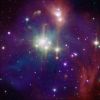
The_Coronet_Cluster.jpgThe "Coronet Cluster"64 visite"...Non invidio chi ha potuto frequentare tante scuole,
Ed ha Assorbito l'imposizione di troppi saccenti,
Divenendo vittima di presuntuosi scienziati,
Di errate e fallaci ideologie politiche,
Succube di dogmatiche imposizioni religiose.
Certo! Non conosco le lingue e le formule chimiche,
Non conosco il computer e gli astronomici conti bancari
Per togliere denaro alle masse senza che se ne accorgano.
Non sarò un importante manager dominante,
Un gongolante politico dalla poltrona dorata,
Un giornalista enfatizzante cronache nere e rosa.
Non invidio tutti questi o altri più fortunati,
Anche se ho fatto una vita molto dura,
Poichè ho fatto e sono rimasto un contadino.
Ho amato la Terra, le Piante, gli Animali e la Natura.
Ho amato e quando ho potuto ho aiutato i miei simili.
Mi sono sentito partecipe alla Vita con Dio Sole,
Con la sublime Aria e la Santa Acqua nell'eterna Creazione.
Ora, anziano, sono orgoglioso di avere obbedito
Soltanto al mio Sè Interiore:
Piccola Luce della Grande Luce..."
Giuseppe Gasparotto - "Insieme verso l'Approdo" (2007)MareKromium
|
|
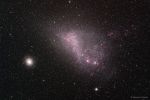
The_Small_Magellanic_Cloud.jpgThe Small Magellanic Cloud and 47-Tucanae64 visite"...Timeo hominem unius libri..."
(S. Tommaso D'Aquino)
"...Temo l'uomo che è padrone di un libro solo..." (e cioè: temibile è colui che conosce poche cose, ma - quelle poche cose - le conosce a perfezione)MareKromium
|
|

NGC-7331-Hager.jpgInside Pegasus (Stephan's Quintet and NGC 7331)64 visite"... Vita sine Litteris mors est, et hominis vivi sepultura..."
(Seneca)
"...La Vita senza studio è la morte ed il sepolcro dell'uomo - comunque - vivo..."MareKromium
|
|

NGC-1333~0.jpgNGC 1333 - Stardust in Perseus64 visite"...Stet quicumque volet potens aulae culmine lubrico,
Me dulcis saturet quies. Obscuro positus loco
Leni perfruar otio. Nullis nota Quiritibus
Aetas per tacitum fluat. Sic cum transierint mei
Nullo cum strepitu dies, plebeius moriar, sed senex..."
(Seneca)
"...Stia chi vuole nella somma e perigliosa dimora dei Re; a me basta la quiete.
Celato, in un luogo remoto, godrò dolce riposo, mentre nessun Romano che ami la fama della città in cui vive potrà godere della tranquillità.
E così scorrendo i miei giorni, senza rumori, morirò plebeo; ma vecchio..." (trad. libera)MareKromium
|
|

NGC-2237.jpgNGC 2237 - The "Rosette Nebula"64 visite"...Nihil tamen aeque proderit quam quiescere et minimum cum aliis loqui, plurimum secum..."
(Seneca)
"...Nulla ci può dare maggior giovamento di una vita tranquilla, trascorsa parlando poco con gli altri e molto con se stessi..."MareKromium
|
|

HD-189733b-1.jpgExtra-Solar Planet HD 189733b64 visiteNASA's Hubble Space Telescope (HST) has made the first detection ever of an organic molecule in the atmosphere of a Jupiter-sized planet orbiting another star. This breakthrough is an important step in eventually identifying signs of life on a planet outside our Solar System.
The molecule found by Hubble is Methane, which under the right circumstances can play a key role in prebiotic chemistry — the chemical reactions considered necessary to form life as we know it.
This discovery proves that Hubble and upcoming space missions, such as NASA's James Webb Space Telescope, can detect organic molecules on planets around other stars by using spectroscopy, which splits light into its components to reveal the "fingerprints" of various chemicals.
"This is a crucial stepping stone to eventually characterizing prebiotic molecules on planets where life could exist," said Mark Swain of NASA's Jet Propulsion Laboratory (JPL), Pasadena, Calif., who led the team that made the discovery. Swain is lead author of a paper appearing in the March 20 (2008) issue of Nature.
The discovery comes after extensive observations made in May 2007 with Hubble's Near Infrared Camera and Multi-Object Spectrometer (NICMOS). It also confirms the existence of water molecules in the planet's atmosphere, a discovery made originally by NASA's Spitzer Space Telescope in 2007. "With this observation there is no question whether there is water or not — water is present", said Swain.
The planet now known to have Methane and water is located 63 Light-Years away in the constellation Vulpecula. Called HD 189733b, the planet is so massive and so hot it is considered an unlikely host for life. HD 189733b, dubbed a "hot Jupiter", is so close to its parent star it takes just over two days to complete an orbit. These objects are the size of Jupiter but orbit closer to their stars than the tiny innermost planet Mercury in our solar system.
HD 189733b's atmosphere swelters at 1700 degrees Fahrenheit, about the same temperature as the melting point of Silver.
Though the star-hugger planet is too hot for life as we know it, "this observation is proof that spectroscopy can eventually be done on a cooler and potentially habitable Earth-sized planet orbiting a dimmer red dwarf–type star," Swain said. The ultimate goal of studies like these is to identify prebiotic molecules in the atmospheres of planets in the "habitable zones" around other stars, where temperatures are right for water to remain liquid rather than freeze or evaporate away.
The observations were made as the planet HD 189733b passed in front of its parent star in what astronomers call a transit. As the light from the star passed briefly through the atmosphere along the edge of the planet, the gases in the atmosphere imprinted their unique signatures on the starlight from the star HD 189733.
The astronomers were surprised to find that the planet has more Methane than predicted by conventional models for "hot Jupiters".
"This indicates we don't really understand exoplanet atmospheres yet," said Swain. "These measurements are an important step to our ultimate goal of determining the conditions, such as temperature, pressure, winds, clouds, etc., and the chemistry on planets where life could exist. Infrared spectroscopy is really the key to these studies because it is best matched to detecting molecules", said Swain.
Swain's co-authors on the paper include Gautam Vasisht of JPL and Giovanna Tinetti of University College, London/European Space Agency.MareKromium
|
|

Gravitational_Lensing-01.jpgGravitational Lensing and "Light Distortion"64 visite"...Noi continuiamo a definire, reputare e trattare il Tempo e lo Spazio come ed in quanto Misure Lineari.
Questo, a mio parere, equivale a dire che non solo le nostre "basi" sono fatiscenti, ma altresì che noi non abbiamo la minima idea di che cosa il Tempo e lo Spazio sìano effettivamente...
Comunque sia, dobbiamo aspettare. La Verità, nella Vita come nella Scienza, alla fine si automanifesta e si dimostra da sola, nonostante tutto e tutti..."
Paolo C. Fienga (appunti)MareKromium
|
|

HD-189733b-PIA10364.jpgHD-189733b - Exoplanet in Vulpecula64 visite"...Vulpes non capitur muneribus..."
(Proverbio Medioevale)
"...L'astuzia non si lascia vincere (non la si può corrompere) dai (con) regali..." (trad. libera)MareKromium
|
|

TheCrescentMoon-GIF-080406_0939-46.gifYoung Moon (GIF-Movie; credits: Laurent Laveder)64 visiteCaption NASA, da "NASA - Picture of the Day" del giorno 11 Aprile 2008:"At first, he couldn't see it, but searching with binoculars along a cloudy western horizon near Sunset, photographer Laurent Laveder finally spotted a delicate Lunar Crescent. Captured in this dramatic picture on April 6th, 2008, from Bretagne, France, the Moon was only 15 h. and 38' old.
Its slight, irregular, sunlit arc opens upward just above the dark cloud bank near picture center. Of course, a crescent Moon in the early evening sky is a lovely sight often enjoyed by many. But finding the Moon when its slim crescent is still less than about 24 hours past the New Moon phase requires careful timing and planning, a challenging project even for experienced observers.
In this sighting, only about 0,8% of the Moon's disk appears illuminated.
Laveder notes that this is the youngest Moon he has spotted in 20 years of skygazing".MareKromium
|
|

NGC-3372-B.jpgNGC 3372 - The Dark Clouds of the Carina Nebula64 visite"...Quoties inter homines fui, minor homo redii..."
(Seneca)
"...Ogni volta che fui in mezzo agli uomini, mi ritrovai diminuito (come uomo)..." (ovvero: più si sta in mezzo ai tumulti del - cosiddetto - "vivere civile", e peggio si diventa)MareKromium
|
|

SNR-1006.jpgSupernova Remnant SNR-100664 visite"...Ea Natura multitudinis est: aut servit humiliter, aut superbe dominatur; Libertatem, quae media est, nec sibi parare modice, nec habere sciunt..."
(Livio)
"...La folla ha questa Natura: o serve umilmente, o comanda con arroganza; nè essa sa gestire un'equa misura di Libertà, nè, nella sua pienezza, sa goderne..."MareKromium
|
|

NGC-6357.jpgPismis 24: Open Star Cluster64 visite"...The unfolding of your words gives Light; it imparts understanding to the simple..."
- Psalm 119:130MareKromium
|
|
| 1891 immagini su 158 pagina(e) |
 |
|
|
|
|
149 | |
|
|
|
|





