| Piú viste - MARS |

ESP_020793_1935_RED_abrowse-PCF-LXTT.jpgElliptical Impact Crater or Crater Chain? (Natural Colors; credits for the additional process. and color.: Dr Paolo C. Fienga - Lunexit Team)334 visiteCaption NASA:"This image shows what appears to be a highly Elliptical Crater, which would be unusual. Closer examination reveals that it is probably two overlapping Craters that formed concurrently, plus several smaller Craters aligned with the Long Axis of the elliptical depression.
This type of "Crater Chain" can form from a highly oblique impact, in which the Impactor (Bolide) trajectory is almost parallel to the Surface".MareKromium
|
|
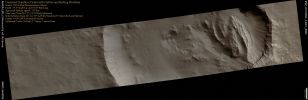
ESP_015900_1465_RED_abrowse-00-PCF-LXTT.jpgUnnamed Southern Crater with Gullies, Rolling Boulders and Dunes (CTX Frame - Absolute Natural Colors; credits for the additional process. and color.: Dr Paolo C. Fienga - Lunexit Team)334 visiteCaption NASA:"Although this image was primarily taken to study the Gullies in the Inner Walls of the Crater, it also reveals a few other interesting things.
Near the Gullies in the Northern Wall of the Crater, for instance, some Boulders have bounced down the Slope, leaving trails of Hollows along their paths (see EDM n. 1).MareKromium
|
|

Craters-Secondary_Craters-ArabiaTerra-PIA08759-PCF-LXTT.jpgSeconday Craters in Arabia Terra Region (Absolute Natural Colors; credits for the additional process. and color.: Dr Paolo C. Fienga - Lunexit Team)334 visitenessun commentoMareKromium
|
|

OPP-SOL2560-1N355458555EFFB3XKP1777L0M2-PCF-LXTT-2.jpgBeautiful Desolation - Sol 2560 (Red Filters ON - Absolute Natural Colors; credits for the additional process. and color.: Dr Paolo C. Fienga - Lunexit Team)334 visitenessun commentoMareKromium
|
|
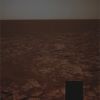
OPP-SOL2560-1N355458555EFFB3XKP1777L0M2-PCF-LXTT-1.jpgBeautiful Desolation - Sol 2560 (Red Filters OFF - Absolute Natural Colors; credits for the additional process. and color.: Dr Paolo C. Fienga - Lunexit Team)334 visitenessun commentoMareKromium
|
|

ESP_020918_1400_RED_abrowse.jpgOutcrops in the Southern Latitudes (Natural Colors; credits for the additional process. and color.: Dr Paolo C. Fienga - Lunexit Team)333 visitenessun commentoMareKromium
|
|
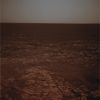
OPP-SOL2560-1N355458343EFFB3XKP1777L0M1-PCF-LXTT.jpgBeautiful Desolation - Sol 2560 (Absolute Natural Colors; credits for the additional process. and color.: Dr Paolo C. Fienga - Lunexit Team)333 visitenessun commentoMareKromium
|
|
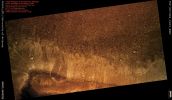
PSP_007492_2265_RED_abrowse-PCF-LXTT.jpgPolygons in Deuteronilus Mensae (Enhanced Absolute Natural Colors; credits for the additional process. and color.: Dr Paolo C. Fienga - Lunexit Team)333 visiteThis image reveals hexagonal and polygonal patterns formed by networks of soil troughs on the floor of a valley in the Deuteronilus Mensae Region, located on the Northern edge of Arabia Terra and borders the Martian Southern Highlands and Northern Lowlands.
The polygonal patterns indicate that the surface has undergone stress, potentially caused by subsidence (sinking), desiccation (drying out), or thermal contraction. These polygon features are similar to permafrost thermal-contraction polygons that form in Polar and High Alpine Regions on Earth by seasonal-to-annual contraction of the subsoil. On Earth, such polygon features are indicative of the presence of ground ice and are commonly referred to as “patterned ground”. The patterns are the result of thermal contraction in ice-cemented soil or permafrost that forms a honeycomb network of small fractures below the surface.
The network of fractures is eventually manifested as shallow troughs at the surface, forming the hexagonal and polygonal patterns visible in this image.
The polygons in this scene average approx. 100 meters (110 yards) in size and appear to be higher in elevation in the center than in the surrounding troughs. Boulders are accumulated in the center of the polygons and dunes are visible in several of the troughs.
The landforms we observe here most likely indicate that ice-rich permafrost is present or has been present in the past.MareKromium
|
|
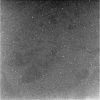
SOL080-2P133456546EFF2232P2874L8M1.jpgYou see the stars, but...it's daytime! (1)332 visiteOsservate attentamente il campo ripreso da questo frame (usando il "filtro 8"): sembra, decisamente, un'altra fotografia del Cielo Marziano in cui si possono vedere stelle ed altri (almeno 2) "star-like" objects che sembrano muoversi secondo percorsi e traiettorie proprie, incoerenti rispetto al moto del Pianeta. Tutto chiaro?
Per nulla! Il problema, infatti, è che questa immagine è stata presa intorno alle 09:20 a.m., ora di Marte, e quindi a giorno fatto. Come si spiega che è identica (rectius: estremamente simile) a quelle scattate alle 2 di notte?
Siamo noi a non capire (e può anche essere) oppure c'è qualcuno che sta "confondendo" ed "intorbidendo" non tanto le acque, quanto i Cieli di Marte (e può essere anche questa la verità)?
|
|
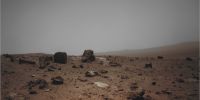
OPP-SOL2695-1N367432321ESFBMLVP1961L0M1-PCF-LXTT.jpgBoulders near the Edge of Endeavour Crater - Sol 2695 (Absolute Natural Colors; credits for the additional process. and color: Dr Paolo C. Fienga - Lunexit Team)332 visitenessun commentoMareKromium
|
|

OPPORTUNITYBRIGHTOBJECT-1N136544076EFF1900P2860L0M1.jpgObjects in the Sky or defects of the frame?331 visiteNe abbiamo viste tante di immagini come questa e di "Anomalie" come quelle che appaiono in questo frame che, forse, non vale più la pena di spenderci tempo e parole. Noi adesso aspettiamo, con fiducia, che - prima o poi - ci giunga qualche immagine "meno equivoca" di queste Anomalie. Se arriverà, la troveremo e poi la commenteremo insieme. Se la trovate Voi, mandacela subito per favore!
|
|
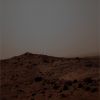
SOL1255-PCF-LXTT.jpgPeaceful Horizon - Sol 1255 (Absolute Natural Colors; credits for the additional process. and color.: Dr Paolo C. Fienga - Lunexit Team)331 visitenessun commentoMareKromium
|
|
| 13513 immagini su 1127 pagina(e) |
 |
|
|
|
|
22 | |
|
|
|
|





