| Piú viste - Original NASA Frames - Jupiter and the "Jupiter System" through Voyager 1 and 2 |

44-vg1_1637750.jpgThe "Strange Companion" of Io (extreme detail mgnf)56 visiteL'oggetto a noi pare lo stesso (a tutti gli effetti) del frame VG1-1636836: il super-stretching ne evidenzia alcune, minime, caratteristiche superficiali e la sua dimensione apparente, a parità di stretching, suggerisce che esso si stia allontanando dalla Sonda Voyager.
Incredibile, vero?!?
Un vero peccato che, anche in questo caso, la NASA non abbia MAI speso una parola (se non altro per dire, ad esempio, "è solo un image artifact"...).
Mai.
|
|

505-PIA00357.jpgGanymede (Enhanced Natural Colors and HR; credits: NASA/JPL)56 visiteCaption NASA originale:"This color picture of Ganymede is relevant to a Region located at 30° South Lat. and 180° West Long. It shows features as small as 6 Km (about 3,7 miles) across. Notice here a bright halo impact crater that shows the fresh material thrown out of the crater. In the background it can be seen a bright grooved terrain that may be the result of the shearing of the surface materials along fault planes.
The dark background material is the ancient heavily cratered terrain -- probably the oldest material preserved on the surface of Ganymede".
|
|
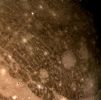
505-PIA00356.jpgGanymede (Enhanced Natural Colors and HR; credits: NASA/JPL)56 visiteCaption NASA originale:"This color reconstruction of part of the Northern Hemisphere of Ganymede was made from pictures taken from a range of about 313.000 Km (approx. 194.000 miles).
The scene is approx. 1.300 Km (about 806 miles) across and it shows part of dark, densely cratered block which is bound on the south by lighter and less cratered, grooved terrain.
The dark blocks are believed to be the oldest parts of Ganymede's surface. Numerous craters are visible, many with central peaks. The large bright circular features have little relief and are probably the remnants of old, large craters that have been annealed by flow of the icy near-surface material.
The closely-spaced arcuate, linear features are probably analogous to similar features on Ganymede which surround a large impact basin.
The linear features here may indicate the former presence of a large impact basin to the South-West".
|
|

03-vg1_p21181.jpgJupiter, in true colors55 visite"...NASA's twin Voyager spacecrafts are still beaming back new information about the final frontier of our Solar System, including evidence of "potholes" in the turbulent zone near the edge...".
|
|

08-vg1_p21229.jpgThe "Great Red Spot" of Jupiter (false colors)55 visitenessun commento
|
|

12-vg2_1973106.jpgJupiter55 visitenessun commento
|
|

18-vg1_1636738.jpgThe "Great White Spot" of Jupiter (one of the many...)55 visitenessun commento
|
|
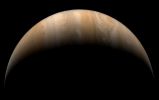
19-vg1_ipl260668.jpgCrescent Jupiter (HR)55 visitenessun commento
|
|
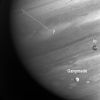
14-vg1_1610104.jpgJupiter, Io, Ganymede and...55 visiteL'oggetto indicato dalla freccia e contraddistinto da un "?" non è un photoartifact (nella maniera più categorica) e non è neppure una delle altre Lune Maggiori (o Galileiane) di Giove - e quindi non si tratta nè di Europa, nè di Callisto.
Abbiamo pensato potesse trattarsi di Amalthea, ma l'oggetto è troppo piccolo e non riusciamo a risolverlo per osservarne i dettagli superficiali e, soprattutto, le fattezze esteriori.
Se qualcuno di Voi avesse delle idee, ci scriva!
|
|
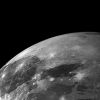
500-PIA02233.jpgGanymede (HR)55 visiteCaption NASA originale:"This picture of Ganymede was taken from a range of about 272.000 Km. The center of the picture lies at 13° Latitude and 359° Longitude. Many bright impact craters are shown that have radial ejecta patterns. These rays lie across and therefore are younger than the bright and dark background material. Many older impact craters are shown that have lost their rays probably by impact erosion. The bright background areas contain grooves and ridges that may be caused by faulting of the surface materials".
|
|
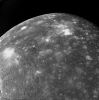
501-vg1_1641854.jpgGanymede (HR)55 visitenessun commento
|
|

504-PIA01516.jpgGanymede (natural colors and HR)55 visiteCaption NASA originale:"This color picture as acquired by Voyager 1 during its approach to Ganymede, at ranges between about 230 to 250.000 Km. The image shows detail on the surface with a resolution of 4,5 Km/px.
This picture shows the two distinctive types of terrain found by Voyager: the darker ungrooved regions and the lighter areas which show the grooves or fractures in abundance. The most striking features are the bright ray craters which have a distinctly "bluer" color appearing white against the redder background. Ganymede's surface is known to contain large amounts of surface ice and it appears that these relatively young craters have spread bright fresh ice materials over the surface. Likewise, the lighter color and reflectivity of the grooved areas suggests that here too, there is cleaner ice. We see ray craters with all sizes of ray patterns, ranging from extensive systems of the crater in the northern part of this picture, which has rays at least 300-500 kilometers long, down to craters which have only faint remnants of bright ejecta patterns".
|
|
| 39 immagini su 4 pagina(e) |
 |
3 |
|





