| Piú viste - Mars Reconnaissance Orbiter (MRO) |
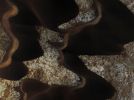
PSP_005684_1890_RED_abrowse-01.jpgDark Dunefield in Nili Patera Caldera (EDM - Enhanced Absolute Natural Colors; credits for the additional process. and color.: Dr Paolo C. Fienga - Lunexit Team)77 visitenessun commentoMareKromium
|
|
PSP_010460_2500_RED_abrowse-Vastitas_Borealis-PCF-LXTT.jpgFeatures of Vastitas Borealis (Natural Colors; credits for the additional process. and color: Dr Paolo C. Fienga - Lunexit Team)77 visitenessun commentoMareKromium
|
|
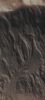
ESP_025646_1440-PCF-LXTT-00.jpgIcy Flows (Absolute Natural Colors; credits for the additional process. and color.: Dr Paolo C. Fienga - Lunexit Team)77 visiteMars Local Time: 15:06 (Early Afternoon)
Coord. (centered): 35,452° South Lat. and 112,094° East Long.
Spacecraft altitude: 253,5 Km (such as about 158,5 miles)
Original image scale range: 50,7 cm/pixel (with 2 x 2 binning) so objects ~ 1 mt and 52 cm across are resolved (with 4 x 4 binning)
Map projected scale: 50 cm/pixel
Map projection: EQUIRECTANGULAR
Emission Angle: 4,8°
Sun - Mars - MRO (or "Phase") Angle: 69,0°
Solar Incidence Angle: 72° (meaning that the Sun is about 18° above the Local Horizon)
Solar Longitude: 57,5° (Northern Spring/Southern Fall)
Credits: NASA/JPL/University of ArizonaMareKromium
|
|

Psp_001401_1850_red-0.jpgPseudo-Pyramids and Rocky Bridges in Arabia Terra76 visiteAncora una volta la Regione di Arabia Terra ci mostra dei rilievi straordinari e davvero difficili da commentare.
Per quanto attiene le Pseudo-Piramidi ("buttes" o "colline a ceppo", geologicamente parlando), dobbiamo dire che la maggiore - quella più in basso - mostra una pianta quadrata semi-regolare che fa "impallidire" la tanto pubblicizzata D&M Pyramid di Cydonia mentre la minore - poco più in alto - mostra una pianta triangolare davvero molto ben delineata per non far nascere nella mente degli Osservatori qualche idea di "artificialità".
Lunar Explorer Italia ritiene che le Pseudo-Piramisi di Arabia Terra sìano bizzarre, ma assolutamente naturali; ci è sembrato comunque giusto evidenziarle poichè altri rilievi, situati in altre Regioni di Marte, i quali erano/sono MOLTO meno regolari ed intriganti di questi, sono stati segnalati come possibili "monumenti". Insomma: la geologia di Marte è così curiosa che, VOLENDO, i manufatti si possono davvero vedere ovunque.
Per quanto attiene i "Ponti", invece, riteniamo che dovrebbero essere compiute (da parte di chi ha i mezzi adeguati per poterlo fare) delle analisi molto accurate poichè questi rilievi, anch'essi - comunque - a nostro parere "naturali", potrebbero costituire delle sconcertanti evidenze oggettive di forme vitali indigene aventi una natura bio-magnetica (come sostiene il Dr Feltri). Che non si tratti di semplici dune (checchè ne dica la NASA) lo potete semplicemente constatare operando anche un minimo stretch del frame e quindi verificando la loro tendenza a "sovrapporsi", a "sollevarsi dal suolo" (alcuni "ponti", infatti, mostrano delle ombre al di sotto delle loro "campate"...) ed a posizionarsi, comunque, in maniera tale da consentirci di escludere nella maniera più categorica una loro eventuale origine eolica.
Per onor di cronaca, simili rilievi erano già stati individuati (in altre Regioni) in passato dal Dr J. Skipper il quale, tuttavia, propendeva per una loro natura "artificiale".
|
|

PSP_006268_1995_RED_abrowse.jpgThe alleged "Bridges" of Chrise Planitia (MULTISPECTRUM; credits: Lunexit)76 visiteThis image shows part of the surface of Chryse Planitia, near the mouth of several of the giant outflow channels carved by massive floods. At this location the channel is much too large to be seen within a HiRISE image, and this shows an area of level plains near the mouth.
Two geologic units are visible at this site: a relatively dark expanse in the southern part of the image (Dx) and a light, slightly higher-standing area along the northern edge. The light unit may be material that has flowed out from below the surface in a process called mud volcanism. However, many aspects of the history of the Northern Plains of Mars remain uncertain.
A few other prominent features are present. A long trough with aeolian ripples runs through the eastern part of the image. This feature likely formed by contraction of the surface layer. This must have occurred after the formation of the light material since it cuts through the light unit in the northwest part of the image.
There is also a large mound which appears to bury part of the trough, and thus is even younger. Alternatively, two troughs could both terminate at the hill.
Despite the resolution of HiRISE, the nature of this mound is still unclear. It has a rugged surface, which might mean that it has been eroded enough to remove indications of its origin.
MareKromium
|
|

PSP_009313_1560_RED.jpgMars 6 Landing Region (natural colors; credits: Lunar Explorer Italia)76 visiteMars Local Time: 15:30 (middle afternoon)
Coord. (centered): 23,6° South Lat. and 341,2° East Long.
Spacecraft altitude: 259,9 Km (such as about 162,5 miles)
Original image scale range: 26,0 cm/pixel (with 1 x 1 binning) so objects ~78 cm across are resolved
Map projected scale: 25 cm/pixel
Map projection: EQUIRECTANGULAR
Emission Angle: 0,2°
Phase Angle: 70,3°
Solar Incidence Angle: 70° (meaning that the Sun is about 20° above the Local Horizon)
Solar Longitude: 102,0° (Northern Summer)
Credits: NASA/JPL/University of Arizona
Additional process. and coloring: Lunar Explorer ItaliaMareKromium
|
|

ESP_011605_1170_RED_abrowse.jpgDefrosting Malea Patera (Natural Colors; credits: Lunar Explorer Italia)76 visiteMalea Patera is one of a group of ancient volcanoes that ring the Hellas Impact Basin. This HiRISE image was intended to investigate the nature of the volcanic materials at this location. However, the image was taken in early Spring for this location in the Southern Hemisphere and so the ground is covered with bright frost except for some dark splotches found in discrete patches.
This is where the sunlight has penetrated the frost and initiated defrosting around discrete spots.
Clearly something is different about the patches where this defrosting has started before any other locations. One possibility is that these are (frost covered) dark sand dunes that heat up more easily than the surrounding terrain. However, we will need to take a new image in the Summer time to really know what is happening here.
Mars Local Time: 16:11 (middle afternoon)
Coord. (centered): 62,5° South Lat. and 53,3° East Long.
Spacecraft altitude: 249,1 Km (such as about 155,7 miles)
Original image scale range: 24,9 cm/pixel (with 1 x 1 binning) so objects ~75 cm across are resolved
Map projected scale: 25 cm/pixel
Map projection: EQUIRECTANGULAR
Emission Angle: 0,9°
Phase Angle: 72,4°
Solar Incidence Angle: 73° (meaning that the Sun is about 17° above the Local Horizon)
Solar Longitude: 192,6° (Northern Autumn)
Credits: NASA/JPL/University of Arizona
Additional process. and coloring: Lunar Explorer ItaliaMareKromium
|
|

PSP_010494_1790_RED_abrowse.jpgMound in Aeolis (Natural Colors; credits: Lunar Explorer Italia)76 visiteMars Local Time: 15:40 (middle afternoon)
Coord. (centered): 1,1° South Lat. and 135,7° East Long.
Spacecraft altitude: 268,1 Km (such as about 167,6 miles)
Original image scale range: 53,6 cm/pixel (with 1 x 1 binning) so objects ~ 1,61 mt across are resolved
Map projected scale: 50 cm/pixel
Map projection: EQUIRECTANGULAR
Emission Angle: 0,0°
Phase Angle: 56,6°
Solar Incidence Angle: 57° (meaning that the Sun is about 33° above the Local Horizon)
Solar Longitude: 145,6° (Northern Summer)
Credits: NASA/JPL/University of Arizona
Additional process. and coloring: Lunar Explorer ItaliaMareKromium
|
|

ESP_013499_1650-1.jpgSpirit near Home Plate (EDM n.1 - Natural - but enhanced - Colors; credits: Lunexit)76 visitenessun commentoMareKromium
|
|
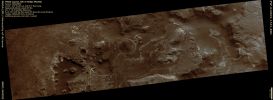
PSP_010839_1525_RED_abrowse.jpgPitted Layers, N/E of Hellas Planitia Region (Natural Colors;: credits: Lunexit)76 visitenessun commentoMareKromium
|
|

Vastitas_Borealis-DD-PIA12876.jpgCaught in the Act (Natural Colors; credits: NASA/JPL-Caltech/University of Arizona - Additional process. and color.: Dr Paolo C. Fienga - Lunexit Team)76 visiteThis image was targeted to study Knobs in Mars' Northern Plains (Vastitas Borealis), just North of Scandia Crater. What surprised scientists was the presence of a Dust Devil passing by.
As on Earth, Dust Devils form when ground heated by sunlight warms the air above it. The hot air rises, forming an updraft accompanied by vortical motions.
Because warm ground is a requirement, Dust Devils on Mars generally form in late Spring to Summer, especially at high Latitudes.
This image was taken in early Spring (2010), at a latitude of about 61° North. No Dust Devil has been seen this far from the Equator at such an early season before.MareKromium
|
|

PSP_005387_1935_RED_abrowse-00-PCF-LXTT.jpg"Sinuous" Collapse Pits on Ascraeus Mons (Absolute Natural Colors; credits for the additional process. and color.: Dr Paolo C. Fienga - Lunexit Team)76 visitenessun commentoMareKromium
|
|
| 2237 immagini su 187 pagina(e) |
 |
|
|
|
|
87 | |
|
|
|
|





