| Piú viste - Mars Reconnaissance Orbiter (MRO) |

Psp_010141_1540_red.jpgPitted Plain, North of Hellas Region (possible True Colors; credits: Lunar Explorer Italia)81 visiteMars Local Time: 15:38 (middle afternoon)
Coord. (centered): 25,5° South Lat. and 55,6° East Long.
Spacecraft altitude: 258,8 Km (such as about 161,7 miles)
Original image scale range: 51,8 cm/pixel (with 1 x 1 binning) so objects ~1,55 mt across are resolved
Map projected scale: 50 cm/pixel
Map projection: EQUIRECTANGULAR
Emission Angle: 6,7°
Phase Angle: 74,2°
Solar Incidence Angle: 69° (meaning that the Sun is about 21° above the Local Horizon)
Solar Longitude: 132,0° (Northern Summer)
Credits: NASA/JPL/University of Arizona
Additional process. and coloring: Lunar Explorer ItaliaMareKromium
|
|
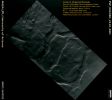
PSP_006980_2610_RED_abrowse.jpgSmooth Surface Features of Chasma Boreale (False Colors; credits: Lunexit)81 visitenessun commentoMareKromium
|
|

ESP_012065_9000_COLOR.JPGDeimos (Natural - but enhanced - Colors; credits: NASA/JPL/Univ. of Arizona)81 visiteHiRISE captured this enhanced-color image of Deimos, the smaller of the two moons of Mars, on 21 February 2009.
Deimos has a smooth surface due to a blanket of fragmental rock or regolith, except for the most recent impact craters. It is a dark, reddish object, very similar to Phobos.
There are subtle color variations — redder in the smoothest areas and less red near fresh impact craters and over ridges or topographic highs (relative to its center of gravity).
These color variations are probably caused by the exposure of surface materials to the space environment, which leads to darkening and reddening. Brighter and less-red surface materials have seen less exposure to space due to recent impacts or downslope movement of regolith.
With an image scale of about 20 mt/pixel, features 60 mt or larger can be discerned.MareKromium
|
|
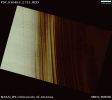
PSP_010463_2735_RED_abrowse.jpgNorth Polar Layers (Natural Colors; credits: Lunar Explorer Italia)81 visiteMars Local Time: 07:04 (early morning)
Coord. (centered): 86,5° North Lat. and 126,1° East Long.
Spacecraft altitude: 315,9 Km (such as about 197,4 miles)
Original image scale range: 63,2 cm/pixel (with 1 x 1 binning) so objects ~ 1,90 mt across are resolved
Map projected scale: 50 cm/pixel
Map projection: EQUIRECTANGULAR
Emission Angle: 0,0°
Phase Angle: 74,7°
Solar Incidence Angle: 75° (meaning that the Sun is about 15° above the Local Horizon)
Solar Longitude: 144,4° (Northern Summer)
Credits: NASA/JPL/University of Arizona
Additional process. and coloring: Lunar Explorer ItaliaMareKromium
|
|

ESP_011884_2045_RED_abrowse-02.jpgUnusual Translucent Surface on the edge of a candidate Collapse Pit (edm frame - Natural Colors, credits: Lunar Explorer Italia)81 visitenessun commentoMareKromium
|
|

ESP_014298_1105_RED_abrowse.jpgUSGS Dune Database Entry Number 3327-692 (Natural Colors; credits: Lunexit)81 visitenessun commentoMareKromium
|
|
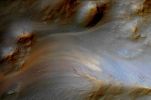
ESP_016136_1525_RED_abrowse-01.jpgColourful Streaks (EDM - possible True Colors; credits: NASA/JPL/Univ. of Arizona and Dr Paolo C. Fienga - Lunexit Team)81 visiteIn this enhanced True Color EDM, we see colorful Streaks, where the bedrock is eroding, moving downhill a bit, then getting swept by the wind.MareKromium
|
|
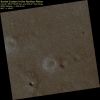
Psp_001484_2455_red.jpgThe Northern Plains (Natural Colors; credits for the additional process. and color.: Dr Paolo C. Fienga - Lunexit Team)81 visiteM.L.T.: 15:07 (early afternoon)
Latitude (centered): 65,5° North
Longitude: 235,1° East
Range to target site: 310,3 Km (about 194,8 miles)
Original image scale range: 31 cm/pixel (with 1 x 1 binning) so objects ~93 cm across are resolved
Map Projected Scale: 25 cm/pixel
Map Projection: POLAR STEREOGRAPHIC
Emission Angle: 0,3°
Phase Angle (Sun-Mars-MRO): 58,1 °
Solar Incidence Angle: 58° (meaning that the Sun is about 32° above the Local Horizon)
Solar Longitude: 138,0° (Northern Summer)MareKromium
|
|
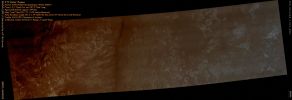
PSP_004384_1705_RED_abrowse-PCF-LXTT.jpgN/W Melas Chasma (Absolute Natural Colors; credits for the additional process. and color.: Dr Paolo C. Fienga - Lunexit Team)81 visiteThis HiRISE image covers a portion of the Wallrock and Canyon Floor in South-Western Melas Chasma.
Along the Floor of Melas Chasma is an unusual Blocky Deposit composed of light-toned Blocks in a darker matrix. The HR provided by the HiRISE camera reveals Layers only a few meters thick in some of the light-toned Blocks. The Blocks vary in size but most fall between approx. 100 up to 500 mts in diameter. Although most Blocks appear rounded, others have angular edges and can be very elongate. The morphologies of the Blocks suggest ductile deformation, such as from a flow or by tectonic disruption after emplacement. Aeolian Ripples are interspersed between the Blocks in the darker Matrix.
Small valleys can be seen along the Wallrock. The Wallrock is a mixture of two geologic units that differ mainly in their reflectance. The light-toned unit appears to be thinner and only exposed in localized spots. Several of the light-toned Deposits are seen only in the Valleys, suggesting they were either deposited or are exposed by erosion.MareKromium
|
|

ESP_019521_1750_RED_abrowse-PCF-LXTT.jpgCandor Chasma (Natural Colors; credits for the additional process. and color.: Dr Paolo C. Fienga - Lunexit Team)81 visitenessun commentoMareKromium
|
|

ESP_019595_1890_RED_abrowse-00.jpgDiverse Bedrock Exposures on the Floor of Nii Patera (Absolute Natural Colors; credits for the additional process. and color.: Dr Paolo C. Fienga - Lunexit Team)81 visitenessun commentoMareKromium
|
|

PSP_005514_1360_RED_abrowse.jpgDunes on Rabe Crater's Floor (Absolute Natural Colors; credits for the additional process. and color.: Dr Paolo C. Fienga - Lunexit Team)81 visitenessun commentoMareKromium
|
|
| 2237 immagini su 187 pagina(e) |
 |
|
|
|
|
81 | |
|
|
|
|





