| Piú viste - Mars Reconnaissance Orbiter (MRO) |
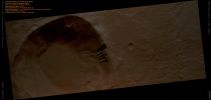
PSP_003162_1445_RED_abrowse-00-PCF-LXTT.jpgUnnamed Southern Crater with deep Gullies and Fill (Absolute Natural Colors; credits for the additional process. and color.: Dr Paolo C. Fienga - Lunexit Team)86 visitenessun commentoMareKromium
|
|

Dunes_and_DD_Tracks-PIA13538-PCF-LXTT-002.jpgSouthern Dunes and DD Tracks (Absolute Natural Colors; credits for the additional process. and color.: Dr Paolo C. Fienga - Lunexit Team)86 visitenessun commentoMareKromium
|
|

PSP_005418_1075_RED_abrowse-00.jpgSouth Polar Features (Absolute Natural Colors; credits for the additional process. and color.: Dr Paolo C. Fienga - Lunexit Team)86 visitenessun commentoMareKromium
|
|
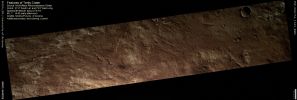
PSP_006752_1525_RED_abrowse-PCF-LXTT2.jpgFeatures of Terby Crater (Absolute Natural Colors; credits for the additional process. and color.: Dr Paolo C. Fienga - Lunexit Team)86 visitenessun commentoMareKromium
|
|

PSP_007805_2505-PCF-LXTT-IPF-00.jpgFrost all over Louth Crater (Absolute Natural Colors; credits for the additional process. and color.: Dr Paolo C. Fienga - Lunexit Team)86 visiteThis image shows the changing Seasonal Frost Patterns on Louth Crater, located at about 70° North Latitude, in the Martian Region of Vastitas Borealis. This Crater contains a Mound (---> terrapieno) covered by Water Frost that persists throughout the year (which is an unusual circumstance for this Latitude); however, even the Seasonal Carbon Dioxide (CO2) Frost deposited during the Northern Winter can reach such a Latitude. At the time this image was acquired (such as during the Northern Spring), the Carbon Dioxide Frost was in the process of sublimating back into the Martian Atmosphere. Note that there are Sand Dunes near the edge of the Mound, which become clear of Frost in the Summer.
Mars Local Time: 14:32 (Early Afternoon)
Coord. (centered): 70,228° North Lat. and 103,538° East Long.
Spacecraft altitude: 316,2 Km (such as about 197,6 miles)
Original image scale range: 31,6 cm/pixel (with 1 x 1 binning) so objects ~ 95 cm across are resolved
Map projected scale: 25 cm/pixel
Map projection: POLAR STEREOGRAPHIC
Emission Angle: 1,7°
Sun - Mars - MRO (or "Phase") Angle: 54,7°
Solar Incidence Angle: 56° (meaning that the Sun is about 34° above the Local Horizon)
Solar Longitude: 50,3° (Northern Spring - Southern Autumn)
Credits: NASA/JPL/University of Arizona
Additional process. and coloring: Lunar Explorer ItaliaMareKromium
|
|
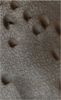
ESP_027378_2540-PCF-LXTT-IPF-2.jpgNorthern Dunes (EDM - Absolute Natural Colors; credits for the additional process. and color.: Dr Paolo C. Fienga/Lunexit Team)86 visiteThe Dunes visible in this EDM are approximately 100 meters across and they are traversing a bumpy, hard Terrain. Polygonal Patterns are evident in some areas while numerous meter-scale Boulders are strewn throughout the whole Region. The Boulders are more numerous in areas where the Polygonal Patterns are less pronounced. Repeated imaging of this large Dunefield shall reveal whether these Dunes are presently moving (so-called "Migrating Dunes") or not.
Mars Local Time: 14:42 (Early Afternoon)
Coord. (centered): 73,622° North Lat. and 328,215° East Long.
Spacecraft altitude: 316,7 Km (such as about 198,0 miles)
Original image scale range: 63,4 cm/pixel (with 2 x 2 binning) so objects ~ 1 mt and 90 cm across are resolved
Map projected scale: 50 cm/pixel
Map projection: POLAR STEREOGRAPHIC
Emission Angle: 1,9°
Sun - Mars - MRO (or "Phase") Angle: 57,6°
Solar Incidence Angle: 56° (meaning that the Sun is about 34° above the Local Horizon)
Solar Longitude: 117,4° (Northern Summer - Southern Winter)
Credits: NASA/JPL/University of Arizona
Additional process. and coloring: Lunar Explorer ItaliaMareKromium
|
|

ESP_028957_2085-PCF-LXTT-IPF-00B.jpgFeatures of Nilosyrtis Mensae (CTX Frame "B" - Absolute Natural Colors; credits for the additional process. and color.: Dr Paolo C. Fienga - Lunar Explorer Italia/Italian Planetary Foundation)86 visiteMars Local Time: 15:34 (Middle Afternoon)
Coord. (centered): 28,286° North Lat. and 75,424° East Long.
Spacecraft altitude: 287,8 Km (such as about 179,9 miles)
Original image scale range: 28,8 cm/pixel (with 1 x 1 binning) so objects ~ 86 cm across are resolved
Map projected scale: 25 cm/pixel
Map projection: EQUIRECTANGULAR
Emission Angle: 8,5°
Sun-Mars-MRO (or "Phase") Angle: 50,4°
Solar Incidence Angle: 59° (meaning that the Sun was about 31° above the Local Horizon of the imaged Region, at the time that the picture was taken)
Solar Longitude: 180,1° (Northern Autumn - Southern Spring)
Credits: NASA/JPL/University of Arizona
Additional process. and coloring: Lunar Explorer ItaliaMareKromium
|
|

PIA08014_modest.jpgThe "First Frame" from MRO (detail mgnf)85 visiteThe scene covers an area 49,8 Km (about 30,9 mi) wide and 23,6 Km (about 11,7 mi) high, of landscape typical of Mars' mid-latitude Southern Highlands. The location is 34° South Latitude, 305° East Longitude. An old, muted crater lies at the middle of the scene, with sets of channels to the left and right. Superimposed on parts of this terrain is a much younger, layered mantle of debris. The debris mantle is smooth in places but rough in other areas where it may have partially sublimated. This suggests that the debris mantle is (or was) rich in volatiles such as ices of water, CO2 or both. Also superimposed on the landscape are many small sharp-rimmed impact craters and wind-blown dunes. This image illustrates processes that may have involved water both on ancient Mars (channels and eroded craters) and much more recently in Mars' history (volatile-rich debris mantle). The radiometric and geometric processing of this image is very preliminary. In particular there are mismatches visible at full resolution along the seams between the 10 side-by-side images from separate CCDs (charge-coupled devices, which are electronic optical sensors).
|
|

PSP_007162_1915_RED_abrowse.jpgBright and Dark "Slope Streaks" in Arabia Terra (MULTISPECTRUM; credits: Lunexit)85 visiteThis observation is of region between large craters in Arabia Terra, which is a large swath of bright (high albedo) terrain in the Martian Cratered Uplands. At the center of this image is a channel with a sinuous, fluvial-like (such as "river-like") morphology, although it has long since been dry.
The floor of the channel is covered with an array of linear dunes, which are accumulations of windblown sediment.
Of special interest in this scene is a series of dark (low albedo) and brighter (higher albedo) discolorations along the channel walls, also known as slope streaks. Most slope streaks are initially dark, gradually brighten with time, and are thought to be due to dust avalanches that remove a thin layer of bright dust to reveal darker material. Here, many streaks appear brighter than the surrounding undisturbed slope surface, and the origin of these bright streaks is not entirely clear.MareKromium
|
|
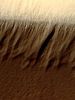
PSP_009356_1835_RED_abrowse-01.jpgRidged Margin of Elevated Plateau North-West of Pavonis Mons (edm - Natural Colors; credits: Lunar Explorer Italia)85 visitenessun commentoMareKromium
|
|
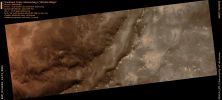
ESP_014260_1675_RED_abrowse.jpgUnnamed Crater intersecting a "Wrinkle Ridge" (Natural Colors; credits: Lunexit)85 visiteWrinkle Ridges are topographic structures produced by Subsurface faulting; they are commonly found on both the Moon and Mars.
This image shows a site where a Wrinkle Ridge intersects a Crater; the Ridge is a large feature and extends well outside this observation. The spur just inside the Crater Rim is roughly in line with the Wrinkle Ridge structure and probably represents enhanced crater collapse along the fault line.
An alternative possibility is that this spur was created by movement of the Wrinkle Ridge fault after the Crater formed, but this is unlikely because the Outer Rim of the Crater is not cut. Observations like this help constrain the relative timing of events on Mars.MareKromium
|
|
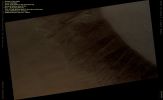
ESP_014267_1460_RED_abrowse.jpgGullies in Dao Vallis (Natural Colors; credits: Lunexit)85 visitenessun commentoMareKromium
|
|
| 2237 immagini su 187 pagina(e) |
 |
|
|
|
|
76 | |
|
|
|
|





