| Piú viste - Mars Reconnaissance Orbiter (MRO) |
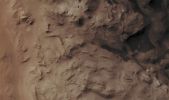
ESP_025297_1730-PCF-LXTT-00.jpgDunes and Ripples on the Floor of Jus Chasma (CTX Frame n.1 - Absolute Natural Colors; credits for the additional process. and color.: Dr Paolo C. Fienga - Lunexit Team)116 visiteMars Local Time: 14:50 (early afternoon)
Coord. (centered): 7,0° South Lat. and 275,6° East Long.
Spacecraft altitude: 265,6 Km (such as about 166,0 miles)
Original image scale range: 26,6 cm/pixel (with 1 x 1 binning) so objects ~ 80 cm across are resolved
Map projected scale: 25 cm/pixel
Map projection: EQUIRECTANGULAR
Emission Angle: 0,1°
Sun - Mars - MRO (or "Phase") Angle: 48,9°
Solar Incidence Angle: 49° (meaning that the Sun is about 41° above the Local Horizon)
Solar Longitude: 45,6° (Northern Spring)
Credits: NASA/JPL/University of Arizona
Additional process. and coloring: Lunar Explorer ItaliaMareKromium
|
|

PSP_003595_2115_RED_browse.jpgOlympus' Aureole (False Colors; credits for the additional process. and color.: Dr Paolo C. Fienga - Lunexit Team) 115 visiteThis image samples the rugged central portion of the mysterious "aureole" that extends to the West and North of Olympus Mons.
While many ideas for its formation have been advanced over the decades, these days it is generally thought to be a giant landslide deposit. The scene here fits that model with kilometer-scale (mile-sized) rocky hummocks and blocks strewn about. The blocks themselves are now covered with dust that is slumping off in small landslides or avalanches. These leave dark streaks on the sides of the blocks.MareKromium
|
|
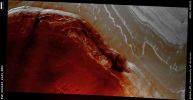
PSP_009945_2645_RED.jpgExposure of North Polar Basal Unit (possible True - but enhanced - Colors; credits: Lunar Explorer Italia)115 visiteMars Local Time: 14:37 (early afternoon)
Coord. (centered): 84,4° North Lat. and 343,5° East Long.
Spacecraft altitude: 330,4 Km (such as about 206,5 miles)
Original image scale range: 33,1 cm/pixel (with 1 x 1 binning) so objects ~99 cm across are resolved
Map projected scale: 25 cm/pixel
Map projection: EQUIRECTANGULAR
Emission Angle: 14,2°
Phase Angle: 53,9°
Solar Incidence Angle: 65° (meaning that the Sun is about 25° above the Local Horizon)
Solar Longitude: 124,7° (Northern Summer)
Credits: NASA/JPL/University of Arizona
Additional process. and coloring: Lunar Explorer ItaliaMareKromium
|
|

PSP_003086_2015_RED_abrowse.jpgFeatures of Nili Fossae (Absolute Natural Colors; credits for the additional process. and color.: Dr Paolo C. Fienga - Lunexit Team:)115 visitenessun commentoMareKromium
|
|
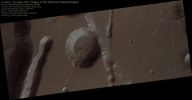
PSP_004046_2080_RED_browse-PCF-LXTT.jpgFeatures of Elysium Fossae (Absolute Natural Colors; credits for the additional process. and color.: Dr Paolo C. Fienga - Lunexit Team:)115 visitenessun commentoMareKromium
|
|

ESP_019987_1095_RED_abrowse.jpgHigh Southern Latitude "Dunes' Gullies" (Absolute Natural Colors; credits for the additional process. and color.: Elisabetta Bonora and Paolo C. Fienga - Lunexit Team)115 visitenessun commentoMareKromium
|
|

PSP_005409_1530_RED_abrowse-00.jpgUnnamed Southern Crater with Central Peak (CTX Frame - Enhanced Natural Colors; credits for the additional process. and color.: Dr Paolo C. Fienga - Lunexit Team)115 visitenessun commentoMareKromium
|
|
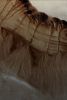
ESP_022156_1115_RED_abrowse-01-PCF-LXTT.jpgSouth Polar "Pit Gullies" (EDM - Absolute Natural Colors; credits for the additional process. and color.: Dr Paolo C. Fienga - Lunexit Team)115 visiteNumerous Gullies that have formed along the S/W Wall of an elongated shaped Pit are visible in this image. This Pit is located within a degraded approx. 100 Km Impact Crater located in the Southern Presso-Polar Regions of Mars.
Gullies originate along the rubbly, bouldery upper Wall Region and have eroded into the numerous Layered Wall Units before terminating in Fan Deposits on the Pit Floor (here, in the EDM). A previous HiRISE image (ESP_020956_1115) of this location taken during the Spring, showed Frost and interesting dark-toned Flows within the Gully Channels. Neither Frost nor Dark Flows are apparent in this Summer-time image. One goal of HiRISE is to repeat observations at locations such as this to detect changes that may lead to understanding how these Gullies form.MareKromium
|
|
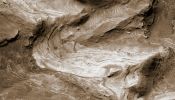
Gale_Crater-PIA12508.jpgLayers in lower formation of Gale Crater Mound (Natural Colors; credits NASA/Dr Paolo C. Fienga - Lunexit Team)114 visiteLayers of rock exposed in the lower portion of a tall Mound near the center of Gale Crater on Mars exhibit variations in layer thickness and range between dark and light tones. The Crater's Mound of layered material is over 4 Km (approx. 2,4 miles) high, making it more than twice as thick as the stack of rocks exposed in the Grand Canyon on Earth.
Gale Crater is approx. 152 Km (about 94 miles) in diameter.
This view of layering in the Mound's lower formation covers an area about 950 meters (3100 feet) wide. It was taken by the High Resolution Imaging Science Experiment (HiRISE) camera on NASA's Mars Reconnaissance Orbiter on April 23, 2009.
Observations of the lower formation by the Compact Reconnaissance Imaging Spectrometer for Mars, on the same orbiter, have indicated the presence of Sulfate Salts and clay minerals in these rock layers. The changes in composition from the lower (older) to the upper (younger) layers in the Gale Crater Mound may record stages in water loss and the drying out of Mars.
This image is one product from HiRISE observation ESP_012841_1750, centered at 4,9° South Lat., 137,2° East Long.MareKromium
|
|
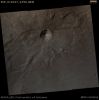
ESP_019197_2290_RED_abrowse-00.jpgExtremely unusually-looking Unnamed Northern Crater (Absolute Natural Colors; credits for the additional process. and color.: Dr Paolo C. Fienga - Lunexit Team)114 visiteAcquisition Date: 31 August 2010
Mars Local Time (MLT): 15:25 (Early Afternoon)
Latitude (centered): 48,7° North
Longitude (East): 127,6°
Range to Target Site: 311,5 Km (such as about 194,7 miles)
Original image scale range: from 31,2 to 62,3 cm/pixel (with 2 x 2 binning)
Map projected scale: 25 cm/pixel
Map projection: EQUIRECTANGULAR
Emission angle: 12,5°
Sun-Mars-Spacecraft (or Phase) Angle: 41,3°
Solar Incidence Angle: 53° (with the Sun about 37° above the Local Horizon)
Solar Longitude: 141,1° - Northern SummerMareKromium
|
|

ESP_019596_1365_RED_abrowse-PCF-LXTT.jpgOn the Edge of Hellas Planitia (Absolute Natural Colors; credits for the additional process. and color.: Dr Paolo C. Fienga - Lunexit Team)114 visitenessun commentoMareKromium
|
|
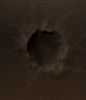
Santa_Maria_Crater-PIA13706-PCF-LXTT.jpgOrbital View of Santa Maria Crater (Absolute Natural Colors; credits for the additional process. and color.: Dr Paolo C. Fienga - Lunexit Team)114 visiteCaption NASA:"NASA's Mars Exploration Rover Opportunity approached Santa Maria Crater in December 2010. With a diameter of about 90 meters (295 feet), this Crater is slightly smaller than Endurance Crater, which Opportunity explored for about six months in 2004.
This image of Santa Maria Crater was taken by the High Resolution Imaging Science Experiment (HiRISE) camera on Mars Reconnaissance Orbiter".MareKromium
|
|
| 2237 immagini su 187 pagina(e) |
 |
|
|
|
|
56 | |
|
|
|
|





