| Piú viste - Mars Reconnaissance Orbiter (MRO) |
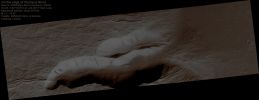
PSP_003476_1940_RED_abrowse-PCF-LXTT.jpgCollapse Feature at the Base of Olympus Mons (Absolute Natural Colors; credits for the additional process. and color.: Dr Paolo C. Fienga - Lunexit Team) 123 visitenessun commentoMareKromium
|
|

PSP_001784_001454___2030_anaglyph-MF-LXTT2.jpgMartian Crossway (Hi-Def-3D; credits for the additional process.: Dr Marco Faccin - Lunexit Team)122 visitenessun commentoMareKromium
|
|

ESP_019589_2340_RED_abrowse-GB-PCF-LXTT-0.jpgNorhern Plains (Absolute Natural Colors; credits for the additional process. and color.: Dr Paolo C. Fienga - Lunexit Team:)122 visitenessun commentoMareKromium
|
|
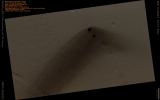
PSP_003317_1975_and_ESP_003317_1975-EB-LXTT-00.jpgThe "OO Pits" - Rimless Collapse Pits in Tharsis (CTX Frame - Absolute Natural Colors; credits for the additional process.: Dr Paolo C. Fienga - Lunexit Team)122 visitenessun commentoMareKromium
|
|
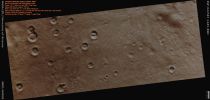
ESP_022587_1445_RED_abrowse-PCF-LXTT.jpgCrater Field (Enhanced Natural Colors; credits for the additional process. and color.: Dr Paolo C. Fienga - Lunexit Team)122 visitenessun commentoMareKromium
|
|
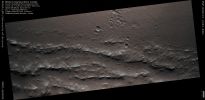
PSP_008197_2045_RED_abrowse.jpgFeatures of Olympus Mons' Aureole (Absolute Natural Colors; credits for the additional process. and color: Dr Paolo C. Fienga - Lunexit Team)122 visitenessun commentoMareKromium
|
|

Psp_009535_2240_red.jpgMerging Lobate Debris Aprons of Deuteronilus Mensae (Natural Colors; credits for the additional process. and color.: Dr Paolo C. Fienga - Lunar Explorer Italia)121 visiteThis image lies within the Deuteronilus Mensae Region, located on the Northern Edge of Arabia Terra and borders the high-standing, heavily cratered Southern Hemisphere and the low, relatively uncratered, plains of the Northern Hemisphere of Mars.
Deuteronilus Mensae is characterized by hills and mesas surrounded by broad debris aprons and this HiRISE image shows examples where lobate-shaped debris aprons appear to overlap.
There is zone of ridges that formed in an area where lobate debris aprons merged from different directions. A current hypothesis is that these ridges are expressions of compressional deformation between two lobes acting like a viscous fluid. One possibility, given the high latitude of the occurrence, is that the lobes of debris are ice-rich and flow somewhat like glaciers.
Recent results from the SHAllow RADar (SHARAD) instrument, also onboard the Mars Reconnaissance Orbiter, indicate that lobate debris aprons in Deuteronilus Mensae are composed of material dominated by ice [Plaut et al., 2008].
This supports the interpretation that these might be potential debris-covered glaciers or rock glaciers.
Some of the detailed textures on the surface of the debris aprons are commonly believed to be the result of ice loss due to sublimation (ice changing into water vapor). On Earth, debris-covered glaciers/rock glaciers typically develop wrinkles and fractures due to stresses in the ice as it flows. Where flows merge, they can buckle and push up ridges producing features similar to those visible here.MareKromium
|
|
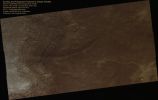
PSP_002070_2250_RED_browse-00~0.jpgPolygons in Utopia Planitia (Natural Colors; credits for the additional process. and color.: Dr Paolo C. Fienga - Lunexit Team)121 visitenessun commentoMareKromium
|
|

ESP_023359_1710_RED_abrowse-PCF-LXTT-00.jpgFeatures of Noctis Labyrinthus (CTX Frame - Absolute Natural Colors; credits for the additional process. and color: Dr Paolo C. Fienga - Lunexit Team)121 visiteMars Local Time: 14:01 (early afternoon)
Coord. (centered): 9,0° South Lat. and 264,1° East Long.
Spacecraft altitude: 280,8 Km (such as about 175,5 miles)
Original image scale range: 28,1 cm/pixel (with 1 x 1 binning) so objects ~ 84 cm across are resolved
Map projected scale: 25 cm/pixel
Map projection: EQUIRECTANGULAR
Emission Angle: 23,8°
Sun-Mars-Spacecraft (or "Phase") Angle: 53,8°
Solar Incidence Angle: 30° (meaning that the Sun is about 60° above the Local Horizon)
Solar Longitude: 331,8° (Northern Winter)
Credits: NASA/JPL/University of Arizona
Additional process. and coloring: Dr Paolo C. Fienga - Lunar Explorer ItaliaMareKromium
|
|
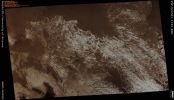
ESP_022567_1735_RED_abrowse-PCF-LXTT.jpgFeatures of Western Candor Chasma (Natural Colors; credits for the additional process. and color.: Dr Paolo C. Fienga - Lunexit Team)120 visitenessun commentoMareKromium
|
|
ESP_025914_2540_RED-PCF-LXTT-01.jpgClouds over Vastitas Borealis (EDM - Absolute Natural Colors; credits for the additional process. and color.: Dr Paolo C. Fienga - Lunexit Team)120 visiteMars Local Time: 14:20 (early afternoon)
Coord. (centered): 73,9° North Lat. and 334,7° East Long.
Spacecraft altitude: 318,4 Km (such as about 199,0 miles)
Original image scale range: 31,9 cm/pixel (with 1 x 1 binning) so objects ~ 96 cm across are resolved
Map projected scale: 25 cm/pixel
Map projection: POLAR STEREOGRAPHIC
Emission Angle: 4,6°
Sun - Mars - MRO (or "Phase") Angle: 58,0°
Solar Incidence Angle: 54° (meaning that the Sun is about 36° above the Local Horizon)
Solar Longitude: 66,6° (Northern Spring)
Credits: NASA/JPL/University of Arizona
Additional process. and coloring: Lunar Explorer ItaliaMareKromium
|
|

ESP_032097_1810-PCF-LXTT-IPF.jpgEquatorial Dunefield (Absolute Natural Colors; credits for the additional process. and color. Dr Paolo C. Fienga/Lunar Explorer Italia/Italian Planetary Foundation)120 visiteMars Local Time: 14:08 (Early Afternoon)
Coord. (centered): 1,068° North Lat. and 30,111° East Long.
Spacecraft altitude: 268,9 Km (such as about 166,986 miles)
Original image scale range: 53,8 cm/pixel (with 2 x 2 binning) so objects ~ 1 mt and 61 cm across are resolved
Map projected scale: 50 cm/pixel
Map projection: EQUIRECTANGULAR
Emission Angle: 0,0°
Phase Angle: 34,9°
Solar Incidence Angle: 35° (meaning that the Sun was about 55° above the Local Horizon at the time the picture was taken)
Solar Longitude: 328,5° (Northern Winter - Southern Summer)
Credits: NASA/JPL/University of Arizona
Additional process. and coloring: Lunar Explorer Italia
This picture (which is a NASA - Original Mars Reconnaissance Orbiter NON-Map Projected CTX b/w frame identified by the serial n. ESP_032097_1810) has been additionally processed and then colorized in Absolute Natural Colors (such as the colors that a human eye would actually perceive if someone were onboard the NASA - Mars Reconnaissance Orbiter and then looked down, towards the Surface of Mars), by using an original technique created - and, in time, dramatically improved - by the Lunar Explorer Italia Team.MareKromium
|
|
| 2237 immagini su 187 pagina(e) |
 |
|
|
|
|
53 | |
|
|
|
|





