| Piú viste - Mars Reconnaissance Orbiter (MRO) |
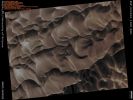
ESP_022616_1300_RED_abrowse.jpgDunefield on the Floor of Matara Crater (Absolute Natural Colors; credits for the additional process. and color.: Dr Paolo C. Fienga - Lunexit Team)125 visitenessun commentoMareKromium
|
|

ESP_022593_1595_RED_abrowse-PCF-LXTT.jpgBright Southern Dunes (Absolute Natural Colors; credits for the additional process. and color.: Dr Paolo C. Fienga - Lunexit Team)125 visitenessun commentoMareKromium
|
|

Chasma_Boreale-Psp_001412_2650_red-00~0.jpgChasma Boreale: the Martian "Pentagon" and other unusual surface features (1)124 visiteUn modestissimo esempio (si fa per dire...) di Anomalìa di Superficie sul Pianeta Rosso: siamo nella Regione conosciuta come Chasma Boreale. Un frame bello, senza dubbio, ma privo di interesse.
Privo di interesse?!? Ne siamo/siete certi?!?
Ma no, certo che no! Basta un minimo di "occhio" e di attenzione, infatti, per scoprire alcuni rilievi che non hanno davvero nulla di usuale e che, quindi, sono interessanti per definizione.
Eccoli qui (dall'alto in basso):
1) un doppio cratere da doppio impatto (...sic...) - a forma di "8" - con/su "piedistallo";
2) un cratere a forma PENTAGONALE (quasi) REGOLARE e
3) un rilievo ad ANGOLO RETTO (che abbiamo definito "L-shaped") all'interno di un altro cratere.
Ora, a noi vanno bene gli Scrittori di Fantascienza (tipo Hoagland e Discepoli) i quali vedono manufatti ed artificialità ovunque, però ci sorprende che questi "Fenomeni" non riescano a vedere delle Anomalìe di simile portata! Insomma: costoro vedono le "pagliuzze", ma NON VEDONO LE TRAVI!!!
Certo, parlare di "piramidi" ed altre scemenze simili fa audience&business, siamo d'accordo. Ma allora - per favore - smettetela di dire che "cercate la Verità"!
La Verità è che di rilievi (a dir poco) anomali, su Marte (e non solo), ce ne sono migliaia e non si tratta, purtroppo per Voi, delle solite "facce" e delle immancabili "piramidi". Si tratta di rilievi i quali FANNO A PUGNI con la Geologia Convenzionale, le Meccaniche da impatto e tanti altri precetti della Scienza Consolidata. Quella Scienza che viene usata solo quando fa comodo e solo da coloro che possono disporre del supporto di mezzi di comunicazione di massa.
Volete parlare di Anomalìe Marziane? Guardate questo frame ed il successivo detail mgnf! Non c'è bisogno di Cydonia & dintorni (o delle pseudo-fotografie ESA) per porsi delle domande "intelligenti, affascinanti ed indiscrete"...MareKromium
|
|
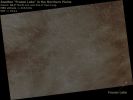
Psp_001497_2480_red-00~0.jpgThe Northern Lakes: Lake "Ginny" (CTX Frame - Natural Colors; credits: Dr Paolo C. Fienga - Lunexit Team) 124 visitenessun commentoMareKromium
|
|
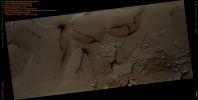
PSP_003597_1765_RED_abrowse-PCF-LXTT2.jpgPossible Smoke Emissions in Elysium Planitia (Natural Colors; credits for the additional process. and color.: Dr Paolo C. Fienga - Lunexit Team)124 visiteCaption NASA:"This observation shows fractured Mounds on the Southern Edge of Elysium Planitia. The Mounds are typically a few Km in diameter and about 200 feet tall. The fractures that crisscross their Surfaces are dilational (extensional) in nature, suggesting that the Mounds formed by localized uplift (i.e., they were pushed up from below).
The Mounds are probably composed of solidified Lava. They are contiguous with, and texturally similar to, the flood Lavas that blanket much of Elysium Planitia, and, where dilation cracks provide cross-sectional exposure, the uplifted material is rocky.
Patches of mechanically weak and disrupted material overlie the rocky mound material. This is particularly conspicuous in the Northeast corner of the HiRISE image. These patches may be remnants of a layer that was once more continuous but has been extensively eroded. Smooth Lava Plains fill the low-lying areas between the Mounds. They are riddled with sinuous pressure ridges.
The entire area is covered by a relatively thin layer of Dust and Sand".
Nota Lunexit: l'elemento più suggestivo dell'intero frame, completamente tralasciato dal commento NASA "Ufficiale", attiene quelle che a noi sembrano delle (evidenti e, riteniamo, anche piuttosto recenti) "emissioni di fumi", ben visibili in corrispondenza di quasi tutti i maggiori punti di fratturazione. E' proprio il dato, confermato dalla NASA stessa, per cui l'intera area ripresa è coperta da un sottile strato di sabbia e polvere (la quale dovrebbe conferire un colore denso e, soprattutto, uniforme a tutto il paesaggio) che ci fa ritenere recenti (se non recentissime) le summenzionate zone più scure ("macchiate", di fatto) e, dunque, molto probabilmente interessate da eventuali e persistenti emissioni di fumi, vapori (sulfurei?) e ceneri vulcaniche.MareKromium
|
|
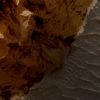
PSP_003830_1740_RED_abrowse-01.jpgLayered Bedrock in Candor Chasma (EDM n.1 - Absolute and Enhanced Natural Colors; credits for the additional process. and color.: Dr Paolo C. Fienga - Lunexit Team)124 visiteThis EDM shows a clear example of a "Gullied Fan", taken from the left (Northern) portion of the whole scene.MareKromium
|
|
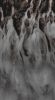
ESP_022848_1595_RED_abrowse-PCF-LXTT-01.jpgLike Waterfalls... (EDM - Absolute Natural Colors; credits for the additional process. and color.: Dr Paolo C. Fienga - Lunexit Team)124 visitenessun commentoMareKromium
|
|

ESP_022572_1725_RED_abrowse-PCF-LXTT.jpgFeatures of Zephyria Planum (Natural Colors; credits for the additional process. and color.: Dr Paolo C. Fienga - Lunar Explorer Italia)124 visitenessun commentoMareKromium
|
|

ESP_025297_1730-PCF-LXTT-03.jpgDunes and Ripples on the Floor of Jus Chasma (EDM n.2 - Absolute Natural Colors; credits for the additional process. and color.: Dr Paolo C. Fienga - Lunexit Team)124 visiteMars Local Time: 14:50 (early afternoon)
Coord. (centered): 7,0° South Lat. and 275,6° East Long.
Spacecraft altitude: 265,6 Km (such as about 166,0 miles)
Original image scale range: 26,6 cm/pixel (with 1 x 1 binning) so objects ~ 80 cm across are resolved
Map projected scale: 25 cm/pixel
Map projection: EQUIRECTANGULAR
Emission Angle: 0,1°
Sun - Mars - MRO (or "Phase") Angle: 48,9°
Solar Incidence Angle: 49° (meaning that the Sun is about 41° above the Local Horizon)
Solar Longitude: 45,6° (Northern Spring)
Credits: NASA/JPL/University of Arizona
Additional process. and coloring: Lunar Explorer ItaliaMareKromium
|
|
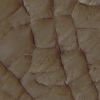
ESP_017348_1910_RED_abrowse-01.jpgPolygonal Ridges in Gordii Dorsum (EDM - Natural Colors; credits for the additional process. and color.: Dr Paolo C. Fienga - Lunexit Team)123 visitenessun commentoMareKromium
|
|

Volcanoes-Arsia_Mons-PIA13540-2.jpgLayers in the lower West Flank of Arsia Mons (Absolute Natural Colors; credits for the additional process. and color.: Dr Paolo C. Fienga - Lunexit Team)123 visiteCaption NASA:"This image - dated July, 18th, 2007) covers a Pit in the lower West Flank of Arsia Mons, one of the four Giant Volcanoes of the Tharsis Volcanic District.
Many Layers are exposed in the Pit, probably marking individual Lava Flows, and they can provide useful information about the nature of some of the many Martian Volcanic Eruptions.
This image was acquired in the middle of a large Regional Dust Storm, but the Atmosphere over this image is only moderately dusty because the altitude is 6,5 Km higher than the Planetary Mean, so the air is quite thin and cannot hold as much Dust. Although the Atmosphere was not too dusty, the Surface is buried by a Dust Layer which is probably several meters thick.
These high-altitude locations on Mars have thick Dust Deposits because the thin air cannot blow away the Dust, or at least not as fast as it accumulates. On Earth the oceans serve as "Dust Traps", but on Mars, it is a job for the highest Volcanoes".MareKromium
|
|

PSP_003655_1885_RED_abrowse-00.jpgBeautiful Windworks (Natural Colors; credits for the additional process. and color.: Dr Paolo C. Fienga)123 visiteThis image shows a portion of a Mound partly filling an Unnamed Impact Crater.
The Impact Crater is a little more than 60 Km (approx. 37 miles) across while the Central Mound is about half that figure (since it extends itself well beyond the area shown here).
Large Impact Craters typically have Central Peaks which surge upwards in the last stage of crater formation. However, Mounds like this represent a different process: Sedimentary Infill of the Crater AFTER its formation.
At this site, the Mound appears to be Layered. Step-forming Layers crop out throughout the center of the image. This indicates that the Mound material was deposited in a series of events, likely the same process repeating many times. Many processes could form Layers like this, including Aeolian Deposition, Volcanic Ash or Lake Sedimentation.
Unfortunately, fine details of the Layers are obscured by Dust which covers most of the Mound. Avalanches in this Dust Layer are responsible for the many small Dark Streaks that can be seen in the image.
Anyway, however the material in the Mound formed, it was once even more extensive, perhaps entirely filling the Crater. Wind Erosion has caused the formation of these elongated shapes (called "Yardangs").MareKromium
|
|
| 2237 immagini su 187 pagina(e) |
 |
|
|
|
|
52 | |
|
|
|
|





