| Piú viste - Mars Reconnaissance Orbiter (MRO) |

ESP_017693_1795_RED_abrowse.jpgThermal Anomaly in Aeolis and Zephyria Regions (Saturated Natural Colors; credits for the additional process. and color.: Dr Paolo C. Fienga - Lunexit Team)130 visiteThis image is taken of an interesting Linear Surface Feature in the Aeolis and Zephyria regions. Using the daytime IR imaging data from the THEMIS instrument, this feature has a higher daytime temperature than its surroundings while also being relatively dark.
When viewed at full HiRISE resolution, this area contains Sand Ripples with some consolidated, Bedrock-like material poking through. These Bedrock Outcrops are more pronounced along the southern portion of the image and are most apparent in the region of the Thermal Anomaly. The Outcrops trend generally East-West and appear sculpted by aeolian erosion.
In the area of the Anomaly, the sand between these Outcrops has a darker tone and gradually blends with the lighter material to either side. This darker sand may be the reason why the material has a "hot" signature compared to its surroundings, because dark materials absorb sunlight more efficiently.
Features similar to the one in this image help researchers to characterize such features and to understand whether such exposures may indicate possible Hydrothermal Fissures, or perhaps be just an exposure of a darker underlying material.
Written by: Shawn Hart and Ginny GulickMareKromium
|
|
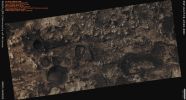
ESP_022578_2030_RED_abrowse-PCF-LXTT.jpgFeatures of Mawrth Vallis (Enhanced Absolute Natural Colors; credits for the additional process. and color.: Dr Paolo C. Fienga - Lunexit Team)130 visitenessun commentoMareKromium
|
|

ESP_024067_1310_RED_abrowse.jpgSouthern Dunefield (Absolute Natural Colors; credits for the additional process. and color.: Dr Paolo C. Fienga - Lunexit Team)130 visiteMars Local Time: 14:18 (Early Afternoon)
Coord. (centered): 48,7° South Lat. and 19,3° East Long.
Spacecraft altitude: 270,9 Km (such as about 169,3 miles)
Original image scale range: 54,2 cm/pixel (with 2 x 2 binning) so objects ~ 1 mt and 63 cm across are resolved
Map projected scale: 50 cm/pixel
Map projection: EQUIRECTANGULAR
Emission Angle: 22,9°
Sun-Mars-Spacecraft (or "Phase") Angle: 72,9°
Solar Incidence Angle: 57° (meaning that the Sun is about 33° above the Local Horizon)
Solar Longitude: 0,6° (Northern Spring)
Credits: NASA/JPL/University of Arizona
Additional process. and coloring: Dr Paolo C. Fienga - Lunar Explorer ItaliaMareKromium
|
|
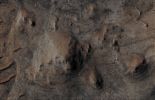
ESP_020732_2000_RED_abrowse-PCF-LXTT-02.jpgLight-Toned Layered Rocks in Arabia and East Xanthe Regions (EDM n.2 - Absolute Natural Colors; credits for the additional process. and color.: Dr Paolo C. Fienga - Lunexit Team)130 visiteMars Local Time: 15:31 (Middle Afternoon)
Coord. (centered): 19,9° North Lat. and 342,5° East Long.
Spacecraft altitude: 284,8 Km (such as about 178,0 miles)
Original image scale range: 57,0 cm/pixel (with 2 x 2 binning) so objects ~ 1 mt and 71,0 cm across are resolved
Map projected scale: 50 cm/pixel
Map projection: EQUIRECTANGULAR
Emission Angle: 5,9°
Sun-Mars-Spacecraft (or "Phase") Angle: 66,2°
Solar Incidence Angle: 61° (meaning that the Sun is about 29° above the Local Horizon)
Solar Longitude: 207,0° (Northern Fall)
Credits: NASA/JPL/University of Arizona
Additional process. and coloring: Dr Paolo C. Fienga - Lunar Explorer ItaliaMareKromium
|
|

ESP_020732_2000_RED_abrowse-PCF-LXTT-01.jpgLight-Toned Layered Rocks in Arabia and East Xanthe Regions (EDM n.1 - Absolute Natural Colors; credits for the additional process. and color.: Dr Paolo C. Fienga - Lunexit Team)130 visiteMars Local Time: 15:31 (Middle Afternoon)
Coord. (centered): 19,9° North Lat. and 342,5° East Long.
Spacecraft altitude: 284,8 Km (such as about 178,0 miles)
Original image scale range: 57,0 cm/pixel (with 2 x 2 binning) so objects ~ 1 mt and 71,0 cm across are resolved
Map projected scale: 50 cm/pixel
Map projection: EQUIRECTANGULAR
Emission Angle: 5,9°
Sun-Mars-Spacecraft (or "Phase") Angle: 66,2°
Solar Incidence Angle: 61° (meaning that the Sun is about 29° above the Local Horizon)
Solar Longitude: 207,0° (Northern Fall)
Credits: NASA/JPL/University of Arizona
Additional process. and coloring: Dr Paolo C. Fienga - Lunar Explorer ItaliaMareKromium
|
|

Craters-Gale_Crater-PIA16148-PCF-LXTT-IPF.jpgCuriosity Traverse Map through Sol 29 (Absolute Natural Colors; credits for the additional process. and color.: Dr Paolo C. Fienga/Lunar Explorer Italia/Italian Planetary Foundation)130 visiteCaption NASA:"This Map shows the route driven by NASA's Mars rover Curiosity through the 29th Martian Day, or Sol, of the Rover's Mission on Mars (such as September 4, 2012). The route starts where the Mars Science Laboratory Spacecraft placed the Rover, a Site subsequently named "Bradbury Landing". The line extending toward the right (---> Eastward) from Bradbury Landing is the Rover's Path. Numbering of the dots along the line indicate the Sol number of each drive. North is up. The scale bar is 200 meters (656 feet).
By Sol 29, Curiosity had driven at total of 358 feet (such as 109 meters). At the location reached by the Sol 29 drive, the Rover began several Soles of Arm Characterization Activities. The "Glenelg Area", which is farther East, is the mission's first Major Science Destination, selected as likely to offer a good target for Curiosity's first analysis of powder collected by drilling into a Rock".MareKromium
|
|
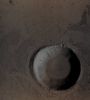
ESP_028321_1785_RED_NOMAP_browse-PCF-LXTT-IPF.jpgUnnamed Crater with "Lava-carved Gullies" (Absolute Natural Colors; credits for the additional process. and color.: Dr Paolo C. Fienga/Lunar Explorer Italia/Italian Planetary Foundation)130 visiteMars Local Time: 15:33 (Middle Afternoon)
Coord. (centered): 1,258° South Lat. and 161,856° East Long.
Spacecraft altitude: 270,3 Km (such as about 168,9 miles)
Original image scale range: 27,0 cm/pixel (with 1 x 1 binning) so objects ~ 81 cm across are resolved
Map projected scale: 25 cm/pixel
Map projection: EQUIRECTANGULAR
Emission Angle: 3,6°
Sun-Mars-MRO (or "Phase") Angle: 51,0°
Solar Incidence Angle: 54° (meaning that the Sun was about 36° above the Local Horizon of the imaged Region, at the time that the picture was taken)
Solar Longitude: 153,3° (Northern Summer- Southern Winter)
Credits: NASA/JPL/University of Arizona
Additional process. and coloring: Lunar Explorer ItaliaMareKromium
|
|
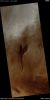
ESP_014312_1320_RED_abrowse.jpgGully in Massif in the Nereidum Montes (Natural Colors; credits: Lunexit)129 visiteSource: NASA/MRO
Coord.: 47,4° South Lat. and 305,3° East Long.
Spacecraft altitude: about 253 Km
M.L.T.: 14:28 (early afternoon)
S.I.A.: 44° (with the Sun about 46° above the Local Horizon)
Credits: NASA/JPL/Univ. of Arizona
Additional process. and color.: LunexitMareKromium
|
|

ESP_023359_1710_RED_abrowse-PCF-LXTT-01.jpgFeatures of Noctis Labyrinthus (EDM - Enhanced Absolute Natural Colors; credits for the additional process. and color: Dr Paolo C. Fienga - Lunexit Team)129 visiteMars Local Time: 14:01 (early afternoon)
Coord. (centered): 9,0° South Lat. and 264,1° East Long.
Spacecraft altitude: 280,8 Km (such as about 175,5 miles)
Original image scale range: 28,1 cm/pixel (with 1 x 1 binning) so objects ~ 84 cm across are resolved
Map projected scale: 25 cm/pixel
Map projection: EQUIRECTANGULAR
Emission Angle: 23,8°
Sun-Mars-Spacecraft (or "Phase") Angle: 53,8°
Solar Incidence Angle: 30° (meaning that the Sun is about 60° above the Local Horizon)
Solar Longitude: 331,8° (Northern Winter)
Credits: NASA/JPL/University of Arizona
Additional process. and coloring: Dr Paolo C. Fienga - Lunar Explorer ItaliaMareKromium
|
|

ESP_024131_1080_RED_abrowse.jpgSouthern Dunefield (Absolute Natural Colors; credits for the additional process. and color.: Dr Paolo C. Fienga - Lunexit Team)129 visiteMars Local Time: 14:51 (Early Afternoon)
Coord. (centered): 71,9° South Lat. and 81,8° East Long.
Spacecraft altitude: 249,0 Km (such as about 155,6 miles)
Original image scale range: 49,8 cm/pixel (with 2 x 2 binning) so objects ~ 1 mt and 49 cm across are resolved
Map projected scale: 50 cm/pixel
Map projection: POLAR STEREOGRAPHIC
Emission Angle: 0,2°
Sun-Mars-Spacecraft (or "Phase") Angle: 78,3°
Solar Incidence Angle: 78° (meaning that the Sun is about 12° above the Local Horizon)
Solar Longitude: 3,1° (Northern Spring)
Credits: NASA/JPL/University of Arizona
Additional process. and coloring: Dr Paolo C. Fienga - Lunar Explorer ItaliaMareKromium
|
|

ESP_025665_1825-PCF-LXTT-01.jpgUnnamed Crater with Layers of Water-deposited Sediments (EDM - Absolute Natural Colors; credits for the additional process. and color.: Dr Paolo C. Fienga - Lunexit Team)129 visiteMars Local Time: 14:56 (Early Afternoon)
Coord. (centered): 2,317° North Lat. and 307,960° East Long.
Spacecraft altitude: 269,9 Km (such as about 168,7 miles)
Original image scale range: 54,0 cm/pixel (with 2 x 2 binning) so objects ~ 1 mt and 62 cm across are resolved (with 4 x 4 binning)
Map projected scale: 50 cm/pixel
Map projection: EQUIRECTANGULAR
Emission Angle: 2,3°
Sun - Mars - MRO (or "Phase") Angle: 48,9°
Solar Incidence Angle: 47° (meaning that the Sun is about 43° above the Local Horizon)
Solar Longitude: 58,1° (Northern Spring/Southern Fall)
Credits: NASA/JPL/University of Arizona MareKromium
|
|
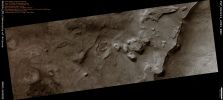
PSP_003231_2095_RED_abrowse-00.jpgRocky Mesas in Nilosyrtis Mensae (CTX Frame - Absolute Natural Colors; credits for the additional process. and color.: Dr Paolo C. Fienga - Lunexit Team)128 visiteMareKromium
|
|
| 2237 immagini su 187 pagina(e) |
 |
|
|
|
|
50 | |
|
|
|
|





