| Piú viste - Mars Reconnaissance Orbiter (MRO) |
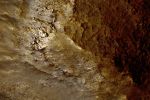
PSP_009708_2205_RED_abrowse-01.jpgHills in Acidalia Planitia (EDM - Enhanced Natural Colors; credits for the additional process. and color.: Dr Paolo C. Fienga - Lunexit Team)57 visiteThis edm frame (375x250 meters, or 410x273 yards) of the HiRISE depicts in detail the rocky layers existing in one of these hills.
CRISM, another of the instruments onboard Mars Reconnaissance Orbiter, has acquired data over this same region showing that the rocky outcrops contain clays. Clays of similar composition form in terrestrial environments favorable for life, where volcanic rocks are in close contact with water.MareKromium
|
|
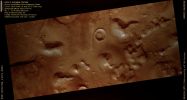
PSP_009708_2205_RED_abrowse-00.jpgHills in Acidalia Planitia (CTX Frame - Enhanced and Darkened Natural Colors; credits for the additional process. and color.: Dr Paolo C. Fienga - Lunexit Team)57 visiteThe hilly landscape visible in this observation may appear at first rather bleak, due to the pervasive soils of uniform brightness blanketing most of the area.
However, upon closer examination, the image reveals rocky outcrops at the top of some of the hills.
These rocks contain clues pointing to a watery past.MareKromium
|
|
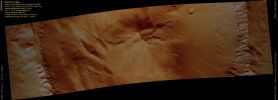
Psp_009677_2135_red.jpgBacolor Crater (natural colors; credits: Lunexit)57 visiteBacolor Crater is a pristine crater in the Northern Hemisphere. The linear striations visible at both sides (Sx and Dx) of the image are from the blast of the formation impact. This crater has a Central Peak, other mounds and terraces on its floor.
All of these features appeared during the final stages of crater formation.
The Northern Wall of the crater has landslides which have sculpted the Crater Rim. The Southern Wall has Gullies, thought to form by fluvial processes.
The Gullies here are more incised (cut into the slope) than the landslides are.MareKromium
|
|

PIA10148-LizardSkinTerrain~0.jpgLizard-Skin Surface Texture (natural colors; elab. Lunexit)57 visite The South Polar Region of Mars is covered seasonally with translucent CO2 ice.
In the Spring, gas subliming (evaporating) from the underside of the seasonal layer of ice bursts through weak spots, carrying dust from below with it, to form numerous Dust Fans aligned in the direction of the prevailing wind.
The dust gets trapped in the shallow grooves on the surface, helping to define the small-scale structure of the surface. The surface texture is reminiscent of lizard skin.MareKromium
|
|
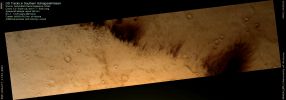
PSP_006477_1745_RED_abrowse-00~0.jpgDD Tracks in Southern Schiaparelli Basin (context frame - False Colors; credits: Lunexit)57 visiteDust-Devils (DD) are vortices of wind that form when air rising from a warm surface encounters shear in the above atmosphere.
Martian Dust-Devils can attain gargantuan proportions, reaching the size of terrestrial tornadoes with plumes that tower up to 9 Km above the surface.
Dust-Devils play an important role in sustaining the aerosols that make up Mars’ Red Sky and in cleaning the Martian Surface after a Dust Storm.
Nota Lunexit: sono quindi i DD, secondo la NASA, la "causa maggiore" del Cielo Rosso di Marte? Interessante riflessioni ed interessante quesito: dunque il Cielo di Marte NON E', naturalmente, "rosso" o "arancio", ma è "tinto di rosso/arancio"!
Pensateci sopra...
MareKromium
|
|
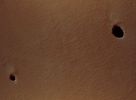
PSP_009488_1745_RED_abrowse-01.jpgMartian Caves (edm n. 1 - possible natural colors; credits: Lunexit)57 visiteThe pair of Pit Craters visible here are the smallest “anomalous” pits known to exist at this time. These have either vertical or sub-vertical interior walls (sub-vertical means that they are not visible from a nearly overhead viewing perspective), and each pit is deep enough that sunlight does not hit the floor when the Sun is at or near the Zenith.
Unfortunately, the only thermal-infrared camera currently orbiting Mars cannot resolve features this small, so the temperature characteristics of these pits must remain unknown for now, underscoring the need for a high-resolution thermal instrument on future missions.
Intriguingly, when pit craters on Earth have similar characteristics to the pair shown here, they often have cave entrances in their bases connecting to large underground networks. Current investigations are determining whether the anomalous Martian Pits may be shown to contain such entrances.MareKromium
|
|
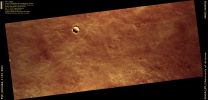
PSP_009488_1745_RED_abrowse-00.jpgMartian Caves (ctx frame - possible natural colors; credits: Lunexit)57 visitePit Craters exist in Volcanic Regions across Mars, and form when surface materials collapse into large underground cavities. Such pits are generally bowl-shaped, filled with sediment, and are relatively shallow when compared with their diameters.
Recently, a small number of anomalous Pit Craters were identified with strikingly different visible and thermal characteristics such as: sheer cliff walls; deep interiors that can extend out-of-sight beneath the surface and temperature fluctuations that behave unlike any known feature on Mars.MareKromium
|
|

PSP_009739_2580_RED_abrowse-2.jpgResidual Ice (edm - natural colors; credits: Lunexit)57 visiteIl dettaglio, palese tanto nella versione in b/n del frame, quanto in quella a colori naturali, è stato individuato dal bravissimo Dr Barca e, inizialmente, ci ha fatto pensare ad una possibile estrusione d'acqua la quale, poco dopo essere stata "espulsa", si è rapidamente congelata.
Ma sbagliavamo, poichè non si tratta, a nostro parere, del residuo di un fenomeno estrusivo.
Non lo è, perchè le estrusioni d'acqua (e fango) si manifestano - di solito, e "visivamente" - con accumuli caotici di blocchi di ghiaccio sporco di varie dimensioni intorno ad un'area di ghiaccio più limpido la quale è compatta e posizionata centralmente rispetto agli altri blocchi e blocchetti (provate a visualizzare, per capire bene, la conseguenza di uno "spruzzo" - tipo geyser - di acqua e fango, con l'acqua che poi gela rapidamente).
In Islanda, se volete, si può vedere qualcosa di simile.
Nel nostro caso di specie, comunque, si può dire che la posizione del dettaglio in oggetto è indicativa di un'area su cui si trova del semplice ghiaccio "sporco" (ghiaccio d'acqua, a giudicare dall'albedo e dal colore) residuale, sfuggito al disgelo grazie alla protezione offertagli dalla duna che lo sovrasta.
La configurazione delle dune che caratterizzano la zona, inoltre, ci dice che l'area gelata è posizionata su una superficie decisamente più bassa rispetto al Datum medio della regione, e quindi con niente (o poco) Sole che scioglie e niente (o poco) vento che "gratta & smuove".
Un accumulo di ghiaccio, quindi, destinato a "sopravvivere" MOLTO a lungo!...MareKromium
|
|
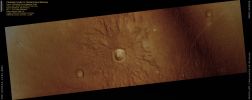
Psp_009654_2245_red.jpgPedestal Crater in Deuteronilus Mensae (natural colors; credits: Lunexit)57 visiteThis crater with spectacular ejecta is located in the Northern Mid-Latitudes in the Deuteronilus Mensae, located near the dichotomy boundary, where the Southern Highlands transition into the Northern Lowlands.
The crater has raised, fluidized ejecta. Scientists think that fluidized ejecta forms when an impact occurs into ice-rich material. The interior of the crater shows some material, particularly on the West wall, that has detached and is flowing into the crater center. This suggests the presence of ground ice.MareKromium
|
|
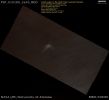
PSP_010180_2645_RED_abrowse-00.jpgSmall and young Impact Crater in the NPLD (ctx frame - natural colors; credits: Lunexit)57 visiteThis image shows a small impact crater on the bright North Polar Perennial Ice Cap. Mars has Ice Caps at both its North and South Poles.
The Perennial, or Permanent, portion of the North Polar Cap consists almost entirely of water ice.MareKromium
|
|
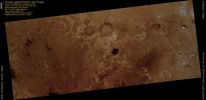
PSP_009929_2020_RED_abrowse-00.jpgAncient Layered Rocks in Nili Fossae (ctx frame - natural colors; credits: Lunexit)57 visiteThis image covers a flat plain in the Nili Fossae Region of Mars. The portion shown here is roughly 400 meters, or 1/4 of a mile, across.MareKromium
|
|

PSP_007392_2650_RED_abrowse~0.jpgNorthern Hemisphere Ice Cap (False Colors; credits: Lunexit)57 visiteThis image shows layering within the Northern Hemisphere Ice Cap, which probably reflects seasonal variability in accumulation of the ice versus sublimation (going from solid to a gas).
The presence of sand dunes indicates transport of sedimentary materials by wind. Erosion of layering is apparent as a series of undulating ridges at the transition between the Layered Terrain and the Dune-Field.
Near the top of the image several vents occur where materials from the shallow subsurface are erupted onto the surface. MareKromium
|
|
| 2237 immagini su 187 pagina(e) |
 |
|
|
|
|
154 | |
|
|
|
|





