| Piú viste - Mars Reconnaissance Orbiter (MRO) |

MartianTerminator-TRA_000841_1300_RED.jpgHalf in the light and half in the darkness... (possible True Colors; credis: Lunar Explorer Italia)59 visiteCaption NASA originale:"Image TRA_000841_1300 was taken by the High Resolution Imaging Science Experiment (HiRISE) camera onboard the Mars Reconnaissance Orbiter spacecraft on October 1, 2006. The complete image is centered at 49,7° South Lat. and 154,2° East Long. The range to the target site was 248,4 Km (such as about 155,3 miles).
At this distance the image scale is 99,4 cm/pixel (with 4 x 4 binning) so objects ~298 cm across are resolved. The image shown here has been map-projected to 100 cm/pixel and North is up. The image was taken at a MLT of 15:39 and the scene is illuminated from the West with a solar incidence angle of 87°, thus the Sun was about 3° above the horizon.
At a Solar Longitude of 114,2°, the season on Mars is Northern Summer". MareKromium
|
|

Psp_010589_1510_red.jpgLayered Deposits North of Hellas Basin (Natural Colors; credits: Lunar Explorer Italia)59 visiteMars Local Time: 15:47 (middle afternoon)
Coord. (centered): 28,7° South Lat. and 65,5° East Long.
Spacecraft altitude: 258,4 Km (such as about 161,5 miles)
Original image scale range: 51,7 cm/pixel (with 1 x 1 binning) so objects ~1,55 mt across are resolved
Map projected scale: 50 cm/pixel
Map projection: EQUIRECTANGULAR
Emission Angle: 0,3°
Phase Angle: 68,8°
Solar Incidence Angle: 69° (meaning that the Sun is about 21° above the Local Horizon)
Solar Longitude: 149,3° (Northern Summer)
Credits: NASA/JPL/University of Arizona
Additional process. and coloring: Lunar Explorer ItaliaMareKromium
|
|
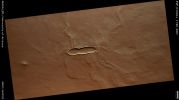
Psp_010661_1780_red.jpgShield Volcano with Leveed Channels in Noctis Fossae (possible Natural Colors; credits: Lunar Explorer Italia)59 visiteMars Local Time: 15:42 (middle afternoon)
Coord. (centered): 1,9° South Lat. and 256,3° East Long.
Spacecraft altitude: 258,3 Km (such as about 161,4 miles)
Original image scale range: 51,7 cm/pixel (with 1 x 1 binning) so objects ~1,55 mt across are resolved
Map projected scale: 50 cm/pixel
Map projection: EQUIRECTANGULAR
Emission Angle: 0,9°
Phase Angle: 56,2°
Solar Incidence Angle: 57° (meaning that the Sun is about 33° above the Local Horizon)
Solar Longitude: 152,2° (Northern Summer)
Credits: NASA/JPL/University of Arizona
Additional process. and coloring: Lunar Explorer ItaliaMareKromium
|
|

PSP_001501_2280_RED_abrowse-00.jpgThe Viking Lander 2 Landing Site - Gerald Soffen Memorial Station (ctx frame - Natural Colors; credits: Lunar Explorer Italia)59 visiteViking Lander 2 (VL2) landed on Mars on 3 September 1976, in Utopia Planitia. The Lander, which has a diameter of about 3 meters, has been precisely located in the HiRISE image, and likely locations have been found for the Heat-Shield and Backshell.
The Lander location has been confirmed by overlaying the lander-derived topographic contours on the HiRISE image, which provides an excellent match.
VL2 was one element of an ambitious mission to study Mars, with a 4-spacecraft flotilla consisting of 2 Orbiters and 2 Landers.
Large Boulders, Dunes and other features visible in Lander images can be located in the HiRISE image. The polygonal pattern of the Surface is typical at these latitudes and may be due to the presence of deep subsurface ice.
As chance would have it, this image is blurred in some places due to the abrupt motion associated with the restart of the High Gain Antenna tracking during the very short image exposure. This is the first time after acquiring hundreds of pictures that an image has been unintentionally smeared, but the overall performance has been excellent.
A prime motivation for early viewing of these Viking sites is to calibrate what we see from space with the data previously acquired by the Landers. In particular, determining what sizes of rocks can be seen from MRO aids the interpretation of data now being taken to characterize sites for future landers.MareKromium
|
|
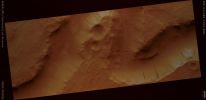
ESP_011289_1950_RED_abrowse.jpgMeander and Tributaries in Scamander Vallis (Enhanced Natural Colors; credits: Lunar Explorer Italia)59 visiteMars Local Time: 15:48 (middle afternoon)
Coord. (centered): 14,6° North Lat. and 29,1° East Long.
Spacecraft altitude: 278,2 Km (such as about 173,9 miles)
Original image scale range: 55,7 cm/pixel (with 1 x 1 binning) so objects ~1,67 mt across are resolved
Map projected scale: 50 cm/pixel
Map projection: EQUIRECTANGULAR
Emission Angle: 5,7°
Phase Angle: 52,4°
Solar Incidence Angle: 58° (meaning that the Sun is about 32° above the Local Horizon)
Solar Longitude: 178,5° (Northern Summer)
Credits: NASA/JPL/University of Arizona
Additional process. and coloring: Lunar Explorer ItaliaMareKromium
|
|
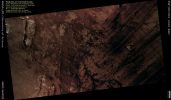
PSP_007095_2020_RED_abrowse~0.jpgInverted Dendritic Stream Channels in Antoniadi Crater (MULTISPECTRUM; credits: Lunexit)59 visiteThis observation is centered within Antoniadi Crater. This crater, even prior to the MRO mission, was identified as a likely ancient lake (now dry) that was supplied by both surface water and ground water.
The image provides further tantalizing evidence of a water-rich past. Most of the flat parts of the image have a polygonal texture, which commonly forms when mud dries. In the center of the image are branched (“dendritic”) features that connect Southward to a larger trunk-shaped landform; the branches resemble stream channels on Earth. Unlike active channels with water, these features are “inverted”, or elevated above the surrounding terrain.
Again, in analogy with such features seen on our Planet, these probably formed when materials deposited by the streams, such as coarse gravel, or chemical cementation after removal of the water, caused the channel bottoms to become resistant. Over time, natural erosion from wind and other processes left the inverted channels elevated above the surrounding terrain.
The branched features are probably remnants of small tributary streams that fed the larger trunk-shaped stream. It appears that the inverted streams lie on top of, and are therefore younger, than the polygons. This area may have first had a lake that later dried to form the polygons, followed by episodes of stream flow and erosion.MareKromium
|
|

PSP_005748_1075_RED_abrowse~0.jpgBuried Crater in the SPLD (natural colors; credits: Lunexit)59 visiteThis image of the SPLD shows some of the layers cut off against other layers below and right of center. Geologists call this an “angular unconformity” because the layers do not conform to each other across this boundary.
In this case, the angular unconformity was probably caused by erosion of the SPLD followed by deposition of new SPLD on top of the eroded surface, but faulting could also have caused the observed unconformity.
Near the unconformity is an impact crater, one of dozens found on the SPLD. The presence of these craters implies that the surface of the SPLD has been relatively stable (i.e., little erosion or deposition) in the past few million years.
This is in stark contrast to the NPLD, on which craters are very rare, implying very recent erosion/deposition.MareKromium
|
|

ESP_011287_2165_RED_abrowse.jpgFresh Impact Crater in Utopia Planitia (Natural Colors; credits: Lunar Explorer Italia)59 visiteThis fresh Unnamed Crater is located in the Northern Mid-Latitudes. It is designated as fresh because of its very sharp rim.
The Crater has experienced some modification since it formed, including a few tiny craters on the South Wall.
The rough texture of the floor is suggestive of ground ice, which is expected to exist in the Mid-Latitudes. Ground ice aids gravity in moving material from the Crater Walls towards the center. Material is visible slumping off the North-Western Crater Wall in this fashion. The wavy texture of the center of the Crater floor suggests that material has been transported from the walls and merged in the center.
Mars Local Time: 15:42 (middle afternoon)
Coord. (centered): 36,0° North Lat. and 80,5° East Long.
Spacecraft altitude: 292,7 Km (such as about 182,9 miles)
Original image scale range: 58,6 cm/pixel (with 1 x 1 binning) so objects ~1,76 mt across are resolved
Map projected scale: 50 cm/pixel
Map projection: EQUIRECTANGULAR
Emission Angle: 2,9°
Phase Angle: 59,7°
Solar Incidence Angle: 62° (meaning that the Sun is about 28° above the Local Horizon)
Solar Longitude: 178,5° (Northern Summer)
Credits: NASA/JPL/University of Arizona
Additional process. and coloring: Lunar Explorer ItaliaMareKromium
|
|

PIA11809.jpgColumnar Jointing (Natural Colors; credits for the additional process. and color.: Dr Paolo C. Fienga - Lunar Explorer Italia)59 visiteThis image from the High Resolution Imaging Science Experiment (HiRISE) on NASA's Mars Reconnaissance Orbiter shows an exposure of layered rock that exhibits a type of fracturing - called Columnar Jointing - that results when cooling lava contracts.
The observation is cited in a report, "Discovery of Columnar Jointing on Mars", publisged in the February 2009 issue of the journal Geology. The Authors propose that flooding by water was likely what caused a quick cooling of lava to result in this jointing.
The image, taken Oct. 31, 2007, shows a portion of an Unnamed Crater about 16 Km (such as approx. 10 miles) in diameter and centered at 21,52° North Latitude and 184,35° East Long.
Shown here is a section about 1 Km (0,6 mile) wide from the image catalogued by the HiRISE team as PSP_005917_2020. The column-forming fractures resemble textures common on Earth in locations such as the Colombia River Basalt Group and in the Colorado Plateau.MareKromium
|
|

PSP_003538_1885_RED_browse.jpgAres Vallis' Cataract (Natural Colors; credits: Lunar Explorer Italia)59 visiteThis image shows a dry cataract within Ares Vallis. A cataract is a large waterfall where there is a high, steep drop. The presence of this large cataract in Ares Vallis confirms that this channel was carved by water, probably in one or many large catastrophic flooding events.
This feature has many of the same characteristics as the cataracts on Earth associated with the flood that carved the Channelled Scablands in Washington State, including horseshoe-shaped headcuts and longitudinal grooves. These grooves in the lower portion of the image lead up to the cataract, with the water flowing from the south to the north in this image. It then flowed down the cataract into the smaller incised channel.
The horseshoe-shaped headcut here is only part of a larger cataract system, and probably formed during the last stage of flooding. The inner channels are now filled with dunes formed by wind blowing along the channel floor.MareKromium
|
|

ESP_012068_9000_COLOR5.JPGDeimos (Natural - but enhanced - Colors; credits: NASA/JPL/Univ. of Arizona)59 visiteThis second image of Deimos was acquired 5 h. and 35' after the first one; so the Sun was to the upper left in the first (ESP_01265_9000) image and to the right in this second one (ESP_01268_9000). Although the viewing geometry is similar in the two images, surface features appear very different due to the changes in illumination.
Nota Lunexit: il concetto sancito dagli Amici di Pasadena nell'ultima riga (...Although the viewing geometry is similar in the two images, surface features appear very different due to the changes in illumination...) è ASSOLUTAMENTE FONDAMENTALE per la corretta visione, comprensione ed analisi di quanto mostrato da immagini orbitali o, comunque, ottenute da notevoli distanze rispetto al luogo/rilievo osservato. MareKromium
|
|

PSP_010402_1485_RED_abrowse.jpgSample of Intermediate-Toned Area (Natural Colors; credits: Lunar Explorer Italia)59 visiteMars Local Time: 15:42 (middle afternoon)
Coord. (centered): 31,1° South Lat. and 130,7° East Long.
Spacecraft altitude: 255,9 Km (such as about 159,9 miles)
Original image scale range: 51,2 cm/pixel (with 1 x 1 binning) so objects ~1,54 mt across are resolved
Map projected scale: 50 cm/pixel
Map projection: EQUIRECTANGULAR
Emission Angle: 7,6°
Phase Angle: 76,9°
Solar Incidence Angle: 71° (meaning that the Sun is about 19° above the Local Horizon)
Solar Longitude: 142,0° (Northern Summer)
Credits: NASA/JPL/University of Arizona
Additional process. and coloring: Lunar Explorer ItaliaMareKromium
|
|
| 2237 immagini su 187 pagina(e) |
 |
|
|
|
|
128 | |
|
|
|
|





