| Piú viste - Mars Reconnaissance Orbiter (MRO) |
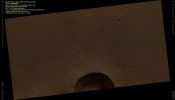
ESP_014262_1510_RED_abrowse.jpgEjecta Blanket - West Side of Zumba Crater (Natural Colors; credits: Lunexit)61 visitenessun commentoMareKromium
|
|
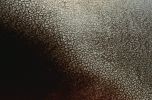
Polar_Polygons-PIA07354.jpgPolar Polygons (Natural Colors; credits: Dr Paolo C. Fienga - Lunexit Team)61 visitenessun commentoMareKromium
|
|
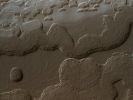
SPLD-PIA13269-PCF-LXTT3.jpgSouth Polar Layered Deposits and Residual Cap (Natural Colors; credits for the additional process. and color.: Dr Paolo C. Fienga - Lunexit Team)61 visiteThis image from NASA's Mars Reconnaissance Orbiter (MRO) shows a variety of surface textures within the South Polar Residual Cap of Mars.
It was taken during the Southern Spring, when the Surface was covered by seasonal CO2 Frost, so that Surface relief is easily seen. Illumination is from the bottom left, highlighting long Troughs at to the right and round pits and irregular Mesas to the left of center.
These unique landforms are common in the South Polar Residual Cap, which is known from previous Mars Global Surveyor images to be eroding rapidly in places. Right of center, SPLDs are exposed on a Sun-facing Scarp. These Deposits are older than the Residual Ice Cap, and the Layers are thought to record climate variations on Mars similar to ice ages on Earth.MareKromium
|
|
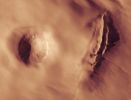
PSP_002922_1725_RED_abrowse-02.jpgPossible Volcanic "Mouth", on Arsia Mons' Flank (EDM - RAW Natural Colors - credits for the additional process.: Dr Marco Faccin)61 visitenessun commentoMareKromium
|
|

ESP_018522_2270-7-MF-PCF-LXTT~0.jpgBull's Eye Impact Crater (Absolute Natural Colors; credits for the additional process. and color.: Dr Paolo C. Fienga - Lunexit Team)61 visiteWhat caused the Central Pit within this Impact Crater: unusual Subsurface Layering or a lucky second impact? Impacts into layers of alternately strong and weak material – for example, ice rich versus non-ice-rich – produce terracing such as that seen between the Inner Pit and the Outer Rim. Scientists have used Terraced Craters to estimate the thickness of Lava Flows on the Moon and elsewhere. Uneven Sublimation and Periglacial Erosion of exposed ice-rich material in the interior of the Crater may explain why the small Central Pit is slightly offset from center relative to the Terrace and Rim of the larger Crater.
The Pit in the center of the main feature could also be from a later Impact Crater striking inside and slightly off-center from the original. It has a Raised Rim, which is characteristic of impact craters and is difficult to explain with a layered target. While no ejecta from this later impact can be seen, the ejecta could have been removed by extensive periglacial modification.
Additionally the Floor Fill around the Inner Crater resembles impact ejects elsewhere at this latitude, and some of the "Landslides" to the East could be flow-back of ejecta off the Walls of the larger crater.MareKromium
|
|

PSP_003618_1725_RED_abrowse-PCF-LXTT.jpgGanges Chasma (Absolute Natural Colors; credits for the additional process. and color.: Dr Paolo C. Fienga - Lunexit Team)61 visitenessun commentoMareKromium
|
|

Q-pia08014-06-AEB1-full-reduced1.jpgMartian Southern Highlands (6) - HR60 visitenessun commento
|
|

T-TRA_000828_1805_RED.jpgYardangs in Medusa Fosse60 visiteThis image covers a portion of an outcrop of the Medusae Fossae Formation, a series of light-toned terrains in the Martian mid-latitudes. The Medusae Fossae has been and remains one of the most enigmatic features on Mars. The unit is characterized by wind-sculpted landforms, most notably eroded ridges known as yardangs. The composition of the Medusae Fossae is not known, but candidates include indurated (hardened) volcanic ash or remnants of dust-ice mixtures that formed in a different Martian climate. This HiRISE image reveals new details of the Medusae Fossae.
Three prominent yardangs are seen, at upper right, lower center right, and partially at lower right. They are aligned with their long axes pointing NW-SE, with tapered ends on the NW, consistent with erosion from a southeasterly wind. One or more hard rocky layers within the yardangs are visible, with the layers commonly segregated into discreet boulders. Isolated rocks are seen on the slopes and at the base of the yardangs, indicating that some formed from breakup of the layers. The rocks may be similar in composition to the softer, non-rocky parts of the yardangs, but simply more indurated. Alternatively, they may be compositionally distinct, challenging current hypotheses for the origin of the Medusae Fossae.
Light-toned ridges at center left have a gross morphology similar to that of barchanoid dunes, formed from wind-blown sand. If these are dunes or ripples, their orientation is consistent with the presumed wind direction that carved the yardangs. However, zooming in to full resolution reveals flat tops, grooves, and smaller, darker ripple forms to the northwest of the ridges. Therefore if these are dunes, they seem indurated.
|
|
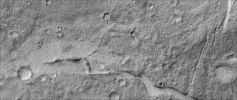
T-TRA_000834_1835_RED.jpgAram Chaos60 visiteAram Chaos is thought to be a degraded impact crater that was once filled with water and sedimentary units. The term "chaos" refers to the cracks and angled blocks formed perhaps by withdrawl of subsurface material. This sub-image covers only a small portion of Aram Chaos and illustrates the modification of the crater by fracturing, younger impact craters, and wind. A linear fracture cuts through the center of the image while a more sinuous depression filled with bright ripples or dunes is located towards the bottom of the image. Both depressions could have resulted from collapse associated with modification of the impact crater that created Aram Chaos or later disruption when water and sediment covered some of the crater floor. Impact craters of many shapes and sizes can be seen across the image, indicating a relatively older surface that has seen little modification since its formation. The bright ripples or dunes appear to cluster in low-lying topography, such as the sinuous depression and a larger impact crater in the lower right of the image, suggesting that wind has moved fine material along the surface until it becomes trapped in low spots where it collects to form ripples or dunes.
|
|
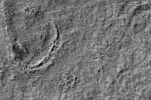
T-TRA_000830_1440_RED_NigerVallis_01.jpgNiger Vallis60 visiteThis image shows a portion of the floor of Niger Vallis, an ancient Martian outflow channel. Niger Vallis originates on the flanks of the volcano Hadriaca Patera, and empties into the Hellas impact basin. Outflow channels are observed in many regions of the planet, and may have been carved by brief eruptions of liquid water from beneath the surface. Since Niger Vallis formed, impacts have cratered the channel floor, and fine-grained wind-blown debris has been transported across the surface, eroding and burying all but the freshest craters. The curved ridge in the scene may be the remnant of a large crater rim. At the high resolution of this image, a pattern of parallel dunes and ripples can be seen, as well as individual boulders as large as two meters across.
|
|

Craters-Becquerel_Crater_mound_6m-00.jpgBeautiful Becquerel Crater (1)60 visiteThe mound of layered rock near the center of Becquerel Crater (2,6° North and 8,2° West) is one of the best examples of sedimentary rocks on Mars. This location has been suggested as a possible target for the 2009 Mars Science Laboratory Rover Mission. An interesting attribute of this mound is that most of the actual rock is light-toned. The darker bands seen in this image are actually dark, wind-blown sediment that has been trapped on the surface by the small escarpments associated with each layer. The source of this dark sediment is the sand dune fields to the north and south of the layered mound.
North is towards the top of the 5 images and the Sun is shining from the left.
|
|

Craters-Becquerel_Crater_mound_6m-01.jpgBeautiful Becquerel Crater (2)60 visitenessun commento
|
|
| 2237 immagini su 187 pagina(e) |
 |
|
|
|
|
116 | |
|
|
|
|





