| Piú viste - Mars Reconnaissance Orbiter (MRO) |

ESP_014097_1120_RED_abrowse.jpgDisappearing Craters (Natural Colors; credits: Lunar Explorer Italia)61 visiteImpact Craters that form at High Latitudes often disappear faster than those that form in Equatorial Regions. The craters in this image are only barely detectable.
Over time, craters in ice, particularly large craters, "relax".
Their depth-to-diameter ratio decreases as the bowl of the crater gets shallower with time. The craters slowly appear softer and smoother, fading into the surrounding landscape, until they remain only as circular patterns on flat ground, before they eventually disappear altogether. The larger the crater, the faster it will relax.
The reason for the crater degradation is partly due to in-filling by snow or dust and slumping off of the crater walls, and also partly from processes that produce the patterned ground you see in this HiRISE image. But the primary reason for the shallowing is because the ground at High Latitudes on Mars is ice-rich, and ice is not very strong. At warmer temperatures found in the Inner Solar System, ice generally flows more easily than rock, so ice cannot support the structure of the crater as well as rock. The crater relaxes as the ice begins to flow back to a level surface.
All of the processes listed above have likely acted on these craters, and recently, they have also been swept by Dust Devils, which left dark streaks in their wake.MareKromium
|
|

ESP_014401_1360_RED_abrowse.jpgAeolian Features Monitoring (Natural Colors; credits: Lunar Explorer Italia)61 visitenessun commentoMareKromium
|
|

ESP_014426_1580_RED_abrowse.jpgTerra Sabaea and Terra Tyrrhena Boundary (Natural Colors; credits: Lunexit)61 visitenessun commentoMareKromium
|
|
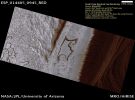
ESP_014405_0945_RED_abrowse.jpgSouth Polar Residual Cap Monitoring (Natural Colors; credits: Lunexit)61 visitenessun commentoMareKromium
|
|
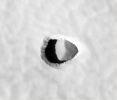
ESP_014380_1775_RED_abrowse-01.jpgExtremely Unusually-looking Skylight (SuperEDM n.1 - credits: Dr G. Barca)61 visitenessun commentoMareKromium
|
|
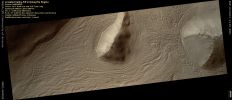
ESP_014307_2130_RED_abrowse.jpgLineated Valley-Fill in Nilosyrtis Region (Natural Colors; credits: Lunexit)61 visitenessun commentoMareKromium
|
|
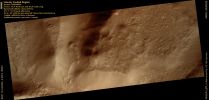
ESP_014306_1905_RED_abrowse.jpgHeavily Faulted Region (Natural Colors; credits: Lunexit)61 visitenessun commentoMareKromium
|
|
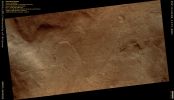
ESP_014298_1375_RED_abrowse.jpgNereidum Montes (Natural Colors; credits: Lunexit)61 visitenessun commentoMareKromium
|
|
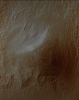
ESP_014264_2235_RED_abrowse-01.jpgSigns of a possible (and recent) "Mid-Air Meteor Strike" (EDM - Natural Colors; credits: Dr G. Barca & Lunexit)61 visiteIn questo EDM, ottimamente curato - come sempre - dal nostro Dr Barca, si può vedere l'evidente "scurimento" (che qualcuno potrebbe anche chiamare "bruciatura") del suolo, senza che però sia possibile scorgere un (anche di modestissime dimensioni) cratere da impatto.
Questa situazione (bruciatura del suolo, presenza di veri detriti di origine indeterminabile e mancanza di cratere) abbiamo deciso di battezzarla come "Mid-Air Meteor Strike", ossìa effetto di collisione meteorica avvenuta a mezz'aria (ergo, SENZA impatto - se non altro nel senso più tecnico della parola).
Una curiosità: la NASA ha classificato/titolato questo frame come "New Crater with Ice". Curioso: poichè noi non riusciamo a vedere nè il cratere in questione (tantomeno un cratere che sia "new"...), nè il ghiaccio (il quale, vista la Latitudine di cui si parla, comunque risulterebbe difficilmente visibile in superficie - se non altro in assenza di nevicate recenti).
Cosa ne pensiamo? Che anche alla NASA sbagliano...MareKromium
|
|
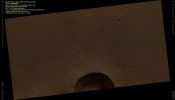
ESP_014262_1510_RED_abrowse.jpgEjecta Blanket - West Side of Zumba Crater (Natural Colors; credits: Lunexit)61 visitenessun commentoMareKromium
|
|
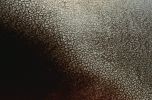
Polar_Polygons-PIA07354.jpgPolar Polygons (Natural Colors; credits: Dr Paolo C. Fienga - Lunexit Team)61 visitenessun commentoMareKromium
|
|
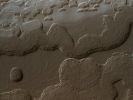
SPLD-PIA13269-PCF-LXTT3.jpgSouth Polar Layered Deposits and Residual Cap (Natural Colors; credits for the additional process. and color.: Dr Paolo C. Fienga - Lunexit Team)61 visiteThis image from NASA's Mars Reconnaissance Orbiter (MRO) shows a variety of surface textures within the South Polar Residual Cap of Mars.
It was taken during the Southern Spring, when the Surface was covered by seasonal CO2 Frost, so that Surface relief is easily seen. Illumination is from the bottom left, highlighting long Troughs at to the right and round pits and irregular Mesas to the left of center.
These unique landforms are common in the South Polar Residual Cap, which is known from previous Mars Global Surveyor images to be eroding rapidly in places. Right of center, SPLDs are exposed on a Sun-facing Scarp. These Deposits are older than the Residual Ice Cap, and the Layers are thought to record climate variations on Mars similar to ice ages on Earth.MareKromium
|
|
| 2237 immagini su 187 pagina(e) |
 |
|
|
|
|
115 | |
|
|
|
|





