| Piú viste - Mars Reconnaissance Orbiter (MRO) |
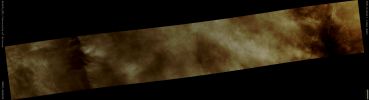
PSP_010417_1460_RED_abrowse.jpgUnnamed Crater in Hellas Planitia (Natural Colors; credits: Lunar Explorer Italia)61 visiteMars Local Time: 15:49 (middle afternoon)
Coord. (centered): 33,5° South Lat. and 83,0° East Long.
Spacecraft altitude: 260,8 Km (such as about 163,0 miles)
Original image scale range: 52,2 cm/pixel (with 1 x 1 binning) so objects ~ 1,57 mt across are resolved
Map projected scale: 50 cm/pixel
Map projection: EQUIRECTANGULAR
Emission Angle: 9,3°
Phase Angle: 66,2°
Solar Incidence Angle: 73° (meaning that the Sun is about 17° above the Local Horizon)
Solar Longitude: 142,5° (Northern Summer)
Credits: NASA/JPL/University of Arizona
Additional process. and coloring: Lunar Explorer ItaliaMareKromium
|
|

ESP_011345_0950_RED_abrowse.jpgSmall Fan-like Surface Features on the South Polar Perennial Cap (Natural Colors; credits: Lunar Explorer Italia)61 visiteMars Local Time: 17:54 (late afternoon)
Coord. (centered): 84,8° South Lat. and 339,3° East Long.
Spacecraft altitude: 247,7 Km (such as about 154,8 miles)
Original image scale range: 99,1 cm/pixel (with 1 x 1 binning) so objects ~ 2,97 mt across are resolved
Map projected scale: 1 mt/pixel
Map projection: EQUIRECTANGULAR
Emission Angle: 0,9°
Phase Angle: 88,7°
Solar Incidence Angle: 89° (meaning that the Sun is about 1° above the Local Horizon)
Solar Longitude: 181,0° (Northern Autumn)
Credits: NASA/JPL/University of Arizona
Additional process. and coloring: Lunar Explorer ItaliaMareKromium
|
|
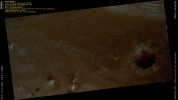
ESP_012940_1655_RED_abrowse-00.jpgThe Floor of Eos Chasma (ctx frame - Natural Colors; credits: Lunar Explorer Italia)61 visiteThe scoured and scabby floor of Eos Chasma, located East of Valles Marineris, is covered with Dunes or Ripples and Eroded Craters. The reddish-brown color likely represents older, eroded Basalt and much of this erosion may have been accomplished by water.MareKromium
|
|

ESP_012016_1800_RED_abrowse.jpgIani Chaos (Natural Colors; credits: Lunar Explorer Italia)61 visitenessun commentoMareKromium
|
|

ESP_013066_1070_RED_abrowse.jpgFault in the South Polar Layered Deposits (Natural Colors; credits: Lunar Explorer Italia)61 visitenessun commentoMareKromium
|
|
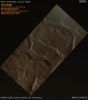
PSP_006980_2610_RED_abrowse~0.jpgChasma Boreale (Natural Colors; credits: Lunexit)61 visitenessun commentoMareKromium
|
|

ESP_014126_2120_RED_abrowse.jpgNorthern Crater with Windstreak (Natural Colors; credits: Lunexit)61 visitenessun commentoMareKromium
|
|
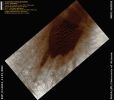
ESP_014041_1145_RED_abrowse.jpgUnusually-looking Dunefield (Natural Colors; credits: Lunexit)61 visitenessun commentoMareKromium
|
|

ESP_014111_1130_RED_abrowse.jpgPityhusa Patera Caldera (Natural Colors; credits: Lunexit)61 visitenessun commentoMareKromium
|
|

ESP_012625_1720_RED_abrowse.jpgSulfate Strata in Ius Chasma (Natural Colors; credits: Lunexit)61 visite...Ed ora, dato che al peggio ed al ridicolo non c'è mai fine, ci aspettiamo che qualcuno trovi una "Scritta", da qualche parte, che indichi questi depositi di Solfati...MareKromium
|
|

ESP_014083_0945_RED_abrowse-00.jpgActive Geyser on Mars: the "Region" (Natural Colors; credits: Lunexit)61 visiteCoord.: 85,4° South Lat. and 104,0° East Long.
Spacecraft altitude: about 248 Km
M.L.T.: 16:08 (middle afternoon)
S.I.A.: 69° (with the Sun about 21° above the Local Horizon)
Credits: NASA/JPL/Univ. of Arizona
Additional process. and color.: Lunexit
Attività geotermica su Marte? La risposta, detta quasi sussurrando, ci arriva direttamente dalla NASA ed è "Si": su Marte si manifesta ancora CERTAMENTE un quantum (residuale?) di attività geotermica e la prova è nelle bocche ancora attive di una serie di geysers che vediamo nelle Regioni Sud-Polari (le Regioni che sembrano ospitarne di più, ma certo non le uniche Regioni ancora "vive" di Marte).
Dietro questa semplice (ed affascinante) ammissione, si apre un universo di possibilità, tutte quante accomunate da una circostanza: il sottosuolo di Marte è ancora "vivo" ed è ancora abbastanza "caldo e vivace" da sostenere la verificazione di eventi eruttivi (di modesta scala, ma non per questo di modesta importanza).
A quando la notizia che nel sottosuolo di Marte esistono ancora e, nelle ere, si sono sviluppate ed evolute delle Forme Vitali Indigene?...MareKromium
|
|
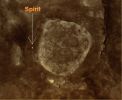
Home_Plate-PIA12205.jpgSpirit at Home Plate61 visiteIn this view from orbit, the pale circular shape in the center is a low plateau called "Home Plate", about 80 meters (about 260 feet) across. The bright dot just to the left of Home Plate at the 9 o'clock position is NASA's MER Spirit. North is toward the top.
The view is a portion of an image taken on June 13, 2009, by the High Resolution Imaging Science Experiment (HiRISE) camera on NASA's Mars Reconnaissance Orbiter. At that date, Spirit had been embedded for more than a month in a patch of soft soil called "Troy".
During the subsequent 3 months, Spirit studied the unusually layered soil at the site while engineers used test rovers at NASA's Jet Propulsion Laboratory to assess possible maneuvers for getting Spirit away from Troy.
The site is at 14,6° South Latitude and 175,5° East Longitude. Home Plate is in the inner basin of the Columbia Hills range, inside Mars' Gusev Crater. Spirit has been exploring the Columbia Hills and nearby features since January 2004.MareKromium
|
|
| 2237 immagini su 187 pagina(e) |
 |
|
|
|
|
114 | |
|
|
|
|





