| Piú viste - Mars Reconnaissance Orbiter (MRO) |

PSP_009334_2275_RED.jpgThermophysical Boundary (possible True Colors; credits: Lunar Explorer Italia)63 visiteMars Local Time: 15:14 (early afternoon)
Coord. (centered): 47,0° North Lat. and 118,4° East Long.
Spacecraft altitude: 304,8 Km (such as about 190,5 miles)
Original image scale range: 30,5 cm/pixel (with 1 x 1 binning) so objects ~61 cm across are resolved
Map projected scale: 25 cm/pixel
Map projection: EQUIRECTANGULAR
Emission Angle: 0,4°
Phase Angle: 44,5°
Solar Incidence Angle: 44° (meaning that the Sun is about 46° above the Local Horizon)
Solar Longitude: 102,7° (Northern Summer)
Credits: NASA/JPL/University of Arizona
Additional process. and coloring: Lunar Explorer ItaliaMareKromium
|
|
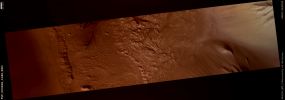
PSP_009896_1680_RED.jpgFeatures of Noctis Labyrinthus (possible True Colors; credits: Lunar Explorer Italia)63 visiteMars Local Time: 15:34 (middle afternoon)
Coord. (centered): 12,0° South Lat. and 263,0° East Long.
Spacecraft altitude: 255,4 Km (such as about 159,6 miles)
Original image scale range: 51,1 cm/pixel (with 1 x 1 binning) so objects ~1,53 mt across are resolved
Map projected scale: 50 cm/pixel
Map projection: EQUIRECTANGULAR
Emission Angle: 0,5°
Phase Angle: 61,9°
Solar Incidence Angle: 62° (meaning that the Sun is about 28° above the Local Horizon)
Solar Longitude: 122,9° (Northern Summer)
Credits: NASA/JPL/University of Arizona
Additional process. and coloring: Lunar Explorer ItaliaMareKromium
|
|

PSP_009878_2605_RED.jpgUnconformity in Gemina Lingula Layered Deposits (possible True Colors; credits: Lunar Explorer Italia)63 visiteMars Local Time: 15:15 (early afternoon)
Coord. (centered): 80,3° South Lat. and 22,6° East Long.
Spacecraft altitude: 340,6 Km (such as about 212,9 miles)
Original image scale range: 34,1 cm/pixel (with 1 x 1 binning) so objects ~1,02 mt across are resolved
Map projected scale: 25 cm/pixel
Map projection: EQUIRECTANGULAR
Emission Angle: 21,1°
Phase Angle: 45,9°
Solar Incidence Angle: 63° (meaning that the Sun is about 27° above the Local Horizon)
Solar Longitude: 122,2° (Northern Summer)
Credits: NASA/JPL/University of Arizona
Additional process. and coloring: Lunar Explorer ItaliaMareKromium
|
|
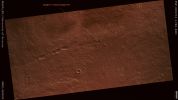
PSP_009765_1780_RED.jpgPossible Skylight Near Arsia Mons (possible True Colors; credits: Lunar Explorer Italia)63 visiteMars Local Time: 15:29 (early afternoon)
Coord. (centered): 2,1° South Lat. and 237,8° East Long.
Spacecraft altitude: 159,8 Km (such as about 162,4 miles)
Original image scale range: 26 cm/pixel (with 1 x 1 binning) so objects ~78 cm across are resolved
Map projected scale: 25 cm/pixel
Map projection: EQUIRECTANGULAR
Emission Angle: 5,4°
Phase Angle: 61,0°
Solar Incidence Angle: 57° (meaning that the Sun is about 33° above the Local Horizon)
Solar Longitude: 118,1° (Northern Summer)
Credits: NASA/JPL/University of Arizona
Additional process. and coloring: Lunar Explorer Italia
Nota Lunexit: "Skylight" ----> curiosa, ma bella, espressione NASA che indica un pozzo da collasso a camino verticale.MareKromium
|
|
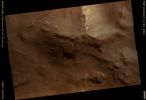
PSP_010047_1745_RED-00.jpgStar-like shaped Hill in Terra Tyrrhena (possible True Colors; credits: Lunar Explorer Italia)63 visiteMars Local Time: 15:34 (middle afternoon)
Coord. (centered): 5,2° South Lat. and 99,6° East Long.
Spacecraft altitude: 264,2 Km (such as about 165,1 miles)
Original image scale range: 26,4 cm/pixel (with 1 x 1 binning) so objects ~52,9 cm across are resolved
Map projected scale: 25 cm/pixel
Map projection: EQUIRECTANGULAR
Emission Angle: 1,6°
Phase Angle: 59,6°
Solar Incidence Angle: 58° (meaning that the Sun is about 32° above the Local Horizon)
Solar Longitude: 128,4° (Northern Summer)
Credits: NASA/JPL/University of Arizona
Additional process. and coloring: Lunar Explorer ItaliaMareKromium
|
|

ESP_011575_1105_RED_abrowse.jpgSeasonal Haloes and Fractal Patterns (Natural Colors; credits: Lunar Explorer Italia)63 visiteNote Lunexit:
gli "Haloes" sono gli "Aloni di Sublimazione" ossìa quelle porzioni di terreno che, quando la temperatura superficiale del Pianeta va ad alzarsi, si scoprono/liberano dei ghiacci e delle brine di CO2 o d'acqua che li ricoprono - per sublimazione, appunto (ossìa mediante il passaggio diretto di un elemento dalla forma solida a quella gassosa).
Questo disgelo (---> "thaw"), di regola (ed a seguito delle osservazioni che abbiamo fatto) procede in maniera aureolare, partendo da un'area leggermente dislivellata (in altezza - dossi, rim di cratero ed altri rilievi) rispetto al Datum e quindi allargandosi a "macchia di leopardo" (e dando quindi l'impressione, nelle osservazioni fatte dall'alto e da distanze sensibili, che si formino, sulla superfcie, dei veri e propri aloni).
I "Fractal Patterns" sono, invece, i "Disegni Frattali" ossìa quelle configurazioni del suolo a sembianza di figura frattale (ossìa eternamente ripetitiva di se stessa) che si producono sempre durante la fase di disgelo del Suolo Marziano (e che possiamo vedere nelle Regioni Polari e presso-Polari, durante la Primavera di Marte, sia a Nord, sia a Sud).
La loro osservazione dall'alto e da grandi distanze (nell'ordine delle centinaia di Km) è produttiva di incredibili effetti ottici i quali hanno suggerito - a molti Ricercatori di Frontiera (su tutti: Skipper ed Hoagland) - l'idea che, su Marte, possano esistere delle forme esotiche di vegetazione (exx.: gli "Arthur Clarke Trees" ed i "Polar Pine Trees"). I "Fractal Patterns", però - e come capite bene - non sono rilievi che si sviluppano in altezza (come alberi), ma sono dei semplici "disegni" che appaiono al suolo e che sviluppano sempre e solo in mera estensione.
Se vogliamo, essi possono essere assimilati - da un punto di vista meramente visivo - alle famose "Piste di Nazca" (anche se, lo ripetiamo, i Disegni Frattali sono "Surface Features" DEL TUTTO ed ASSOLUTAMENTE NATURALI).MareKromium
|
|

Craters-Holden_Crater-TRA_000861_1530_RED_Holden_Delta_01.jpgDetails of the beautiful White Cliffs of Holden Crater (Natural Colors credits: Lunar Explorer Italia)63 visitenessun commentoMareKromium
|
|

ESP_012625_1720_RED_abrowse.jpgSulfate Strata in Ius Chasma (Natural Colors; credits: Lunexit)63 visite...Ed ora, dato che al peggio ed al ridicolo non c'è mai fine, ci aspettiamo che qualcuno trovi una "Scritta", da qualche parte, che indichi questi depositi di Solfati...MareKromium
|
|
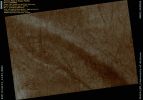
ESP_014272_1245_RED_abrowse.jpgEsker in Southern Argyre Planitia (Natural Colors; credits: Lunexit)63 visiteThough a variety of origins have been proposed, this sinuous, layered, boulder-filled deposit in the Southern Argyre Planitia is likely an "Esker".
"Eskers" form in wet-based glaciers, when water flows inside or below the glaciers and deposits sediment. After the ice melts, the sediment is left behind as a ridge.
Because the material is deposited by flowing water, the sediment in Eskers is sorted: larger rocks, pebbles, sand grains, etc. are deposited first, and smaller sediment - such as smaller pebbles, sand, or clay - are deposited further from the source and on top of the coarser material.
Several factors (including the amount of sediment available, the speed and volume of the flowing water, and the slope over which it flowed) determine how much sediment is deposited and how large the dominant grain size is. There may be many of these sequences preserved within an Esker.
Eskers look a little like Inverted River Beds. One relatively simple way to differentiate between the two is that IRBs record flow in a downhill direction along their entire length.
Eskers, on the other hand, can record flow both down- and uphill. This is possible because water flowing through the ice tunnels in glaciers is under pressure, just like water in a hose.
This particular Esker is part of a branching and braided network of Ridges in the Southern Argyre Basin.
The boulders are on the order of 1-3 meters (about 3-10 feet) in diameter.MareKromium
|
|

ESP_014418_0930_RED_abrowse.jpgSouth Polar Residual Cap Monitoring (Natural Colors; credits: Lunexit)63 visitenessun commentoMareKromium
|
|

ESP_014284_2045_RED_abrowse.jpgUnnamed Crater in Mawrth Vallis Region (Natural Colors; credits: Lunexit)63 visitenessun commentoMareKromium
|
|
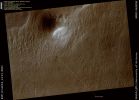
ESP_014264_2235_RED_abrowse-00.jpgSigns of a possible (and recent) "Mid-Air Meteor Strike" (CTX Frame - Natural Colors; credits: Lunexit)63 visitenessun commentoMareKromium
|
|
| 2237 immagini su 187 pagina(e) |
 |
|
|
|
|
109 | |
|
|
|
|





