| |

| Piú viste - Mars Reconnaissance Orbiter (MRO) |
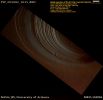
PSP_005682_1035_RED_abrowse-00.jpgBasal Exposure of SPLD (Darkened Absolute Natural Colors; credits for the additional process. and color.: Drr Gianluigi Barca and Paolo C. Fienga - Lunexit Team)68 visitenessun commentoMareKromium
|
|

PSP_007043_2650_RED_abrowse-PCF-LXTT.jpgDefrosting North Polar Dunes (Absolute Natural Colors; credits for the additional process. and color: Dr Paolo C. Fienga - Lunexit Team)68 visitenessun commentoMareKromium
|
|

Craters-Unnamed_Crater-ESP_017975_1705-PCF-LXTT-IPF.jpgUnnamed Crater with Ridges (Absolute Natural Colors; credits for the additional process. and color.: Dr Paolo C. Fienga/Lunar Explorer Italia/Italian Planetary Foundation)68 visiteMars Local Time: 15:20 (Early Afternoon)
Coord. (centered): 9,515° South Lat. and 16,433° East Long.
Spacecraft altitude: 261,3 Km (such as about 162,267 miles)
Original image scale range: 52,3 cm/pixel (with 2 x 2 binning) so objects ~ 1 mt and 57 cm across are resolved
Map projected scale: 50 cm/pixel
Map projection: EQUIRECTANGULAR
Emission Angle: 0,7°
Phase Angle: 60,4°
Solar Incidence Angle: 60° (meaning that the Sun was about 30° above the Local Horizon at the time the picture was taken)
Solar Longitude: 96,6° (Northern Summer - Southern Winter)
Credits: NASA/JPL/University of Arizona
Additional process. and coloring: Lunar Explorer Italia
This picture (which is a NASA - Original Mars Reconnaissance Orbiter NON-Map Projected CTX b/w frame identified by the serial n. ESP_025557_1705) has been additionally processed and then colorized in Absolute Natural Colors (such as the colors that a human eye would actually perceive if someone were onboard the NASA - Mars Reconnaissance Orbiter and then looked down, towards the Surface of Mars), by using an original technique created - and, in time, dramatically improved - by the Lunar Explorer Italia Team.MareKromium
|
|

TRA_000827_1875_IRB.jpgCerberus' River67 visiteThe prominent trough in this sub-image (of HiRISE image TRA_000827_1875_IRB ) is a segment of the Cerberus Fossae rift system. In geological terminology the trough is known as a graben, or down-dropped region bounded by faults. In this location the graben is about 300 m wide and 90 m deep. Bright, dust-covered, cratered plains surround the graben, and darker sediments blanket much of its floor. Dunes that vary in size and spacing occur within the darker sediments, and their shapes suggest that the wind typically blows from east to west. Light-toned, angular boulders pepper the darker sediments. They have broken away from the rocky walls of the graben and tumbled downhill. Over time this mass wasting has caused the cliffs to retreat, widening the trough. The somewhat lighter patches of cratered terrain on the graben floor were once level with the surrounding plains, but have since been lowered by faulting. Over time they may become obscured or buried by the darker sediments. High-standing ridgesÑremnants of the former surfaceÑcast jagged shadows on the floor of the graben that reveal the rugged nature of the landscape in this region of Mars.
Image TRA_000827_1875 was taken by the High Resolution Imaging Science Experiment (HiRISE) camera onboard the Mars Reconnaissance Orbiter spacecraft on September 29, 2006. The complete image is shown below, centered at 7.4 degrees latitude, 168.5 degrees East longitude. The range to the target site was 275 km (171 miles). At this distance the image scale is 55 cm/pixel (with 2 x 2 binning) so objects ~165 cm across are resolved. The image shown below has been map-projected to 50 cm/pixel and north is up. The image was taken at a local Mars time of 3:26 PM and the scene is illuminated from the west with a solar incidence angle of 51.9 degrees, thus the sun was about 38.1 degrees above the horizon. At a solar longitude of 113.7 degrees, the season on Mars is Northern Summer / Southern Winter.
|
|

PSP_007805_2505_RED_abrowse-01.jpgThe "Frozen Lake" of Vastitas Borealis, alias Louth Crater (extra-detail mgnf - MULTISPECTRUM; credits: Lunexit)67 visiteThis extra-detail mgnf shows a comparison of these dunes acquired in late Northern Summer (see PSP_001700_2505, top) with the newer image. It is hard to believe this is the same piece of ground because the brightness patterns are so different due to the large temperature changes throughout the year.
Nota Lunexit: dunque il famoso "Lago di Ghiaccio" - situato all'interno di un cratere senza nome il quale venne individuato nella Regione Nordica di Vastitas Borealis dalla Sonda ESA "Mars Express" - non è un lago, ed il cratere "senza nome" è, in realtà, il Cratere "Louth". Ora, se ci consentite una piccolissima ironia (naturalmente corredata da elementi fattuali), vorremmo dire che il modo in cui ESA e NASA si comportano, alle volte, è davvero "bizzarro" (tanto per usare un eufemismo...).
Andate a leggerVi (o a "rileggerVi", se volete) quello che l'ESA scrisse riguardo questo Cratere. Noi, tanto per semplificare, Vi riportiamo il tutto qui di seguito e Voi, se non vi fidate (un Vostro sacrosanto Diritto) e volete verificare di persona, andate qui: http://www.esa.int/SPECIALS/Mars_Express/SEMGKA808BE_1.html
Caption ESA:"The HRSC on ESA's Mars Express obtained this perspective view on 2 February 2005 during orbit 1343 with a ground resolution of approximately 15 metres per pixel. It shows an unnamed impact crater located on Vastitas Borealis, a broad plain that covers much of Mars's far Northern Latitudes, at approximately 70,5° North and 103° East.
The crater is 35 Km wide and has a maximum depth of approximately 2 Km beneath the crater rim. The circular patch of bright material located at the centre of the crater is residual water ice.
The colours are very close to natural, but the vertical relief is exaggerated three times. The view is looking East.
Credits: ESA/DLR/FU Berlin (G. Neukum)".
Allora: dato e premesso che si sta parlando SENZA OMBRA DI DUBBIO del medesimo rilievo, vorremmo un pò capire come mai il "cratere senza nome" è diventato "Louth Crater".
E da quando?
E' intervenuta la IAU per battezzarlo?
O si tratta di un nome convenzionale adottato dalla NASA ma non ufficiale? Mistero.
L'ESA aveva battezzato questo rilievo come "Lago Ghiacciato" ed ora si scopre che l'unica cosa ghiacciata (rectius: ricoperta di semplice brina gelata) è il "mound" (dosso) che caratterizza solo un versante del cratere. Il "residual water ice" di cui parlava il Dr Neukumm dell'ESA - osservando il "fondo" del cratere - è "sparito" e la NASA, infatti, non lo menziona neppure (anzi! Semmai la NASA avanza l'ipotesi/suggerisce che, oltre ad un minimo di ghiaccio d'acqua, il "grosso" della componente ghiacciata che si vede sul "dosso" imbiancato che giace posizionato sul fondo del cratere, sia semplicemente "frozen CO2").
Volete la nostra ipotesi? Ne abbiamo due, a dire il vero.
Prima Ipotesi: la "scoperta" dell'ESA non era una scoperta reale. Le immagini MRO hanno pesantemente ridimensionato il fenomeno del presunto Lago Ghiacciato (il quale si è rivelato essere un cratere con un pò di brina su alcune porzioni del suo fondo) ed i Signori della NASA, tanto per non dare espressamente degli incompetenti a coloro che formano lo STAFF Scientifico che cura le imprese della Sonda Mars Express (in generale) ed al Dr Neukumm (in particolare), "fanno finta di nulla" e commentano questo rilievo ignorando (diremmo "per cortesia professionale") la circostanza per cui esso era stato già ampiamente trattato e discusso dai loro Colleghi Europei in ben altri termini.
Morale: la NASA, ivi, per "salvare la faccia" ai Colleghi dell'ESA, commenta "asetticamente" ed ignora il passato.
Seconda Ipotesi: la scoperta del Lago Ghiacciato di Vastitas da parte dell'ESA è una scoperta "vera" a tutti gli effetti ed apre scenari i quali non piacciono all'establishment della NASA. L'ESA viene invitata a non pronunciarsi ulteriormente sulla questione del Lago (o DEI LAGHI!) di Vastitas Borealis e la NASA, piano piano, accantona il fenomeno e quindi lo "cancella" dall'Immaginario Collettivo con queste recenti immagini le quali, effettivamente, mostrano un cratere con, al suo interno, un dosso ricoperto di brina persistente e nulla di più.
Morale: la Scienza "Ufficiale" dice che su Marte NON CI SONO ACQUE SUPERFICIALI e quindi, anche davanti ad una o più evidenze del contrario, bisogna ribadire il "Dogma" per il quale su Marte NON ESISTONO ACQUE SUPERFICIALI, nè liquide, nè ghiacciate.
E' sin troppo semplice immaginare che qualcuno, leggendo l'ipotesi 2, ci bollerà come "Complottisti" e poi, leggendo l'Ipotesi 1, dedurrà che NASA ed ESA lavorano "in sintonia" e che l'una integra, completa e, se necessario, corregge il lavoro dell'altra.
Certo, piacerebbe anche a noi che fosse così.
Ma così non è. Basta leggere (e rileggere) gli articoli ORGINALI ESA e NASA su questo Lago/Non Lago di Ghiaccio/Non Ghiaccio per capire che il "flusso informativo" non è stato nè limpido, nè coerente. E comunque sia, ci piacerebbe sapere chi e quando ha battezzato il Cratere "Senza Nome" in Cratere "Louth".
Ed in conclusione, se questo è il modo - non diciamo di "fare Scienza" ma, se non altro - di fare "Divulgazione" adottato dalla NASA in questo momento storico...Beh, allora noi possiamo solo darVi un suggerimento: studiate ed interpretate tutto DA SOLI. Magari, di quando in quando ed orà più, ora meno, prenderete (come accade a noi) "Lucciole per Lanterne" ma, se non altro, non diventerete mai dei semplici "recettori passivi" del modo (distorto) di Divulgare il Sapere adottato dalla più grande e famosa Agenzia Spaziale del Mondo (che noi ammiriamo sempre tanto ma, stavolta, un pò meno del solito...).
Amen.
p.s.: abbiamo reperito un cospicuo quantitativo di abstracts sul "presunto ghiaccio" di Louth Crater (ATTENZIONE: nome ancora NON ufficiale!) e, anzichè schiarirci le idee, adesso le abbiamo ancora più confuse...
Ma ne verremo fuori, come ovvio, e quindi pubblicheremo un articolo su questo rilievo davvero MOLTO intrigante e, incidentalmente, spenderemo qualche parola sul "modo schizofrenico" di "Fare Scienza" adottato in questo momento storico.MareKromium
|
|
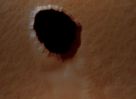
PSP_009488_1745_RED_abrowse-02.jpgMartian Caves (edm n. 2 - possible natural colors; credits: Lunexit)67 visiteThe ability to detect and explore Martian caves is of intense interest to many disciplines in Planetary Science. Caves, in fact, may expose entire sets of stratigraphic layers, providing windows into Mars’ Geologic and Atmospheric histories.
MareKromium
|
|

Psp_009480_2265_red.jpgLayers and Scallops (True Colors; credits: Lunar Explorer Italia)67 visiteMars Local Time: 15:10 (early afternoon)
Coord. (centered): 45,9° North Lat. and 91,1° East Long.
Spacecraft altitude: 306,6 Km (such as about 191,6 miles)
Original image scale range: 30,7 cm/pixel (with 1 x 1 binning) so objects ~92 cm across are resolved
Map projected scale: 25 cm/pixel
Map projection: EQUIRECTANGULAR
Emission Angle: 11,8°
Phase Angle: 55,8°
Solar Incidence Angle: 44° (meaning that the Sun is about 46° above the Local Horizon)
Solar Longitude: 107,9° (Northern Summer)
Credits: NASA/JPL/University of Arizona
Additional process. and coloring: Lunar Explorer ItaliaMareKromium
|
|
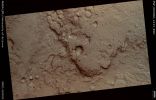
PSP_009960_2235_RED.jpgInverted Channel with Phyllosilicates (possible True Colors; credits: Lunar Explorer Italia)67 visiteMars Local Time: 15:26 (early afternoon)
Coord. (centered): 43,4° South Lat. and 309,2° East Long.
Spacecraft altitude: 303,5 Km (such as about 189,7 miles)
Original image scale range: 60,7 cm/pixel (with 1 x 1 binning) so objects ~1,82 mt across are resolved
Map projected scale: 50 cm/pixel
Map projection: EQUIRECTANGULAR
Emission Angle: 6,6°
Phase Angle: 42,0°
Solar Incidence Angle: 48° (meaning that the Sun is about 42° above the Local Horizon)
Solar Longitude: 125,2° (Northern Summer)
Credits: NASA/JPL/University of Arizona
Additional process. and coloring: Lunar Explorer ItaliaMareKromium
|
|

PSP_003252_1425_RED_browse-00%7E0.jpgBright Gully Deposit in Terra Sirenum (ctx image - MULTISPECTRUM; credits: Lunar Explorer Italia)67 visiteThis HiRISE image shows a bright gully deposit and other gullies within a crater wall in Terra Sirenum (37,7° South Lat. and 229,0° East Long.).
Three images are available:
(context image - A): The full frame HiRISE image, with the crater at left center; the width of the image is 6 Km;
(close-up of the crater's rim - B): an enlargement showing the crater;
(close-up of the bright gully deposit - C).
Frames B and C have been stretched to enhance contrast. The red box in B shows the location of C. MareKromium
|
|

Craters-Wirtz_Crater-Psp_001349_1310_red~0.jpgHigh-Viscosity Flows inside Wirtz Crater (possible True Colors; credits: Lunar Explorer Italia)67 visitenessun commentoMareKromium
|
|

ESP_011477_1275_RED_abrowse.jpgHuge Seepage in Argyre Region (Natural Colors; credits: Lunar Explorer Italia)67 visiteMars Local Time: 16:02 (middle afternoon)
Coord. (centered): 52,0° South Lat. and 304,9° East Long.
Spacecraft altitude: 251,0 Km (such as about 156,9 miles)
Original image scale range: 25,1 cm/pixel (with 1 x 1 binning) so objects ~ 75 cm across are resolved
Map projected scale: 25 cm/pixel
Map projection: EQUIRECTANGULAR
Emission Angle: 1,6°
Phase Angle: 71,6°
Solar Incidence Angle: 70° (meaning that the Sun is about 20° above the Local Horizon)
Solar Longitude: 186,9° (Northern Autumn)
Credits: NASA/JPL/University of Arizona
Additional process. and coloring: Lunar Explorer ItaliaMareKromium
|
|

ESP_012588_1855_RED_abrowse-01.jpgFresh Impact (EDMs - EDM 1, 2 and 3, from the bottom up, are in Natural Colors; credits: Dr M. Faccin)67 visiteOsservate attentamente: il Suolo Marziano è, effettivamente, "macchiato" - e probabilmente bruciato -, MA NON INTACCATO (una conferma in tale senso deriva dalla constatazione della circostanza per cui i Rilievi Superficiali visibili in corrispondenza della "macchia" (diremmo che si potrebbe trattare di Yardangs aventi modestissime dimensioni) non subiscono variazioni/deformazioni in rapporto ai medesimi Rilievi visibili al di fuori della zona interessata dall'impatto/esplosione (diciamo, tecnicamente, che "i Rilievi Superficiali esterni all'area di interesse proseguono senza soluzione di continuità all'interno dell'area stessa").
Che altro aggiungere? Si tratta di un fenomeno, come vedete, decisamente INTERESSANTE, ma sul quale la NASA - as usual... - non ci ha detto assolutamente nulla.
Peccato...MareKromium
|
|
| 2237 immagini su 187 pagina(e) |
|
|
|
|
|
101 | |
|
|
|
|
|
|





