| Piú viste - Mars Reconnaissance Orbiter (MRO) |

Craters-Unnamed_Crater-ESP_017975_1705-PCF-LXTT-IPF.jpgUnnamed Crater with Ridges (Absolute Natural Colors; credits for the additional process. and color.: Dr Paolo C. Fienga/Lunar Explorer Italia/Italian Planetary Foundation)69 visiteMars Local Time: 15:20 (Early Afternoon)
Coord. (centered): 9,515° South Lat. and 16,433° East Long.
Spacecraft altitude: 261,3 Km (such as about 162,267 miles)
Original image scale range: 52,3 cm/pixel (with 2 x 2 binning) so objects ~ 1 mt and 57 cm across are resolved
Map projected scale: 50 cm/pixel
Map projection: EQUIRECTANGULAR
Emission Angle: 0,7°
Phase Angle: 60,4°
Solar Incidence Angle: 60° (meaning that the Sun was about 30° above the Local Horizon at the time the picture was taken)
Solar Longitude: 96,6° (Northern Summer - Southern Winter)
Credits: NASA/JPL/University of Arizona
Additional process. and coloring: Lunar Explorer Italia
This picture (which is a NASA - Original Mars Reconnaissance Orbiter NON-Map Projected CTX b/w frame identified by the serial n. ESP_025557_1705) has been additionally processed and then colorized in Absolute Natural Colors (such as the colors that a human eye would actually perceive if someone were onboard the NASA - Mars Reconnaissance Orbiter and then looked down, towards the Surface of Mars), by using an original technique created - and, in time, dramatically improved - by the Lunar Explorer Italia Team.MareKromium
|
|

TRA_000827_1875_IRB.jpgCerberus' River68 visiteThe prominent trough in this sub-image (of HiRISE image TRA_000827_1875_IRB ) is a segment of the Cerberus Fossae rift system. In geological terminology the trough is known as a graben, or down-dropped region bounded by faults. In this location the graben is about 300 m wide and 90 m deep. Bright, dust-covered, cratered plains surround the graben, and darker sediments blanket much of its floor. Dunes that vary in size and spacing occur within the darker sediments, and their shapes suggest that the wind typically blows from east to west. Light-toned, angular boulders pepper the darker sediments. They have broken away from the rocky walls of the graben and tumbled downhill. Over time this mass wasting has caused the cliffs to retreat, widening the trough. The somewhat lighter patches of cratered terrain on the graben floor were once level with the surrounding plains, but have since been lowered by faulting. Over time they may become obscured or buried by the darker sediments. High-standing ridgesÑremnants of the former surfaceÑcast jagged shadows on the floor of the graben that reveal the rugged nature of the landscape in this region of Mars.
Image TRA_000827_1875 was taken by the High Resolution Imaging Science Experiment (HiRISE) camera onboard the Mars Reconnaissance Orbiter spacecraft on September 29, 2006. The complete image is shown below, centered at 7.4 degrees latitude, 168.5 degrees East longitude. The range to the target site was 275 km (171 miles). At this distance the image scale is 55 cm/pixel (with 2 x 2 binning) so objects ~165 cm across are resolved. The image shown below has been map-projected to 50 cm/pixel and north is up. The image was taken at a local Mars time of 3:26 PM and the scene is illuminated from the west with a solar incidence angle of 51.9 degrees, thus the sun was about 38.1 degrees above the horizon. At a solar longitude of 113.7 degrees, the season on Mars is Northern Summer / Southern Winter.
|
|

PSP_001474_2520_RED-new_lake-01.jpgThe Northern Lakes: Lake "Lunexit" (extra-detail mgnf)68 visiteEd una volta operato un extra-detail mgnf a noi pare che non possano esserci più dubbi di sorta: sul fondo di questo Cratere c'è un deposito di ghiaccio (l'albedo del ghiaccio d'acqua non tradisce!) e quindi, come già fatto in passato, possiamo parlare tranquillamente di Frozen Lake.MareKromium
|
|

PSP_001474_2520_RED-new_lake-00~0.jpgThe Northern Lakes: Lake "Lunexit" (context image; MULTISPECTRUM - Credits: Lunexit)68 visitenessun commentoMareKromium
|
|
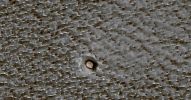
PSP_009942_2645_RED_abrowse-01.jpgSmall Crater on Planum Boreum (edm - natural colors; credits: Lunexit)68 visiteThis edm frame shows an example of a rare, small crater (approx. 115 meters, or 125 yards, in diameter). Scientists can count these shallow craters to attain an estimate of the age of the upper few meters of the Planum Boreum Surface.
The colors come from the presence of dust and of ice of differing grain sizes. The blueish ice has a larger grain size than the ice that has collected in the crater. The reddish material is dust. The smooth area stretching to the upper right, away from the crater may be due to winds being channeled around the crater or to fine-grained ice and frost blowing out of the crater.MareKromium
|
|

PSP_009488_1745_RED_abrowse-02.jpgMartian Caves (edm n. 2 - possible natural colors; credits: Lunexit)68 visiteThe ability to detect and explore Martian caves is of intense interest to many disciplines in Planetary Science. Caves, in fact, may expose entire sets of stratigraphic layers, providing windows into Mars’ Geologic and Atmospheric histories.
MareKromium
|
|
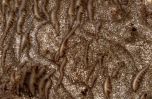
PSP_009929_2020_RED_abrowse-01.jpgAncient Layered Rocks in Nili Fossae (edm - natural colors; credits: Lunexit)68 visiteBright, fractured Bedrock is visible underlying Dunes or Ripples of Wind-Blown Sand.
The parallel, dark brown curves across the Bedrock Surface (underneath the Dunes) that can be seen in this edm frame, are the edges of successive rock layers.
These may appear dark because dark sand has become trapped at the edges of the layers. Successive layers in the bedrock are also exposed in the walls of degraded impact craters elsewhere in the ctx image.
The Layered Rocks here are billions of years old, and infrared spectra from the CRISM instrument have inferred that they contain minerals such as Clays and Carbonate that likely formed when liquid water chemically altered these rocks.
This evidence for past water activity, combined with the general flatness of this particular location, make it a good candidate Landing Site for future Mars Rover missions.MareKromium
|
|

PSP_009337_2600_RED.jpgThickening of Layers near Truncation in the North Polar Region (possible True Colors; credits: Lunar Explorer Italia)68 visiteMars Local Time: 14:34 (early afternoon)
Coord. (centered): 79,8° North Lat. and 24,1° East Long.
Spacecraft altitude: 319,3 Km (such as about 199,5 miles)
Original image scale range: 31,9 cm/pixel (with 1 x 1 binning) so objects ~96 cm across are resolved
Map projected scale: 25 cm/pixel
Map projection: EQUIRECTANGULAR
Emission Angle: 4,6°
Phase Angle: 54,0°
Solar Incidence Angle: 58° (meaning that the Sun is about 32° above the Local Horizon)
Solar Longitude: 102,8° (Northern Summer)
Credits: NASA/JPL/University of Arizona
Additional process. and coloring: Lunar Explorer ItaliaMareKromium
|
|

Psp_009480_2265_red.jpgLayers and Scallops (True Colors; credits: Lunar Explorer Italia)68 visiteMars Local Time: 15:10 (early afternoon)
Coord. (centered): 45,9° North Lat. and 91,1° East Long.
Spacecraft altitude: 306,6 Km (such as about 191,6 miles)
Original image scale range: 30,7 cm/pixel (with 1 x 1 binning) so objects ~92 cm across are resolved
Map projected scale: 25 cm/pixel
Map projection: EQUIRECTANGULAR
Emission Angle: 11,8°
Phase Angle: 55,8°
Solar Incidence Angle: 44° (meaning that the Sun is about 46° above the Local Horizon)
Solar Longitude: 107,9° (Northern Summer)
Credits: NASA/JPL/University of Arizona
Additional process. and coloring: Lunar Explorer ItaliaMareKromium
|
|
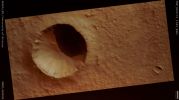
Psp_009772_1545_red.jpgSchaeberle Crater (possible True Colors; credits: Lunar Explorer Italia)68 visiteMars Local Time: 15:35 (middle afternoon)
Coord. (centered): 25,4° South Lat. and 50,0° East Long.
Spacecraft altitude: 254,6 Km (such as about 159,1 miles)
Original image scale range: 50,9 cm/pixel (with 1 x 1 binning) so objects ~1,53 mt across are resolved
Map projected scale: 50 cm/pixel
Map projection: EQUIRECTANGULAR
Emission Angle: 0,9°
Phase Angle: 71,4°
Solar Incidence Angle: 71° (meaning that the Sun is about 19° above the Local Horizon)
Solar Longitude: 118,3° (Northern Summer)
Credits: NASA/JPL/University of Arizona
Additional process. and coloring: Lunar Explorer ItaliaMareKromium
|
|
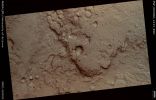
PSP_009960_2235_RED.jpgInverted Channel with Phyllosilicates (possible True Colors; credits: Lunar Explorer Italia)68 visiteMars Local Time: 15:26 (early afternoon)
Coord. (centered): 43,4° South Lat. and 309,2° East Long.
Spacecraft altitude: 303,5 Km (such as about 189,7 miles)
Original image scale range: 60,7 cm/pixel (with 1 x 1 binning) so objects ~1,82 mt across are resolved
Map projected scale: 50 cm/pixel
Map projection: EQUIRECTANGULAR
Emission Angle: 6,6°
Phase Angle: 42,0°
Solar Incidence Angle: 48° (meaning that the Sun is about 42° above the Local Horizon)
Solar Longitude: 125,2° (Northern Summer)
Credits: NASA/JPL/University of Arizona
Additional process. and coloring: Lunar Explorer ItaliaMareKromium
|
|

PSP_003252_1425_RED_browse-00%7E0.jpgBright Gully Deposit in Terra Sirenum (ctx image - MULTISPECTRUM; credits: Lunar Explorer Italia)68 visiteThis HiRISE image shows a bright gully deposit and other gullies within a crater wall in Terra Sirenum (37,7° South Lat. and 229,0° East Long.).
Three images are available:
(context image - A): The full frame HiRISE image, with the crater at left center; the width of the image is 6 Km;
(close-up of the crater's rim - B): an enlargement showing the crater;
(close-up of the bright gully deposit - C).
Frames B and C have been stretched to enhance contrast. The red box in B shows the location of C. MareKromium
|
|
| 2237 immagini su 187 pagina(e) |
 |
|
|
|
|
100 | |
|
|
|
|





