| Piú viste - The Universe Inside |
|
|

Sun___clouds.jpgThe eclipse is real, but this picture is just a fake!75 visiteDa "NASA - Picture of the Day" del giorno 11 Aprile 2005:" (...) The above image composite was taken with a handheld digital camera. After a day of rain in Mt. Holly, North Carolina, USA, a partially eclipsed Sun momentarily peaked through a cloudy sky. After taking a sequence of images, the best eclipse shot was digitally combined with a less good eclipse shot that featured a passing airplane".
Nota: è deprimente vedere come gli Amici della NASA dìano spazio e valore ad un semplice "falso" ("digital combination of different images" significa solo "FABBRICARE UN FALSO").
Stiamo esagerando? Pensate: le fotografie, sino a qualche anno fa, rappresentavano un "istante cristallizzato" del mondo reale. Ora - così come avviene in questo specifico frame - ciò che viene "cristallizzato" è un evento che, nel mondo reale, NON E' MAI accaduto!
L'uso di jargon tecnologico potrà impressionare gli sprovveduti, ma la verità è che il confine fra 'Realtà' e 'Ricostruzione Simulata della Realtà' si è fatto sottilissimo...
|
|

MoonIllusion.jpgThe rise of a Dream...75 visite
|
|

PIA09956.jpgCosmic "Merger"75 visiteThis artist's concept shows what the night sky might look like from a hypothetical planet around a star tossed out of an ongoing four-way collision between big galaxies (yellow blobs). NASA's SST spotted this "quadruple merger" of galaxies within a larger cluster of galaxies located nearly 5 BLY away.
Though the galaxies appear intact, gravitational disturbances have caused them to stretch and twist, flinging billions of stars into space -- nearly three times as many stars as are in our Milky Way galaxy. The tossed stars are visible in the large plume emanating from the central, largest galaxy. If any of these stars have planets, their night skies would be filled with the monstrous merger, along with other galaxies in the cluster (smaller, bluish blobs).
This cosmic smash-up is the largest known merger between galaxies of a similar size. While three of the galaxies are about the size of our Milky Way galaxy, the fourth (center of image) is three times as big.
All four of the galaxies, as well as most other galaxies in the huge cluster, are blob-shaped ellipticals instead of spirals like the Milky Way.
Ultimately, in about one hundred million years or so, the four galaxies will unite into one. About half of the stars kicked out during the merger will fall back and join the new galaxy, making it one of the biggest galaxies in the universe.MareKromium
|
|

Big_Dipper-1.jpgThe "Big Dipper"...again!75 visiteCaption NASA:"Why would the dome of a telescopic observatory appear translucent red? As one of the telescopes of the Etscorn Observatory of New Mexico Tech waited to inspect small portions of the night sky, playful observers decided to make this unusual image. Tricks needed to create this seemingly impossible shot included opening the observatory dome slightly, using a red light to illuminate the inside of the dome, spinning the dome, and using a long exposure. The open slit in the dome then allowed the camera to incrementally image the inside of the observatory, including the telescope. A fortuitous break in the clouds allowed the stars of the Big Dipper asterism to shine through". MareKromium
|
|

The_Moon.jpgThe Hunter's Moon...75 visite"...Caelum, avarus, in coeno quaerit..."
(Binder)
"...L'avaro (inteso anche come chi è "moralmente misero") cerca il Cielo nel fango..."MareKromium
|
|

EyesintheSky-W00037024.jpgLike "Eyes", in the Space of Saturn...75 visite"...Nec te quaesiveris extra..."
(Persio)
"...Non cercarti fuori da te stesso..."MareKromium
|
|

The-Red-Moon.jpgEclipsed Moonlight (by Jerry Lodriguss)75 visiteCaption NASA:"Moon watchers blessed with clear skies over the Americas, Europe, Africa and Western Asia enjoyed a total lunar eclipse.
Catching eclipsed moonlight, astroimager Jerry Lodriguss offers this view of the inspiring celestial event with the shadowed Moon accompanied by wandering planet Saturn at the left, and bright Regulus, alpha star of the constellation Leo, above.
The engaging composite picture was made by combining a filtered, telephoto image of the Moon and surrounding starfield with a telescopic exposure. The combination dramatizes the reddened moonlight while clearly showing the variation of brightness and color in Earth's not-so-dark shadow across the lunar surface".MareKromium
|
|

The_Milky_Way-CN.jpgInfinite Reflections...75 visitenessun commentoMareKromium
|
|
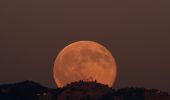
Moonrise.JPGMoonrise over Lick Observatory75 visitenessun commentoMareKromium
|
|

PurpleRain.jpgPurple Rain (by Marco Faccin)75 visitenessun commentoMareKromium
|
|

Moons_of_the_Solar_System.jpgWhich is Which?75 visiteMiranda, Proteus, Enceladus e Mimas: queste quattro "Lune del Sistema Solare" sono state allineate in questa fotocomposizione in maniera tale da poterne individuare le affinità e le differenze con un solo sguardo.
MA...affinità e differenze a parte, sapreste ordinarle correttamente, da Sx a Dx, attribuendo ad ognuna di esse il giusto nome? Provateci!MareKromium
|
|
| 496 immagini su 42 pagina(e) |
 |
|
|
|
|
|
38 | |
|
|
|








