| Piú viste - The Universe Inside |

Walhalla-070912_8930-39.jpgWalhalla84 visitenessun commentoMareKromium
|
|
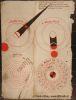
OldAgeAstronomy.jpgMedieval Astronomy from the "Melk Abbey"84 visiteDa "NASA - Picture of the Day" del giorno 17 Aprile 2009:"Discovered by accident, this manuscript page provides graphical insight to astronomy in medieval times, before the Renaissance and the influence of Nicolaus Copernicus, Tycho de Brahe, Johannes Kepler, and Galileo.
The intriguing page is from the lecture notes on astronomy compiled by the monk Magister Wolfgang de Styria before the year 1490 at Melk Abbey in Austria.
The top panels clearly illustrate the necessary geometry for a lunar (left) and solar eclipse in the Earth-centered Ptolemaic system.
At lower left is a diagram of the Ptolemaic view of the solar system and at the lower right is a chart to calculate the date of Easter Sunday in the Julian calendar.
Text at the upper right explains the movement of the planets according to the Ptolemaic system.
The actual manuscript page is on view at historic Melk Abbey as part of a special exhibition during the International Year of Astronomy".MareKromium
|
|

Terra_04.jpgTerra! (additional process. by Giorgio Picciau)84 visitenessun commentoMareKromium
|
|

Cold_Blue.jpgCold Blue (by Roberto Tremolada)84 visiteSe esistesse un Pianeta simile alla Terra in orbita attorno a Sirio (oppure intorno a qualsiasi altra Gigante Blu), la Dominante Cromatica sarebbe quella ipotizzata dal bravissimo Roberto Tremolada, in questo suo spettacolare ed immaginifico quadro.
"Cold Blue" è un dipinto virtuale dedicato alle gelide acque di un Pianeta Senza Nome e ad uno dei suoi fiumi che, appena illuminato dai raggi azzurri di un Sole tanto grande e maestoso, quanto freddo e troppo lontano, scorre silenzioso nel paesaggio immaginato dall'Autore.
Un paesaggio che trasmette sensazioni di "stasi temporale" e di atmosfere, sì, limpide e ritempranti, ma anche - e comunque - aliene, desolate e spettrali...MareKromium
|
|

ZO-Westlake3Planets061905.jpgMercury, Venus and Saturn in the Western Sky83 visiteDa "NASA - Picture of the Day" del 24 Giugno 2005: " This weekend three planets will grace the Western Sky, forming a lovely trio easily visible shortly after sunset. Saturday evening in particular will find Saturn, Venus and Mercury all within a 2° circle (about the size of your thumb held at arm's length) above the Western Horizon.
Recorded last Sunday, June 19, this image shows the same 3 planets arrayed along the ecliptic plane above a Colorado Rocky Mountain skyline. Venus is easiest to pick out of the twilight, the brightest celestial beacon below picture center, with Saturn above and to the left of Venus and Mercury closest to the horizon, right of prominent Pinnacle Peak. By Saturday, the wandering planets will draw even closer together (...)".
|
|

Moon and Pleiades.jpgOld Moon...83 visiteDa "NASA - Picture of the Day" del 29 Giugno 2006:"An old crescent Moon shares the Eastern Sky over Menton, France, with the Sister Stars of the Pleiades cluster in this early morning skyscape recorded just last Friday, June 23rd. (Bright Venus was also near the Eastern horizon, but is not pictured here.) Astronomical images of the well-known Pleiades often show the cluster's alluring blue reflection nebulae, but they are washed out here by the bright moonlight. Still, while the crescent Moon is overexposed, surface features can be seen on the dim lunar night side illuminated by earthshine - light from sunlit planet Earth. Of course, you can spot a young crescent Moon in the early evening sky tonight.
Having left the Pleiades behind, a lovely lunar crescent now appears in the West, lining up with planets Mars, Saturn and Mercury along the Solar System's Ecliptic Plane".
|
|

Autumn_s Moon.jpgLuna d'Autunno83 visitenessun commento
|
|

FL-Anticrepuscolar Rays.jpgInfinite83 visiteCaption NASA originale:"(...) Pictured above are anticrepuscular rays.
To understand them, start by picturing common crepuscular rays that are seen any time that Sunlight pours though scattered clouds. Now although Sunlight indeed travels along straight lines, the projections of these lines onto the spherical sky are great circles. Therefore, the crepuscular rays from a setting (or rising) Sun will appear to re-converge on the other side of the sky.
At the anti-solar point 180° around from the Sun, they are referred to as anticrepuscular rays (...)".
|
|

Morning.jpgThe Pink-fingered Dawn...83 visiteMareKromium
|
|

Aurora_Borealis_-_05.jpgAurora in the Northern Skies83 visitenessun commentoMareKromium
|
|

Outpost1.JPGThe Outpost N. 1 (by Roberto Tremolada)83 visitenessun commentoMareKromium
|
|

BeforeTheMigration-00.jpgMars before the Great Migration (by Roberto Tremolada)83 visitenessun commentoMareKromium
|
|
| 496 immagini su 42 pagina(e) |
 |
|
|
|
|
32 | |
|
|
|
|








