| Piú viste - The Universe Inside |

ALANBEAN-SELFPORTRAIT.jpgIn the dust...104 visiteAutoritratto, nella polvere (o nella "nebbia dei ricordi"...) dell'Astronauta Alan Laverne Bean.
|
|

M_45_and_the_Moon.jpgThe Pleiades "obscured" by the Moon104 visite"...There is no point to Life; though there is a point to Art..."
frase attribuita a Kingsley Amis (1922 - 1995)MareKromium
|
|

Voyagers-01.gifTowards the "Terra Incognita" (2)104 visiteIt is appropriate to consider the VIM as three distinct phases: the termination shock, heliosheath exploration, and interstellar exploration phases. The two Voyager spacecraft began the VIM operating, and are still operating, in an environment controlled by the Sun's magnetic field with the plasma particles being dominated by those contained in the expanding supersonic solar wind. This is the characteristic environment of the termination shock phase. At some distance from the Sun, the supersonic solar wind will be held back from further expansion by the interstellar wind. The first feature to be encountered by a spacecraft as a result of this interstellar wind/solar wind interaction will be the termination shock where the solar wind slows from supersonic to subsonic speed and large changes in plasma flow direction and magnetic field orientation occur.
Passage through the Termination Shock ends the Termination Shock Phase (TSP) and begins the Heliosheath Exploration Phase (HEP). Voyager 1 in 2004 completed the TSP of the mission when the spacecraft was 94 AU from the Sun. After passage through the Termination Shock, the spacecraft will be operating in the Heliosheath environment which is still dominated by the Sun's Magnetic Field and particles contained in the Solar Wind. The HEP ends with passage through the Heliopause which is the outer extent of the Sun's Magnetic Field and Solar Wind. The thickness of the Heliosheath is uncertain and could be tens of AU thick taking several years to traverse. Passage through the Heliopause begins the Interstellar Exploration Phase (IEP) with the spacecraft operating in an interstellar wind dominated environment. This interstellar exploration is the ultimate goal of the Voyager Interstellar Mission.MareKromium
|
|
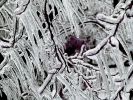
Ice-7.JPGFrozen Life (by Dr Marco Faccin)104 visite"...Gli Schemi sui quali è costruita la Natura sono frattali e, come sai, si ripetono - sempre uguali - sino all'infinito: dunque se tracci lo Schema corretto di una Goccia d'Acqua, avrai tracciato anche quello di una Galassia.
Anzi...di tutte!..."
P.C. Floegers - "Conversations for Tomorrow"
MareKromium
|
|

Lightnings-GIF.gifElectric Signature104 visitenessun commentoMareKromium
|
|

ZZ-ZZ-ZZ-Venus_Co_.jpgVenus, Mercury and Saturn from Brighton (Australia)103 visiteDa "NASA - Picture of the Day" del 2 Luglio 2005:"On Tuesday, June 28th, the setting Sun flooded the horizon with a beautiful warm light in this view from the beach beside the pier at Brighton in Adelaide, South Australia. The Sun also illuminated 3 planets gathered in the Western Sky, such as Mercury, Venus and Saturn. From this perspective Mercury is at the highest point in the celestial triangle, brilliant Venus is just below, and Saturn stands farther to the left and below the close pair. Of course, the Planets only appear close together on the sky but are actually quite far apart in space. The orbits of Mercury and Venus are both interior to Earth's orbit, while gas giant Saturn lies in the outer Solar System, over 9 AU from the Sun. Late next week, Venus and Mercury will share Western Skies with the young crescent Moon".
|
|

ISS017-E-09734_lrg2.jpgFrom Above...103 visiteLunexit Color Processing: left (Sx)
NASA Color Processing: right (Dx)MareKromium
|
|

Horizon.jpgMaybe the "Horizon" is the Future!103 visiteErano anni che aspettavamo di avere i mezzi tecnologici adatti a rilevare oggetti interstellari lontanissimi e oggi, finalmente, ci siamo arrivati. Le prove, peraltro, sono sotto gli occhi di tutti: di recente abbiamo individuato ben due grandi oggetti spaziali, cioè "Oumuamua" e "2I/Borisov". Ma questo è solo l'inizio.
Secondo gli scienziati - come racconta un lungo articolo apparso di recente su Science Alert - sono sempre più focalizzati sul trovare modi per visitarli, questi oggetti spaziali. Sì, potremmo presto sbarcare su oggetti diversissimi e molto lontani da noi, e sta già succedendo su scala ridotta.
La particolarità di queste missioni è che saranno molto diverse tra loro. Visitare una cometa è un obbiettivo che la specie umana ha già raggiunto di recente, anche se non tutti si rendono davvero conto di quanto incredibile sia quest'impresa. E le prossime volte? La particolarità suddetta sta nel fatto che Borisov, per esempio, si è comportato proprio come una cometa una volta entrato nel nostro sistema solare. Mentre Oumuamua no, tutt'altro.
A trovare nuovi incredibili oggetti spaziali sarà molto presto il Vera C Rubin Observatory Legacy Survey of Space and Time (LSST). L'osservatorio si stima che potrà catturare con le sue immense lenti fino a dieci oggetti interstellari di dimensioni importanti, quanto Oumuamua, per intenderci.
Parliamo di oggetti che arrivano da distanze enormi, decisamente inimmaginabili per noi umani, ed è proprio per questo loro essere oggetti alieni che sono importanti. I materiali di cui sono composti, la loro traiettoria, la velocità e molte altre caratteristiche possono raccontarci come sono fatti gli angoli più remoti dell'universo. Un'opportunità incredibile.MareKromium
|
|

DoubleSun.jpgLens Flare or something else?!? (credits: Dr G. Barca)102 visiteUn Sole brillante e velato, domina il cielo sopra la Cittadina Ligure di Albissola. Ma che cosa c'è accanto a quel Sole Estivo?
Il Dr Barca, quando ha scattato la fotografia, riferisce di NON AVER visto nulla e quindi, a nostro parere, le possibilità sono solo due:
1) si tratta di un effetto ottico noto come "Lens Flare", in questo caso davvero molto simile a quegli effetti che, presenti in svariati frames Apollo, fecero parlare di UFO per anni ed erroneamente oppure...
2) ...oppure diteci Voi di che cosa si potrebbe trattare...MareKromium
|
|

ice6.jpgOnce in a While (by Marco Faccin)102 visitenessun commentoMareKromium
|
|

Maybe.jpgHeisenberg's Uncertainty (by Marco Faccin)102 visitenessun commentoMareKromium
|
|

OPP-SOL1961-GB1~0.jpgSMILE! (by Dr Gianluigi Barca)102 visiteCandid Camera on Mars? CERTO!
Perché un sorriso, a volte, è più che necessario: è ESSENZIALE!!!
Un abbraccio e Complimenti - as usual - al nostro Dr Barca (Big "G").MareKromium
|
|
| 496 immagini su 42 pagina(e) |
 |
|
|
|
|
23 | |
|
|
|
|








