| |

| Piú viste - The Universe Inside |

Luna-FGL.jpgRising...125 visiteDomenica 5 Agosto, 2012, Oliviero, Papà della nostra Grande Amica e, da tempo, Partner della nostra Fondazione, Ivana Tognoloni, ha lasciato questa Dimensione (sovente, ahinoi, fatta di Sofferenza) e si è avviato lungo il Cammino che, auspicabilmente, conduce a Nuovi Lidi e Nuove Esistenze, da qualche parte, oltre i nostri Orizzonti Visibili. Tutta l'Astronave "Lunar Explorer" ed il suo Equipaggio, salutano Oliviero, nella Speranza che Ivana possa accettare l'Inevitabile e farsene una Ragione, e con la Certezza che, un giorno, Ivana ed Oliviero si ritroveranno ancora. Da qualche parte.
Con infinito affetto, Paolo C. Fienga & Lunar Explorer Italia
MareKromium
|
|
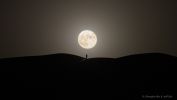
The_Moon~2.jpgFull Moonlight (Credits & Copyright: Zhengjie Wu and Jeff Dai - TWAN)125 visiteThe Full Moon is the brightest lunar phase, and tonight you can stand in the light of the first Full Moon of 2026. In fact, the Moon's full phase occurs on January 3 at 10:03 UTC, while only about 7 hours later planet Earth reaches its 2026 perihelion, the closest point in its elliptical orbit around the Sun, at 17:16 UTC. January's Full Moon was also not far from its own perigee, or closest approach to planet Earth. For this lunation the Moon's perigee was on January 1 at 21:44 UTC.MareKromium
|
|

ALANBEAN-MOTHEREARTH.jpgMother Earth124 visitenessun commento
|
|

ALANBEAN-MANKINDROCK.jpgMankind Rock123 visiteThis is Gene Cernan as he was near the end of the third moonwalk of Apollo 17. He and astronaut-geologist Jack Schmitt had completed most of their work and were just gathering final equipment and samples, putting them aboard the lunar module. At this point, Gene turned toward the television camera and said, "Jack has picked up a very significant rock, composed of many fragments of many sizes and many shapes, probably from all parts of the Moon, probably billions of years old, but a rock of all sizes and shapes and even colors that had grown together to become a cohesive rock, outlasting the nature of space, sort of living together in a very coherent, very peaceful manner. We'd like to share a piece of this rock with many of the countries throughout the world. We hope that this will be a symbol of what our feelings are." Then they continued their preparations for leaving the Moon.
Gene knew he would be the last man on the Moon for quite a long time. As he closed his checklist and prepared for his ascent up the ladder, he said, "As we leave the Moon at Taurus-Littrow, we leave it as we came and, God willing, we shall return with peace and hope for all mankind." Gene Cernan, last man on the Moon, 5:34 a.m. GMT, December 14, 1972.
I felt this was such a fitting and proper occasion in the history of manned lunar exploration that I created two nearly identical paintings of this moment.
|
|

Acheron_Fossae-Fantasy.jpgSunset over Acheron Fossae123 visite"...E se non ci fosse nulla, dopo questo Cammino, nulla, se non l'Eterna Oscurità, e l'Oblio, ed il Silenzio senza fine, allora mi fermerei, ad un istante dall'Orizzonte.
Un istante solo: non di più, non di meno.
Solo, ad un Passo dall'Eternità, mi metterei a sedere, guarderei il Sole scendere e, mentre le Stelle si affanneranno a dipingere il Cielo, chiuderei gli occhi e, nella sera, darei il benvenuto a questo Ultimo Sogno..."
P.C. Floegers - "Conversations"MareKromium
|
|

JustlikeIo.jpgJust like Io!123 visiteCaption NASA:"Volcano Tungurahua erupted spectacularly last year. Pictured above, molten rock so hot it glows visibly pours down the sides of the 5000-meter high Tungurahua, while a cloud of dark ash is seen being ejected toward the left.
Wispy white clouds flow around the lava-lit peak, while a star-lit sky shines in the distance.
The above image was captured last year (2006) as ash fell around the adventurous photographer. Located in Ecuador, Tungurahua has become active roughly every 90 years since for the last 1300 years. Volcano Tungurahua has started erupting again this year and continues erupting at a lower level even today".
Nota: i colori sono stati alterati dallo STAFF Lunexit, così da rendere l'immagine più esotica e, a nostro parere, più simile a quello che potrebbe essere un vulcano situato sulla Luna Galileiana "Io".
Chiediamo scusa al Dr Tashler (l'Autore dell'immagine originale) per la manipolazione.MareKromium
|
|
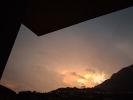
TB-05-20260619_203336.jpgFire in the Sky (Image Crtedits: Tatiana Balbiani)123 visite"L'Amour déçu par ses excès, et surtout l'Amour trompé par la fatalité de la Mort, ne peut aboutir qu'au suicide."
(Traduzione)
"L'Amore deluso nel suo eccesso, e soprattutto l'Amore ingannato dalla fatalità della Morte, non ha altro esito che il suicidio".
Michel Foucault (Histoire de la folie à l'époque classique - 1961)MareKromium
|
|

LonelyQuasar.gifLonely Quasar...122 visite"...It was just before dawn,
One miserable morning in black, '44,
When the forward commander was told to sit tight
When he asked that his men be withdrawn,
And the generals gave thanks
As the other ranks
Held back the enemy tanks for a while,
And the Anzio bridgehead was held for the price
Of a few hundred ordinary lives..."
Pink Floyd - "When The Tigers Broke Free"MareKromium
|
|

The-Holographic-Principle.gifThe Holo...what?!?122 visiteNella caption NASA (che leggerete a fine intervento), ecco un esempio di quella che alcuni chiamano "Psico-Fisica", ossìa una sorta di StranaScienza che viaggia a metà strada fra la Razionalità, l'Irrazionalità e le baggianate da "Lab-Rats".
Per quanto attiene la nozione ed il contenuto del Principio Olografico, i riferimenti fatti dalla NASA nella caption Vi saranno sufficienti per trovare abbondanti informazioni al riguardo; per quanto attiene le implicazioni fisiche del suddetto Principio, invece...Vi suggeriamo di non sforzarVi troppo.
Siamo nel regno della Meccanica Quantistica (secondo i Fisici Classici), o della Fisica Teorica (a detta dei – chiamiamoli così – “Filosofi” della Fisica).
Oppure siamo in quello, molto più vasto e variegato, della Fisica da “Bar dell’Ateneo”: un regno fatto di baggianate suggestive ma indimostrabili e popolato da “scienziati” più vicini alle favole New Age piuttosto che a Planck, Bohr o ad Einstein (e, a proposito, un consiglio: attenzione a quelli che parlano e scrivono di “Oloscienza”…).
Morale: riempirsi la bocca di parole, a quanto pare, conferisce tono, carisma e popolarità (sia ai Grandi della Scienza, sia ai Politici); tuttavia si può comunque notare che non sempre una bocca piena di parole, se si ascolta con la dovuta attenzione ed il necessario spirito, riesce ad esprimere un concetto (che sia uno) di senso compiuto.
Pensiamoci e pensateci sopra...
Caption NASA:”Is this picture worth a thousand words? According to the Holographic Principle, the most information you can get from this image is about 3x1065 bits for a normal sized computer monitor. The Holographic Principle, yet unproven, states that there is a maximum amount of information content held by regions adjacent to any surface. Therefore, counter-intuitively, the information content inside a room depends not on the volume of the room but on the area of the bounding walls. The principle derives from the idea that the Planck length, the length scale where quantum mechanics begins to dominate classical gravity, is one side of an area that can hold only about one bit of information. The limit was first postulated by physicist Gerard 't Hooft in 1993.
It can arise from generalizations from seemingly distant speculation that the information held by a black hole is determined not by its enclosed volume but by the surface area of its event horizon. The term "holographic" arises from a hologram analogy where three-dimension images are created by projecting light though a flat screen. Beware, other people looking at the above image may not claim to see 3 x 1065 bits -- they might claim to see a teapot”.
MareKromium
|
|

RS_Canum_Venaticorum-PIA13346.jpgPlanetary Ashes122 visite"...I bugiardi necessitano di un'ottima memoria..."
Pierre Corbeille
MareKromium
|
|

Orion_on_Barolo.jpg"The Great Hunter" over Barolo - Italy (by Dr Gianluigi Barca/Lunar Explorer Italia/Italian Planetary Foundation)122 visite"...Multiplicity is only apparent, in truth, there is only one mind..."
Erwin Schrödinger - "The Oneness of Mind", as translated in "Quantum Questions: Mystical Writings of the World's Great Physicists" - edited by Ken Wilber in 1984
MareKromium
|
|
TB-02-20260619_203336.jpgFire in the Sky (Image Crtedits: Tatiana Balbiani)122 visite"Le véritable Amour rend la pensée de la Mort familière, facile, sans terreur, un simple terme de comparaison, le prix que l'on paierait pour tant de choses".
Stendhal
(Traduzione)
"...Il vero Amore rende il pensiero della Morte familiare, facile, senza terrori, un semplice termine di paragone, il prezzo che si pagherebbe per tante cose..."MareKromium
|
|
| 496 immagini su 42 pagina(e) |
|
|
|
|
|
18 | |
|
|
|
|
|
|








