| Piú viste - The Universe Inside |

Grigna-WhatsApp_Image_2019-11-16_at_22_27_10_(4).jpgEternity does not mean Forever (by Giovanni Casile)153 visite"...C'é chi crede di sapere, c'é chi sa di non sapere, c'é chi dice di sapere e non sa, e c'é chi veramente sa e non lo dice...".
Luciano Meran DonatoniMareKromium
|
|
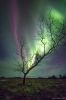
AuroraTree_Wallace_960.jpgThe Aurorae Tree (Image Credit & Copyright: Alyn Wallace)153 visiteDeath Will Come And Will Have Your Eyea
Death will come and will have your eyes.
This death that accompanies us
From morning to night, sleepless,
Deaf, like an old remorse,
Or an absurd vice.
Your eyes will be a vain word,
A silent cry, a silence.
This is how you see them every morning,
When you bend over yourself alone,
In the mirror.
O dear Hope,
That day we too will know
That you are life and you are nothing.
Death has a gaze for everyone.
Death will come and will have your eyes.
It will be like giving up a vice,
Like seeing in the mirror,
Reemerging, a dead face.
Like listening to a closed lip.
And we will descend, into the whirlpool, silent.
(Cesare Pavese, March 22, 1950)
MareKromium
|
|

The_Mono_Lake.jpgThe "Mono" Lake152 visitenessun commentoMareKromium
|
|

YoungMoon.jpgYoung Moon150 visite'Luna Giovane'. L'ultima 'Luna Giovane' risale al 9 Maggio scorso (AD 2005) e questa fotografia la riprende mentre essa è giunta alla sua 34ma ora (e 18') di 'vita'.
In effetti, quando si calcola l'età della Luna durante una completa lunazione (ossia un intero "ciclo di tutte le sue fasi") - dalla Luna Nuova alla Luna Piena e quindi ancora alla Luna Nuova - la Luna non 'invecchia' mai più di 29 giorni e 12 ore.
A parte questa piccola curiosità, ci piace sottolineare che la Luna Giovane, quando appare come una sottilissima falce nel nostro cielo, non è solo un grande spettacolo offerto dalla Natura (ed un grande piacere 'visivo'!), ma è anche un momento assai propizio - come accade durante le eclissi - per cercare di vedere dei TLP o anche di cogliere dei bagliori da impatti sul suo lato in ombra.
Certo, ci vuole una grande dose di fortuna per cogliere questi rarissimi fenomeni mentre accadono ma...Se non si prova neppure quando il momento è favorevole, allora non si riuscirà mai a vederli!
O no?!?
|
|

The_Moon-G_A_Gentile-AndreaGG-LXTT-IPF.jpgWaning Moon... (by Giuseppe Andrea Gentile/Lunar Explorer Italia/Italian Planetary Foundation)149 visite"...Raise your eyes now, and look from the place where you are: for all the Land that you see, I will give it to you..."
Genesis 13:14-15MareKromium
|
|

VENUS___SUN_3.jpgVenus and the Sun148 visiteMa c'é dell'altro: la temperatura superficiale del Pianeta è stabile attorno ai 900 F (pari a circa 480/90° C); la pressione al suolo è circa 90 volte maggiore di quella Terrestre al livello del mare e, ultimo ma non meno importante dato, il Pianeta è quasi costantemente innaffiato da una pioggia corrosiva a base di Acido Solforico (H2SO4, per gli amanti delle formulette...).
E' a causa di queste condizioni di estrema ostilità che tutte le Missioni finalizzate ad un landing su Venere sono, almeno con la tecnologia sino ad oggi in nostro possesso, destinate all'insuccesso anche se, a dire il vero, ben 4 Sonde Sovietiche - Venera 9, 10, 13 e 14 - riuscirono a scendere sul Pianeta e, prima di perire, furono comunque capaci di inviarci qualche prezioso fotogramma.
|
|
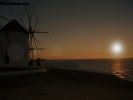
Afterlight.jpgAfterlight (by Dr Gianluigi Barca)147 visitenessun commentoMareKromium
|
|

Dyson_Swarm_-_01.jpgThe Dyson Swarm147 visiteSome have suggested that Dyson Sphere habitats could be built around white dwarfs or pulsars.
In 2022 it was suggested that a Dyson Swarm around the Sun could be launched from either Mercury or Mars.
In order to transmit the energy back (Microwaves and high frequency IR Radiations maybe?), far-field radiative wireless power transfer was proposed, a technology that is not yet fully developed. But the question remains open...
A Dyson swarm is a hypothetical megastructure that orbits a star to capture its radiant energy. Proposed as an alternative to the solid, unbuildable "Dyson Sphere," it consists of a vast cloud of independent satellites or habitats that harness massive amounts of stellar power.
The Inspiration: Physicist Freeman Dyson first proposed the concept in 1960. He theorized that highly advanced alien civilizations would require exponentially more energy than a single planet could provide, prompting them to build structures around their host star.
Dyson Sphere vs. Dyson Swarm: Dyson Sphere vs. Dyson Swarm: While a traditional "Dyson sphere" is often imagined in sci-fi as a single, solid shell around a star, this is mechanically impossible due to immense gravitational stresses. A swarm solves this by using millions or billions of independent solar collectors, mirrors, and space habitats traveling in their own individual orbits. MareKromium
|
|

endless.jpgEndless Lights146 visitenessun commentoMareKromium
|
|

ZW-The Moon and Jupiter.jpgMoon and Jupiter145 visiteUn'immagine amatoriale davvero eccellente che ci arriva dalla cittadina di Atmore - Alabama, USA - e pubblicata sul Sito NASA - Picture of the Day del giorno 9 Dicembre 2004.
Ben visibili, accanto a Giove, guardando il versante superiore della Luna (e, per l'esattezza, quella sua parte che ci appare debolmente illuminata a causa del "chiaro di Terra"), riusciamo a vedere due "Satelliti Galileiani": Ganymede (quello più prossimo a Giove) e Callisto.
Complimenti al Sig. Westlake per l'immagine!
|
|

ZZ-ZZ-ZZ-ZZ-ZZ-LunarGreenFlash_laveder_f.jpgA "green flash" over the Moon145 visiteDa "NASA - Picture of the Day" del 26 Agosto 2005:"July's Full Moon looks strangely darkened and distorted in this remarkable telescopic view. The image is one of a series recorded when the Moon was very near the horizon. The long sight-line through a turbulent atmosphere gives rise to the tantalizing optical effects, including the thin "mirage" shape that seems to float just above the Moon's upper edge. Also seen (more easily in the inset), along the Moon's upper edge is a noticeable green rim. Substantial atmospheric refraction produces this prism-like effect -- related to the more commonly witnessed green flash of the setting Sun. Careful inspection of the full image reveals a corresponding red rim along the lower edge, another intriguing signature of atmospheric refraction".
|
|

Jupiter_and_Saturn.jpgGreat Conjunction145 visiteCaption NASA:"It was time for their close-up. Two days ago Jupiter and Saturn passed a tenth of a degree from each other in what is known a Great Conjunction. Although the two planets pass each other on the sky every 20 years, this was the closest pass in nearly four centuries. Taken early in day of the Great Conjunction, the featured multiple-exposure combination captures not only both giant planets in a single frame, but also Jupiter's four largest moons (left to right) Callisto, Ganymede, Io, and Europa - and Saturn's largest moon Titan. If you look very closely, the clear Chilescope image even captures Jupiter's Great Red Spot. The now-separating planets can still be seen remarkably close - within about a degree -- as they set just after the Sun, toward the west, each night for the remainder of the year".
Buon Natale a Tutti, dall'infima ed ormai disumana Terra, sino alle Stelle ed all'Infinito.MareKromium
|
|
| 496 immagini su 42 pagina(e) |
 |
|
|
|
|
14 | |
|
|
|
|








