| Piú viste - The Universe Inside |

Max-015.jpgDreams never die...174 visitenessun commentoMareKromium
|
|
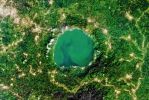
Earth__Impact_Craters_-_Bosumtwi_Crater_-_Ghana.jpgBosumtwi Crater (Ghana)174 visiteIl lago Bosumtwi, l'unico lago naturale del Ghana, e' sprofondato in un antico cratere da impatto situato a sud-est di Kumasi. Gli Ashanti considerano Bosumtwi un lago sacro.MareKromium
|
|
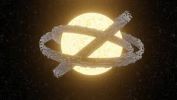
Dyson_Sphere_-_01.jpgThe Dyson Sphere (here: Dyson Revolving Rings)174 visiteDyson speculated that such structures would be the logical consequence of the escalating energy needs of a technological civilization and would be a necessity for its long-term survival. A signature of such spheres detected in astronomical searches would be an indicator of extraterrestrial intelligence.MareKromium
|
|

Alpha-Orionis-1600.jpgSetting Alpha Orionis173 visite
|
|

Martian_Sunset.jpgTwilights172 visitenessun commentoMareKromium
|
|

Drake_Frank.jpgIn Loving Memory: Frank Drake171 visiteE’ morto Frank Drake, l’astronomo e astrofisico pioniere della ricerca di civiltà aliene, padre del programma Seti, dedicato alla ricerca di forme di intelligenza extraterrestri. È sua e porta il suo nome la celebre equazione che permette di stimare il numero delle civiltà aliene capaci di comunicare. La notizia della morte di Drake, avvenuta il 2 settembre scorso, è stata diffusa su Twitter da decine di studiosi e appassionati di scienza e fantascienza. All’età di 92 anni, Drake è morto per cause naturali nella sua casa di Aptos, in California.
Insieme al suo collega Carl Sagan (1934 – 1996), Drake era stato il padre del progetto Seti (Search for Extraterrestrial Intelligence), che si basava sull’idea che si potessero forse rilevare le emissioni di onde radio delle civiltà extraterrestri nella Via Lattea e forse anche comunicare con loro scambiandosi messaggi. Drake è stato per 19 anni presidente del consiglio di amministrazione del Seti Institute, nato nel 1974, a Mountain View, in California, un’organizzazione senza scopo di lucro che si occupa di ricerca delle forme di vita oltre la Terra. Lo scienziato è conosciuto anche per l’equazione che porta il suo nome (equazione di Drake), riferita alla possibilità dell’esistenza di forme di vita intelligenti extraterrestri. Drake iniziò la carriera intraprendendo la ricerca radioastronomica al National Radio Astronomy Observatory a Green Bank nella Virginia Occidentale e in seguito al Jet Propulsion Laboratory, conducendo importanti misurazioni che rilevarono la presenza della magnetosfera e della ionosfera gioviana.
Nel 1960, condusse la prima ricerca radio di un’intelligenza extraterrestre, nota come Progetto Ozma: non venne, tuttavia, trovata alcuna evidenza di segnali alieni. Drake considerava il “contatto” sotto forma di segnali luminosi o radio inevitabile negli anni a venire. Nel 1961, assieme a J. Peter Pearman, presentò la sua famosa equazione, un tentativo di stimare il numero di civiltà extraterrestri intelligenti presenti nella nostra Galassia con le quali potremmo pensare di entrare in contatto. Drake prese parte ai primi studi sulle pulsar, fu professore alla Cornell University (1964-84) e direttore dell’Osservatorio di Arecibo. Nel 1972, poi, Drake disegnò assieme a Carl Sagan la piastra collocata sulle sonde Pioneer 10 e 11, il primo messaggio fisico inviato nello spazio; la piastra venne progettata per essere comprensibile da un eventuale extraterrestre che avrebbe potuto incontrarla.
In seguito, supervisionò anche la creazione del Voyager Golden Record come professore di astronomia e astrofisica all’Università della California. È stato presidente della Società astronomica del Pacifico e membro dell’Accademia Nazionale per le Scienze degli Stati Uniti.MareKromium
|
|

MOONRISE.jpgMoonrise170 visiteUna delle tante 'immagini artistiche' che ci aiutano a ricordare quanto la Natura sia misteriosa e, nel contempo, assolutamente affascinante ed inesplicabile.
|
|

Grigna-1.jpgRosenrot (by Odette Casile)170 visite"Ich bereue nicht, einige Menschen im Laufe der Zeit verloren zu haben, aber ich bereue die Zeit, die ich mit ihnen verschwendet habe; denn die Menschen gehörten nicht mir, aber die Jahre, die ich mit ihnen verbracht habe, schon."
(Traduzione)
"...Non rimpiango alcune persone che ho perso col tempo, ma rimpiango il tempo che ho perso con loro; poiché le persone non mi appartenevano, ma gli anni vissuti (con loro), si..." (trad. libera)
Carl Gustav Jung
MareKromium
|
|
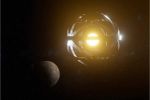
Dyson_Swarm_-_03.jpgThe Dyson Sphere170 visiteHow It Works: each satellite in the Swarm absorbs or reflects the star’s sunlight and beams it to where it is needed—such as to an inhabited planet or orbital space stations.
Uses: the captured energy could power an entire civilization, propel massive spaceships using photon sails, or run planetary-scale supercomputers and artificial intelligence networks.
Materials: constructing a comprehensive Swarm requires a staggering amount of raw materials. Theorists suggest that disassembling an entire rocky planet, like Mercury, could provide enough mass to build the initial stages of a Swarm.
Gradual Build: our Civilization wouldn't build a full Swarm all at once. We would likely start with a "proto-swarm" consisting of space-based solar arrays, expanding it over thousands of years.MareKromium
|
|

VENUS___SUN_2.jpgVenus and the Sun: the transit of June, 9, 2004 (2)169 visiteVenere, a dispetto del suo nome, della sua luminosità e di tutto quant'altro viene solitamente ad esso istantaneamente collegato (non ultima la nomea di "pianeta gemello della Terra"), è un astro violento ed inospitale; forse uno dei più inospitali (conosciuti) in assoluto.
Esso è in perpetuo ricoperto da un'impenetrabile (ai nostri strumenti ottici) coltre di nuvole che, se da un lato rende il Pianeta oltremodo brillante, suggestivo e facile da riconoscersi nel cielo del mattino e della sera, dall'altro, come ovvio, ci impedisce di cogliere qualsiasi tipo di dettaglio del suo paesaggio sottostante.
|
|

Max-019.jpgDreams never die...169 visitenessun commentoMareKromium
|
|

MERCURY SKY.jpgMercury from Earth167 visitenessun commento
|
|
| 495 immagini su 42 pagina(e) |
 |
|
|
|
|
10 | |
|
|
|
|








