| Piú viste - Mercury |

ZY-Mercury-PCF-LXTT.jpgThe "Face" of Mercury (Enhanced Absolute Natural Colors; credits for the additional process. and color.: Dr Paolo C. Fienga - Lunexit Team)199 visitenessun commentoMareKromium
|
|
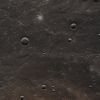
ZZ-Mercury-Plains-PIA14193-PCF-LXTT.jpgRidged Plains (Absolute Natural Colors; credits for the additional process. and color.: Dr Paolo C. Fienga - Lunexit Team)199 visiteDate acquired: March 30, 2011
Image Mission Elapsed Time (MET): 209982350
Image ID: 69294
Instrument: Wide Angle Camera (WAC) of the Mercury Dual Imaging System (MDIS)
WAC filter: 7 (748 nanometers wavelength)
Center Latitude: 56,5° North
Center Longitude: 23,5° East
Resolution: 187 mt/pixel
Scale: the scene is about 191 Km acrossMareKromium
|
|
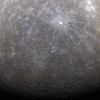
ZZ-Mercury-Z1.jpgThe "Face" of Mercury (Natural Colors; credits for the additional process. and color.: NASA/JHU APL/CIW)192 visiteCaption NASA:"On March 17, 2011, the MESSENGER Spacecraft became the first to orbit Mercury, the Solar System's Innermost Planet. This is its first processed color image since entering Mercury orbit. Larger, denser, and with almost twice the Surface Gravity of Earth's moon, Mercury still looks moon-like at first glance.
But in this view its Terrain shows light blue and brown areas near Craters and long bright rays of material streaking the Surface. The prominent bright ray crater Debussy at the upper right is approx. 80 Km (49,68 miles) in diameter. Terrain toward the bottom of the historic image extends to Mercury's South Pole and includes a region not previously imaged from Space".MareKromium
|
|

ZZ-Mercury-Craters-Unnamed_Craters-PIA14191-PCF-LXTT.jpgUnnamed Craters (Absolute Natural Colors; credits for the additional process. and color: Dr Paolo C. Fienga - Lunexit Team)181 visiteImage Mission Elapsed Time (MET): 209889250
Image ID: 65107
Instrument: Narrow Angle Camera (NAC) of the Mercury Dual Imaging System (MDIS)
Center Latitude: 1,7° North
Center Longitude: 354,3° East
Resolution: approx. 246 mt/pixel
Scale: this image is approx. 390 Km acrossMareKromium
|
|
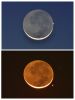
ZG-Mercury_occulted_by_the_Moon-2026Feb18-Melandri.jpgOccultation (Credit & Copyright: Fabrizio Melandri)166 visitenessun commentoMareKromium
|
|

ZZ-Mercury-Limb-PIA14190-PCF-LXTT-0.jpgMercurian Limb165 visiteImage Mission Elapsed Time (MET): 209890193, 209890197, 209890213
Image ID: 65109, 65110, 65114
Instrument: Wide Angle Camera (WAC) of the Mercury Dual Imaging System (MDIS)
WAC filter: 6,7,9 (433, 749, 996 nanometers wavelength)
Center Latitude: 3,1° North
Center Longitude: 352,3° East
Resolution: approx. 1,5 Km/pixel
Nota Lunexit: abbiamo operato una leggerissima saturazione del frame NASA-Original per evidenziare come una "fetta" (decisamente abbondante) del frame - "fetta" relativa allo Spazio circum-Mercuriano - SEMBRA essere stata, di fatto, rimossa (od oscurata). Sia detto con chiarezza: questo è quello che appare dalla semplice analisi del frame, una volta operata - ripetiamo - una leggerissima "schiaritura" (over-saturation) dell'immagine. Quali i motivi di questa operazione di make-up (se di make-up effettivamente si trattasse)? Non ne abbiamo idea. Ma le Vostre opinioni al riguardo saranno, come sempre, apprezzate.MareKromium
|
|

ZZ-Craters-Mercury-Secondary_Craters_Field-PIA14379.jpgSecondary Crater-Chains or Signs of multiple and simultaneous Cometary Impacts? (Enhanced Natural Colors; credits for the additional process. and color.: Dr Paolo C. Fienga - Lunexit Team)158 visiteCaption NASA:"This view captured by MESSENGER's wide angle camera (WAC) shows many Secondary Crater-Chains that originated from a Primary Impact Crater located outside this image, to the West. The Secondary Crater-Chains are formed as the Parent Crater-forming event launches Ejecta into the surrounding area. The chunks of Ejecta dig out their own craters which sometimes overlap to form a long valley-like depression. These features are striking though not uncommon on Mercury's battered Surface. Some other examples of Secondary Craters can be found at Abedin Crater".
Date acquired: April, 30th, 2011
Image Mission Elapsed Time (MET): 212677081
Image ID: 196161
Instrument: Wide Angle Camera (WAC) of the Mercury Dual Imaging System (MDIS)
WAC filter: 7 (748 nanometers)
Center Latitude: 63,76°
Center Longitude: 198,7° East
Resolution: 162 meters/pixel
Scale: this image is about 165 Km across
Incidence Angle: 79,9°
Emission Angle: 1,1°
Sun-Target-Spacecraft (such as "Phase") Angle: 81,0°MareKromium
|
|

ZZ-Mercury-Crater_Chains-PIA14529-PCF-LXTT.jpgFirdousi's Smooth Plains & Crater Chains (Absolute Natural Colors; credits for the additional process. and color.: Dr Paolo C. Fienga - Lunexit Team) 157 visiteDate acquired: July, 17, 2011
Image Mission Elapsed Time (MET): 219349510, 219349512, 219349518
Image ID: 513659, 513658, 513662
Instrument: Wide Angle Camera (WAC) of the Mercury Dual Imaging System (MDIS)
WAC filter: 9 (1000 nanometers), 7 (750 nanometers), 6 (433 nanometers) as red-green-blue
Center Latitude: 6,77° North
Center Longitude: 69,01° East
Resolution: 1330 meters/pixel
Scale: the large crater in the lower left quadrant of this image is about 134 Km (83,214 miles) in diameter
Solar Incidence Angle: 52,4°
Emission Angle: 0,3°
Sun-Mercury-Spacecraft (or "Phase") Angle: 52,4°MareKromium
|
|
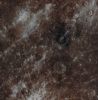
ZZ-Mercury-Global_View_of_the_Surface-PIA14082-PCF-LXTT.jpgCraters and Striations (Enhanced Absolute Natural Colors; credits for the additional process. and color.: Dr Paolo C. Fienga - Lunexit Team)156 visiteDate Acquired: March 29, 2011
Image Mission Elapsed Time (MET): 0209894354, 0209894356, 0209894362
Image ID: 65195, 65196, 65200
Instrument: Wide Angle Camera (WAC) of the Mercury Dual Imaging System (MDIS)
WAC filter: 6,7,9 (433, 749, 996 nanometers wavelength)
Center Latitude: 18,1° North
Center Longitude: 18,3° East
Resolution: approx. 980 meters/pixel
Scale: image width is approx. 510 kmMareKromium
|
|

ZZ-Mercury-Craters-Rembrandt_Crater-PIA14549-PCF-LXTT.jpgRembrandt Crater (Absolute Natural Colors; credits for the additional process. and color: Dr Paolo C. Fienga - Lunexit Team)156 visiteDate acquired: August, 07, 2011
Image Mission Elapsed Time (MET): 221198580
Image ID: 601688
Instrument: Wide Angle Camera (WAC) of the Mercury Dual Imaging System (MDIS)
WAC filter: 7 (748 nanometers)
Center Latitude: 32,95° South
Center Longitude: 84,90° East
Resolution: 1756 meters/pixel
Scale: Rembrandt Crater is ~715 Km (444,015 miles) in diameter.
Solar Incidence Angle: 46,3°
Emission Angle: 48,7°
Sun-Mercury-Spacecraft (or "Phase") Angle: 95,0°MareKromium
|
|

ZZ-Mercury-Limb-PIA14190-PCF-LXTT-1.jpgThe Limb of Mercury (Enhanced Natural Colors; credits for the additional process. and color.: Dr Paolo C. Fienga - Lunexit Team)155 visitenessun commentoMareKromium
|
|

ZW-Mercury-PIA12842-1.jpgThe Eastern Limb of Mercury (possible Natural Colors; add. process. and color.: Dr Paolo C. Fienga - Lunexit Team)154 visiteDate Acquired: January, 14th, 2008
Instrument: Wide Angle Camera (WAC) of the Mercury Dual Imaging System (MDIS)
Resolution: 2,8 Km/pixel (such as about 1,7 miles/pixel) at the Equator
Scale: Caloris Basin (which is the round, light-brown colored Surface Feature visible on the top right of Mercury) is about 1550 Km (approx. 960 miles) in diameter
Spacecraft Altitude: about 13.000 Km (approx. 8000 miles)MareKromium
|
|
| 248 immagini su 21 pagina(e) |
2 |  |
|
|
|
|
|
|
|
|
|





