| |

| Piú viste - Jupiter: the "King" and His Moons |

Ganymede-PIA01610.jpgGanymede's surface detail: a comet fell over there?141 visiteView of a chain of craters named Enki Catena on Jupiter's moon, Ganymede. This chain of 13 craters probably formed by a comet which was pulled into pieces by Jupiter's gravity as it passed too close to the planet. Soon after this breakup, the 13 fragments crashed onto Ganymede in rapid succession. The Enki craters formed across the sharp boundary between areas of bright terrain and dark terrain, delimited by a thin trough running diagonally across the center of this image. The ejecta deposit surrounding the craters appears very bright on the bright terrain. Even though all the craters formed nearly simultaneously, it is difficult to discern any ejecta deposit on the dark terrain. This may be because the impacts excavated and mixed dark material into the ejecta and the resulting mix is not apparent against the dark background.
North is to the bottom of the picture and the sun illuminates the surface from the left. The image, centered at 39 degrees latitude and 13 degrees longitude, covers an area approximately 214 by 217 kilometers. The resolution is 545 meters per picture element. The image was taken on April 5, 1997 at 6 hours, 12 minutes, 22 seconds Universal Time at a range of 27282 kilometers by the Solid State Imaging (SSI) system on NASA's Galileo spacecraft.
|
|
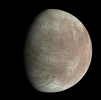
Europa_-_PIA26331-_JunoCam_6solgdm_width-1320.pngEuropa from Juno (Credits: Image data: NASA/JPL-Caltech/SwRI/MSSS; Image processing: Björn Jónsson)141 visiteJupiter’s moon Europa was captured by the JunoCam Instrument aboard NASA’s Juno Spacecraft during the Mission’s close flyby on Sept. 29, 2022. Data from NASA’s Juno mission has provided new insights into the thickness and subsurface structure of the icy shell encasing Jupiter’s moon Europa. Using the spacecraft’s Microwave Radiometer (MWR), mission scientists determined that the shell averages about 18 miles (29 kilometers) thick in the region observed during Juno’s 2022 flyby of Europa. The Juno measurement is the first to discriminate between thin and thick shell models that have suggested the ice shell is anywhere from less than half a mile to tens of miles thick.
Slightly smaller than Earth’s moon, Europa is one of the solar system’s highest-priority science targets for investigating habitability. Evidence suggests that the ingredients for life may exist in the saltwater ocean that lies beneath its ice shell. Uncovering a variety of characteristics of the ice shell, including its thickness, provides crucial pieces of the puzzle for understanding the moon’s internal workings and the potential for the existence of a habitable environment.MareKromium
|
|

Amalthea and Io-PIA01626.jpgAmalthea and Io (approx. true colors)139 visiteComposite view of Amalthea and Io at the same scale. The visible part of Amalthea is about 150 Km across. The colors are just approximate. Amalthea is actually much darker than Io, but is displayed at a similar brightness for ease of viewing. The shape of Amalthea is controlled largely by impact cratering and fragmentation. In contrast, Io, like Earth, has gravity sufficient to form it into a slightly ellipsoidal sphere. Amalthea is covered by craters because there are no processes which erode or cover them efficiently. On extremely volcanically active Io, impact craters are covered quickly by lavas and other volcanic materials. Some of the volcanic materials escape from Io and probably contribute to the reddish colors of Amalthea and the other small inner satellites. The Amalthea and Io composites, obtained by the Solid State Imaging (SSI) camera on NASA's Galileo spacecraft on different orbits, were placed side by side for comparison purposes. The Amalthea composite combines data taken with the clear filter of the SSI system during orbit six, with lower resolution color images taken with the green, violet, and 1 micrometer filters during orbit 4. The Io data was obtained on July 2nd, 1998 (orbit 14) using the green, violet, and 1 micrometer filters.
|
|

Europa-Lineae-Minos_Linea-PIA00275.jpgEuropa: Minos Linea (an EDM in possible Absolute Natural Colors; credits for the additional process. and color.: Dr Paolo C. Fienga - Lunexit Team)138 visitenessun commentoMareKromium
|
|
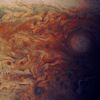
Jupiter-Juno-2024-4-Deutsch.jpgAtmosphärische Turbulenzen138 visiteZur Vorgeschichte: nach einer über fünfjährigen Reise erreichte die Raumsonde Juno am 4. Juli 2016 die Umlaufbahn um Jupiter. Entfernung zur Erde: 1,74 Milliarden Meilen. Am 24. Oktober absolvierte sie ihren achten nahen Vorbeiflug, durchquerte die Wolkendecke des Planeten und näherte sich Jupiters Oberfläche bis auf 3.400 Kilometer. Ihre Mission? Daten und Bilder des größten Planeten unseres Sonnensystems zu sammeln und zur Erde zu übermitteln.
Nach einer Verzögerung (Anfangsphase) bei der Datenübertragung aufgrund einer Sonnenkonjunktion, bei der die Kommunikation zwischen Jupiter und Erde durch die extreme Nähe zur Sonne unterbrochen wurde, erreichten die in der Juno-Sonde gespeicherten Daten die NASA – und die Ergebnisse sind verblüffend. Die Bilder zeigen die geheimnisvollen Nord- und Südpole des Planeten sowie gigantische Gasstürme. Während wir auf weitere nahe Vorbeiflüge warten, präsentieren wir Ihnen einige beeindruckende Bilder, die die Sonde vom Gasriesen, dem fünften Planeten unseres Sonnensystem.MareKromium
|
|

Jupiter~0.jpgThe "true" colors of Jupiter (an interpretation)135 visiteJupiter has several narrow belts of distinct colors as well as reddish oval shaped stable cyclonic weather zones such as the 'Great Red Spot'. The overall albedo of the planet is 0,52. The colors shown in the strips are of the wider alternating belts and zones extending from either side of the often white Equatorial Zone.
This is a Voyager 1 image assembled from raw data and color balanced to approximate the colors and contrast of the Planet.
|
|

Europa-PIA23166.jpgRhadamanthys Linea (Enhanced Natural Color Version)135 visiteCaption NASA Originale:"Europa's Surface is covered with a vast network of Linear Features such as cracks, ridges, and bands, as well as other smaller circular features that include pits, spots, domes, and microchaos.
This image, created from clear-filter images taken on the Galileo spacecraft's 17th orbit around Jupiter and colorized with lower-resolution images taken on Galileo's first orbit around Jupiter, shows a huge variety of these feature types.
Of particular note is the prominent ridge at the center of the image, called Rhadamanthys Linea.
While most ridges have a reddish appearance in colorized images such as this enhanced color version, Rhadamanthys appears to have uneven blotches of darker, redder material which are more prominent in some locations than in others.
Some scientists have interpreted the appearance of Rhadamanthys to indicate that it is a recently, or perhaps currently, active feature on Europa's Surface".MareKromium
|
|

JUPITER_S_RINGS-00.jpgJupiter's rings129 visiteIl profilo di Giove non ci mostra i suoi colori così come invece era avvenuto nell'immagine precedente, ma l'immagine è comunque bella e spettacolare, nonchè interessante: lo vedete il "gap" negli Anelli di Giove che spicca a ridosso del disco del Pianeta, sulla Sx dell'Osservatore?
Si tratta, come ovvio, di un semplice effetto ottico causato dalla particolare prospettiva dalla quale la ripresa è stata effettuata: è l'ombra stessa di Giove, infatti, a "cancellare" una porzione del sottile filo di detriti cosmici che forma il Sistema Anulare del Gigante Gassoso.
|
|

Europa-Ice_Floes-PIA00578-PCF-LXTT-IPF.jpgEuropa's Ice Floes (Absolute Natural Colors; credits for the additional process. and color.: Dr Paolo C. Fienga/Lunexit Team/Italian Planetary Foundation)128 visiteJupiter's moon Europa, as seen in this image taken on June 27, 1996 by the NASA - Galileo Spacecraft, displays a few Surface Features that, in some areas, seem to resembe to Ice Floes (---> usually large, flat, and free masses of floating Sea Ice ) seen in the Polar Seas of our Home Planet Earth. Europa, which is about the size of Earth's Moon, possesses an Icy Crust that has been severely fractured, as indicated by the dark linear, curved, and wedged-shaped bands seen here. These Fractures have broken the Crust into Plates which are as large as 30 Km (such as about 18,6 miles) across. The Areas between the Plates are filled with Material that is probably Icy "Slush", contaminated with Rocky Debris. Some individual Plates were separated and rotated into new positions. Europa's density indicates that this Celestial Body has a shell of Water Ice thicker than approx. 100 Km (such as about 62 miles), parts of which could be liquid. Currently, Water Ice could extend from the Surface down to the Rocky Interior of Europa, but the Features seen in this image suggest that the motion of the disrupted Icy Plates was lubricated by soft Ice or perhaps liquid Water that was just below the Surface at the time of disruption.
This image covers part of the Equatorial Zone of Europa and was taken from a distance of approx. 156.000 Km (such as about 96.876 miles) by the Solid-State Imaging Subsystem onboard the NASA - Galileo Spacecraft. North is up and the Sun is nearly directly overhead. The area shown here is about 510 by 989 Km (such as approx. 317-by-614 miles), and the smallest visible Surface Feature is about 1,6 Km (approx. 1 mile) across.
This frame (which is the Original NASA - Galileo Spacecraft b/w image published on the NASA - Planetary Photojournal with the ID n. PIA 00578) has been additionally processed and then colorized, according to an educated guess carried out by Dr Paolo C. Fienga (LXTT-IPF), in Absolute Natural Colors (such as the colors that a human eye would actually perceive if someone were onboard the NASA - Galileo Spacecraft and then looked outside, towards the Surface of the Jovian moon Europa), by using an original technique created - and, in time, dramatically improved - by the Lunar Explorer Italia Team. Different colors, as well as different shades of the same color, mean, among others, the existence of different Elements present on the Surface of Europa, each having a different Albedo (---> Reflectivity) and Chemical Composition.MareKromium
|
|
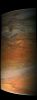
Jupiter-Juno-2024-Intro.jpgатмосферная турбулентность128 visiteНесколько слов о предыстории: После более чем пятилетнего путешествия космический аппарат Juno вышел на орбиту вокруг Юпитера 4 июля 2016 года. Расстояние от Земли: 1,74 миллиарда миль. 24 октября он совершил свой восьмой близкий пролёт, пройдя сквозь облачный покров планеты и приблизившись к поверхности Юпитера на расстояние всего 3400 километров. Его миссия? Собрать данные и изображения крупнейшей планеты нашей Солнечной системы для передачи на Землю.
После задержки (начальная фаза) в передаче данных, вызванной солнечным соединением, во время которого связь между Юпитером и Землёй была прервана из-за его чрезмерной близости к Солнцу, информация, хранящаяся в зонде Juno, поступила в НАСА, и результаты поразительны. На изображениях видны загадочные Северный и Южный полюса планеты, а также гигантские газовые бури.
В ожидании новых близких пролётов мы покажем вам несколько прекрасных изображений, переданных зондом, относящихся к газовому гиганту, пятой планете Солнечной системы.MareKromium
|
|

AA-Jupiter-PIA02666_modest.jpgJupiter from Cassini-Huygens121 visiteJupiter Data and Statistics
Mass (kg) = 1.900e+27
Mass (Earth = 1) = 3,1794e+02
Equatorial radius = 71.492 Km
Equatorial radius (Earth = 1) = 1,1209e+01
Mean density (gm/cm^3) = 1,33
Mean distance from the Sun = 778.330.000 Km
Mean distance from the Sun (Earth = 1) = 5,2028
Rotational period (days) = 0,41354
Orbital period (days) = 4332,71
Mean orbital velocity = 13,07 Km per second
Tilt of axis = 3,13°
Orbital inclination = 1,308°
Equatorial surface gravity (m/sec^2) = 22,88
Equatorial escape velocity = 59,56 Km per second
Magnitude (Vo) = - 2,70
Mean cloud temperature = - 121°C
Atmospheric pressure (bars) = 0,7
Atmospheric composition: Hydrogen 90%; Helium 10%
|
|
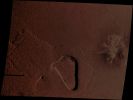
Io-Volcanic_Depression-PIA03532_modest2.jpgVolcanic Depression near the Equator (Absolute Natural Colors; credits for the additional process. and color.: Dr Paolo C. Fienga - Lunexit Team)120 visitenessun commentoMareKromium
|
|
| 325 immagini su 28 pagina(e) |
|
3 | |
|
|
|
|
|
|
|
|
|
|





