| Piú viste - Jupiter: the "King" and His Moons |
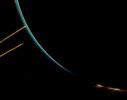
Jupiter_s Rings-PIA01529_modest.jpgColorful Jupiter's Rings833 visiteCaption NASA originale:"Jupiter's faint ring system is shown in this color composite as two light orange lines protruding from the left toward Jupiter's limb. This picture was taken in Jupiter's shadow through orange and violet filters. The colorful images of Jupiter's bright limb are evidence of the spacecraft motion during these long exposures. The Voyager 2 spacecraft was at a range of 1.450.000 kilometers about two degrees below the plane of the ring. The lower ring image was cut short by Jupiter's shadow on the ring itself".
|
|

Europa-V1-PIA00016-1-PCF-LXTT-1.jpgBizarre Image-Artifact... (Absolute Natural Colors; credits for the additional process. and color.: Dr Paolo C. Fienga - Lunexit Team)818 visitenessun commentoMareKromium
|
|
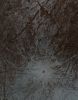
Europa-Craters-Pwyll_Crater-PIA01211-PCF-LXTT.jpgPwyll Crater on Europa (Absolute Natural Colors; credits for the additional process. and coloring: Dr Paolo C. Fienga - Lunexit Team)609 visitenessun commentoMareKromium
|
|

Jupiter-Red_Spot-PCF-LXTT.jpgJupiter's Great Red Spot from Voyager 1 (Credit: NASA, JPL - Additional processing and color.: Dr Paolo C. Fienga - Lunexit Team)338 visiteCaption NASA:"It is a hurricane twice the size of the Earth. It has been raging at least as long as telescopes could see it, and shows no signs of slowing. It is Jupiter's Great Red Spot, the largest swirling storm system in the Solar System.
Like most astronomical phenomena, the Great Red Spot was neither predicted nor immediately understood after its discovery. Still today, details of how and why the Great Red Spot changes its shape, size, and color remain mysterious. A better understanding of the weather on Jupiter may help contribute to the better understanding of weather here on Earth.
The above image is a recently completed digital enhancement of an image of Jupiter taken in 1979 by the Voyager 1 Spacecraft as it zoomed by the Solar System's largest planet.
At about 117 AU from Earth, Voyager 1 is currently the most distant human made object in the Universe and expected to leave the entire Solar Heliosheath any time now".
MareKromium
|
|

Europa-Chaotic_Terrain-Conamara_Chaos-PIA01404-PCF-LXTT.jpgEuropa: Conamara Chaos Region (Absolute Natural Colors; credits for the additional process. and color.: Dr Paolo C. Fienga - Lunexit Team)256 visitenessun commentoMareKromium
|
|
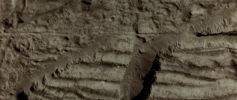
Europa-Icy_Cliffs-PIA01182-PCF-LXTT.jpgThe Icy Cliffs of Europa (Absolute Natural Colors; credits for the additional process. and color.: Dr Paolo C. Fienga - Lunexit Team)254 visitenessun commentoMareKromium
|
|

Europa-PIA00578-PCF-LXTT.jpgThe Icy Floes of Europa (Absolute Natural Colors; credits for the additional process. and color.: Dr Paolo C. Fienga - Lunexit Team)250 visitenessun commentoMareKromium
|
|

Io-Eruption-VG1_p21286.jpgActive and Powerful Volcanic Eruption seen from Atop (Extremely Enhanced Natural Colors; credits for the additional process. and color.: Dr Paolo C. Fienga - Lunar Explorer Italia)234 visitenessun commentoMareKromium
|
|

Io-PIA03530-Loki-PCF-LXTT.jpgThe Loki Region of Io (Enhanced and Darkened Natural Colors; credits for the additional process. and color.: Dr Paolo C. Fienga - Lunar Explorer Italia)203 visitenessun commentoMareKromium
|
|

Jupiter-PIA22948.jpgJupiter Abyss...183 visiteCaption NASA Originale:"NASA's Juno spacecraft captured this view of an area within a Jovian jet stream showing a vortex that has an intensely dark center. Nearby, other features display bright, high altitude clouds that have puffed up into the sunlight.
The color-enhanced image was taken at 12:55 a.m. PDT (3:55 a.m. EDT) on May 29, 2019, as the spacecraft performed its 20th science fly-by of Jupiter. At the time, Juno was about 9.200 miles (approx. 14.805,96 Km) from the Planet's cloud tops, above approximately 52° North Latitude.
Citizen scientists Gerald Eichstädt and Seán Doran created and named this image using data from the spacecraft's JunoCam imager".MareKromium
|
|
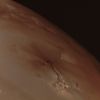
Io-PIA02232-PCF-LXTT.jpgIo's Limb (Absolute Natural Colors; credits for the additional process. and color.: Dr Paolo C. Fienga - Lunar Explorer Italia)182 visitenessun commentoMareKromium
|
|

Jupiter-PIA21974.jpgWhat a View!174 visitenessun commentoMareKromium
|
|
| 325 immagini su 28 pagina(e) |
1 |
 |
|
|
|
|
|
|
|
|
|





