| Piú viste - Saturn: the "Ringed Beauty" and His Moons |

Mimas and Janus.jpgMimas (from 1,8 MKM) and Janus (from 1,9 MKM)63 visiteCaption NASA originale:"Saturn's icy, impact-riddled moon Mimas slips briefly in front of Saturn's moon Janus in this movie from Cassini. The movie was created from 37 original images taken over the course of 20 minutes as the spacecraft's narrow-angle camera remained pointed toward Janus. Although Mimas moves a greater distance across the field of view, Janus also moved perceptibly during this time. The images were aligned to keep Janus close to the center of the scene. Additional frames were inserted between the 37 Cassini images in order to smooth the appearance of Mimas' movement - a scheme called interpolation. Close-up images from the few minutes surrounding the occultation are arranged into a strip along the bottom of the movie. Contrast on Janus was mildly enhanced to aid the visibility of its surface. The right side of Mimas appears bright because the moon was partly overexposed in this image sequence".
|
|

Hyperion-N00035353.jpgHyperion, from about 166.000 Km (1)63 visiteIperione, la luna 'rotolante' (--->tumbling moon) - così chiamata a causa del suo procedere caotico il quale la fa assomigliare di più ad un macigno scagliato nello Spazio piuttosto che ad un corpo celeste in orbita regolare attorno ad un Mondo Genitore.
Queste, come ovvio, sono le logiche e scientifiche conclusioni alle quali si arriva interpretando il movimento di alcuni corpi celesti in accordo al nostro 'Sapere Comune'. La congettura di base è che Iperione, come tante altre Lune Minori, non sia altro che una scheggia di roccia (un KBO, p.e.), proiettata verso l'interno del Sistema Solare a causa di un qualche ignoto cataclisma, o di un impatto o, magari, per effetto di impulsi o cicli mareali i quali, più o meno periodicamente, spingono dei corpi rocciosi di dimensioni medio-piccole verso il Sole. Il moto disordinato (ma che cosa è 'disordinato' e che cosa è 'lineare' nell'Universo?) di Iperione potrebbe quindi dipendere da fatto che, durante il suo viaggio, esso è passato accanto ad altri corpi...
|
|

Rhea-N00037507.jpgRhea, from about 255.000 Km63 visiteUn'altra spettacolare ripresa della grande Rhea, in cui possiamo vedere - e con grande chiarezza - non solo due grandi crateri (da impatto?), ma anche una serie di almeno 2 "crater clusters" che giacciono a ridosso della linea del terminatore.
Chiarissima (ed inesplicabile, naturalmente) la grande depressione (forse un altro cratere?) che caratterizza la Regione a ridosso del Polo Nord (dal nostro punto di vista) di Rhea.
|
|

Hyperion-PIA07741-2.jpgHyperion's unusual craters (2) - HR63 visiteOriginal caption:"Scientists will also be examining Cassini's sharp views to try to determine whether there have been multiple episodes of landslides on Hyperion. Such "downslope" movement is evident in the filling of craters with debris and the near elimination of many craters along the steeper slopes. Answers to these questions may help solve the mystery of why this object has evolved different surface forms from other moons of Saturn.
The images comprising this mosaic were taken with the Cassini spacecraft narrow-angle camera at distances ranging from approximately 8.500 Km (about 5.300 miles) to 4.600 Km (about 2.900 miles) from Hyperion. Image scale is 26 mt (about 85 feet) per pixel".
|
|

Prometheus-PIA07601.jpgPrometheus leaves a "dark track" inside the F-Ring63 visiteOriginal caption:"Prometheus poses here with its latest creation: a dark, diagonal gore (---> incisione/striscia) in the tenuous material interior to Saturn's F-Ring. The shepherd moon creates a new gore each time it comes closest to the F-Ring while the memory of previous passes is preserved in the Rings' structure for some time afterward. The image was taken in visible light with the Cassini spacecraft narrow-angle camera on Aug. 20, 2005, at a distance of approx. 499.000 Km (about 310.000 miles) from Saturn and at a very high phase angle, such as 144°.
Resolution in the original image was 3 Km about 2 miles) per pixel".
|
|

Janus-N00041468-2.jpgJanus?63 visitenessun commento
|
|

Dione-PIA07638.jpgDione: Carthage Linea63 visiteDione's icy surface is scarred by craters and sliced up by multiple generations of geologically-young bright fractures. Numerous fine, roughly-parallel linear grooves run across the terrain in the upper left corner. Most of the craters seen here have bright walls and dark deposits of material on their floors. As on other Saturnian moons, rockslides on Dione may reveal cleaner ice, while the darker materials accumulate in areas of lower topography and lower slope (e.g. crater floors and the bases of scarps).
The terrain seen here is centered at 15,4° North Latitude, 330,3° West Longitude, in a Region called Carthage Linea. North on Dione is up and rotated 50° to the left.
The image was taken in visible green light with the Cassini narrow-angle camera on Oct. 11, 2005, at a distance of approx. 19.600 Km (roughly 12.200 miles) from Dione. The image scale is about 230 mt (760 feet) per pixel".
|
|

Rhea-N00055720.jpgMoments of Rhea (1)63 visitenessun commento
|
|

Mimas-N00063435.jpgMimas and Enceladus (1)63 visiteCaption originale:"N00063435.jpg was taken on July 03, 2006 and received on Earth July 04, 2006. The camera was pointing toward Mimas that, at the time, was approximately 1.634.848 Km away. The image was taken using the CL1 and CL2 filters"
|
|

Saturn-N00063521-02.jpgIncredible "Meteor" (?) strikes the upper layers of Saturn's atmosphere (detail mgnf-2)63 visiteSe la nostra ipotesi fosse corretta - come pensiamo che sia -, saremmo orgogliosi di battezzare questa meteora (la prima, immortalata su una fotografia, che va a disintegrarsi nell'atmosfera di un Pianeta diverso dalla Terra) come Lun-Ex-It One-2006-07.
La NASA, per ora, non ha detto nulla.
Caption originale:"N00063521.jpg was taken on July 07, 2006 and received on Earth July 07, 2006. The camera was pointing toward Saturn that, at the time, was approximately 2.476.952 Km away.
The image was taken using the CL1 and CL2 filters. This image has not been validated or calibrated".
|
|
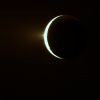
Enceladus-N00081671.jpgFountains in the Darkness (4) - natural colors, elab. Lunexit63 visiteCaption NASA:"N00081671.jpg was taken on April 24, 2007 and received on Earth April 25, 2007.
The camera was pointing toward ENCELADUS that, at the time, was approx. 190.884 Km, and the image was taken using the CL1 and CL2 filters.
This image has not been validated or calibrated".MareKromium
|
|
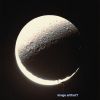
Rhea-N00084610.jpgOver-exposed Rhea63 visitenessun commentoMareKromium
|
|
| 2245 immagini su 188 pagina(e) |
 |
|
|
|
|
42 | |
|
|
|
|





