| Piú viste - Saturn: the "Ringed Beauty" and His Moons |
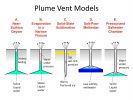
Enceladus-PIA12081.jpgEnceladus' Ice-Plume Models74 visiteCaption NASA:"These illustrations indicate possible ways in which the water vapor and ice particles in the plume of Enceladus may be formed. The Cassini spacecraft recently found a small fraction of salt-rich ice particles from the plumes, while Earth-based observations indicate gas from the plumes is very poor in sodium. These measurements are helping scientists to evaluate how the plumes form.
In model A, salty water boils explosively near the surface of Enceladus when it encounters the vacuum of space. This model can be ruled out, because such explosive activity would spread large amounts of sodium into space where it would have been seen by the Earth-based observers. If this model was correct, then nearly all the ice particles observed by Cassini would be salt-rich, instead of just a fraction of them.
In model B, salty water evaporates more slowly at some depth in a narrow fissure, creating vapor which escapes to the surface to form the plume. This model also seems unlikely because the fissure would rapidly become clogged by salt left behind as water evaporates. The water would also freeze, because not enough heat could reach the water surface up the narrow fissure to replace the heat lost by evaporation.
In model C, the warm ice evaporates directly into vapor to form the plume, in a process called sublimation. The salty particles found in the plume would have been created by liquid water in an earlier epoch and would have been stored in the near-surface layers of Enceladus until the present. These particles would now be incorporated into the plume by the escaping gases. This model cannot be ruled out, but seems unlikely because it may be difficult to dislodge old ice grains from the walls of the fracture.
In model D, the liquid water results from melting of near-surface ice rather than coming from an underlying salty ocean. The water is initially only slightly salty, but its salinity increases as evaporation removes some of the water and leaves the salt behind. Thus, in this model, the salt-rich ice particles seen by Cassini would be derived from initially salt-poor water. This model may be plausible and has not yet been evaluated in detail.
In model E, the water is originally salty, and perhaps comes from a subsurface ocean in contact with an underlying rocky core. The water evaporates slowly into a pressurized chamber, from which water vapor and ice particles, including salty particles from the salt water, escape to the surface along narrow fissures. The large area of the evaporating water surface prevents accumulated salt from clogging the vent and allows enough heat to reach the water surface from below to prevent the water from freezing. This model seems he simplest, and perhaps most likely of the models shown here, but is not the only possibility. Enceladus' plumes may involve a combination of several of these idealized models".MareKromium
|
|

Enceladus-N00160966-79-EB-LXTT.jpgIs there any "Luminescence" over the "Tiger Stripes"? (Superdefinition; credits for the additional process.: Elisabetta Bonora - Lunexit Team)74 visitenessun commentoMareKromium
|
|

Hyperion-MF-PCF-LXTT-3.jpgHyperion and its Surfacing Hydrocarbons (Absolute Natural Colors; credits for the additional process. and color.: Elisabetta Bonora and Paolo C. Fienga)74 visiteNota: questa colorizzazione "Naturale Assoluta" (e cioè che risponde a quello che, a nostro parere, un essere umano vedrebbe se si trovasse a bordo della Sonda CASSINI) è un prodotto UNICO ed ESCLUSIVO del "Lunexit Team". MareKromium
|
|

Hyperion-MF-PCF-LXTT-2.jpgHyperion and its Surfacing Hydrocarbons (Absolute Natural Colors; credits for the additional process. and color.: Drr Marco Faccin and Paolo C. Fienga)74 visiteNota: questa colorizzazione "Naturale Assoluta" (e cioè che risponde a quello che, a nostro parere, un essere umano vedrebbe se si trovasse a bordo della Sonda CASSINI) è un prodotto UNICO ed ESCLUSIVO del "Lunexit Team". MareKromium
|
|

Enceladus from Voyager 2.jpgEnceladus from Voyager 273 visiteImmagine Voyager 2 di Enceladus in "natural colors". Anche per questa fotografia il contrasto è stato leggermente esaltato, in maniera tale da rendere visibili i lievi dettagli e le formazioni crateriche e montuose (canali inclusi) che caratterizzano questa "Luna di Ghiaccio".
|
|

Japetus-A-W-Deathstar-28.jpgThe "Pentagon", again73 visite...alla fine - ed a nostro modesto parere - scarsamente credibile o, comunque, da "prendersi con estrema cautela" e da " raffinare a lungo", prima di essere "assunto e metabolizzato". La Scienza Convenzionale - e questo lo andiamo dicendo sian dall'inizio delle nostre 'prolusioni/conversazioni' - NON è in grado di spiegare tutto. Pensare fermamente il contrario, non è da Scienziati nè da persone razionali: è da stupidi. Ma è anche da stupidi (diciamo che è "indice di leggerezza"...) credere altresì che la Scienza Convenzionale NON sia in grado di spiegare alcunchè. Giapeto, la Luna e Marte, inter alia, tentano di essere capiti e spiegati - dal CICAP, per esempio - solo alla luce del loro (presunto) pensiero razionale. Errore! Costoro non arriveranno mai, a nostro parere, da nessuna parte. Il Prof. Hoagland, invece, sta accantonando (sempre più nettamente e decisamente) la Scienza Convenzionale per cercare SOLO spiegazioni esotiche e sensazionalistiche alle (tante) Singolarità che il Cosmo ci offre.
|
|

Rhea-N00029094.jpgRhea and Prometheus73 visiteUna nuova istantanea di due dei protagonisti delle "danze planetarie" che si susseguono nello spazio di Saturno e che Sir Stanley Kubrick riuscì ad immaginare molto bene più di 36 anni fa ed a farne un tassello fondamentale del film di fantascienza più famoso (e certamente più suggestivo ed attuale) al Mondo.
|
|

Enceladus-N00030123.jpgEnceladus, from approx. 166.000 Km73 visiteIl Fly-By è finito e, purtroppo, le immagini di Encelado da distanza inferiore ai 1000 Km, la NASA non le ha (ancora?) rese disponibili. In attesa, quindi, di vedere i dettagli ravvicinati delle incredibili increspature che segnano la superficie di Encelado, contentiamoci di questa - comunque - bellissima immagine di "arrivederci": una falce bene illuminata (e stupendamente definita) della "Luna di Neve", ossìa il corpo celeste più brillante - sia pure solo di luce riflessa - di tutto quanto il Sistema Solare.
|
|
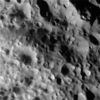
Hyperion-N00040329.jpgHyperion (13)73 visiteSiamo a circa 16.700 Km dalla superficie di Hyperion.
I dettagli che abbiamo cercato di portare alla Vostra attenzione tramire i frames precedenti si confermano.
Difficile pensare che questo tipo di superficie sia il prodotto di un semplice bombardamento meteorico...
|
|

Janus-N00060322.jpgLonely Janus...73 visiteCaption NASA:"N00060322.jpg was taken on April 29, 2006 and received on Earth April 29, 2006. The camera was pointing toward Janus that, at the time, was approximately 225.386 Km away.
The image was taken using the P120 and GRN filters. This image has not been validated or calibrated".
|
|

Prometheus-PIA08849.jpgThe "Wave-Maker"...73 visiteCaption NASA:"Prometheus dips into the inner F-Ring at its farthest point from Saturn in its orbit, creating a dark gore and a corresponding bright streamer. Gores created during previous apoapsis (the name for the farthest point in an orbit) passes, are seen above. The older gores are farther behind the moon in its orbit of Saturn. This view looks toward the unlit side of the Rings from about 31° above the Ring-Plane.
The image was taken in visible light with the Cassini spacecraft narrow-angle camera on Nov. 1, 2006 at a distance of approx. 1,7 MKM (about 1,1 MMs) from Saturn and at a Sun-Saturn-spacecraft, or phase, angle of 162°.
Image scale is roughly 10 Km (a little more than 6 miles) per pixel".
Nota: si tratta di una elaborazione Lunexit in falsi colori che abbiamo realizzato per evidenziare non solo la reale forma di Prometheus ma anche la presenza, sia internamente, sia esternamente all'Anello "F", di una debolissima luminosità (che appare di colore rosso scuro) la quale, a nostro parere, NON è un semplice effetto ottico - tipo luce diffusa dall'Anello "F" - bensì è vero e proprio materiale: la porzione più estrema (esterna ed interna) dell'Anello "F" stesso la quale è formata, con ogni probabilità, solo da polveri.MareKromium
|
|

Japetus-N00092000.jpgThe "Cassini Regio" of Japetus (1) - possible natural colors; elab. Lunexit73 visiteCaption NASA:"Iapetus, Saturn's third largest moon, is a candidate for the strangest moon of Saturn. Tidally locked in its orbit around the Ringed Gas Giant, Iapetus is sometimes called the "Yin-Yang Moon" because its Leading Hemisphere is very dark, reflecting about 5% of the Sun's light, while its Trailing Hemisphere is almost as bright as snow. This recent Cassini spacecraft flyby image is one of the closest views ever and spans about 35 Km across a cratered transition zone between bright and dark terrain. Iapetus itself has a density close to that of water ice, but the detailed reflective properties of the dark material suggest an organic composition.
Honoring the moon's discoverer, the dark terrain is called Cassini Regio".MareKromium
|
|
| 2245 immagini su 188 pagina(e) |
 |
|
|
|
|
28 | |
|
|
|
|





