| Piú viste - Saturn: the "Ringed Beauty" and His Moons |

Saturn-W00003808.jpgSaturn and Dione78 visitenessun commento
|
|
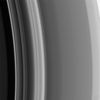
The Rings-PIA07616.jpgThe "Cassini" Division (close-up)78 visiteOriginal caption:"The outer reaches of Saturn's Cassini Division merges with the inner A-Ring (at the right) in a Region that is rich in structure.
The smooth Region leading up to the A-Ring grows brighter from the left to the right (known as a "ramp" to Ring).
This Region contains a faint "double-wave" structure that is a density feature caused by the influence of the co-orbital moons Janus and Epimetheus. Scientists are interested in observing the evolution of this density wave as the moons swap places in their orbits every few years, presumably resulting in a change in the perturbations that cause this feature.
This image was taken in visible light with the Cassini narrow-angle camera on Sept. 5, 2005, at a distance of approx. 441.000 Km (about 274.000 miles) from Saturn. The image scale is 2 Km (a little more than 1 mile) per pixel".
|
|

Japetus-IMG002621-cr2000.jpgJapetus' "Bright Side" (natural colors - elab. Lunexit)78 visitenessun commentoMareKromium
|
|

Hyperion from Voyager 2.jpgHyperion from Voyager 277 visitenessun commento
|
|
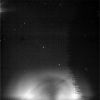
AV-Saturn-N00015958.jpgA "double glare" in the Space of Saturn77 visiteIl consueto riflesso che si accompagna alle rotazioni della Sonda quando essa si rivolge verso l'Anello "E", questa volta presenta una ulteriore curiosità. Guardate alla estrema Sn dell'immagine, in alto: potrete chiaramente vedere l'irraggiamento che proviene da un'altra sorgente luminosa, posizionata fuori obbiettivo. Dunque abbiamo un riflesso/irraggiamento in basso ed uno in alto a Sn. La domanda è ovvia: quali sono le cause di questi due fenomeni?
|
|

Atlas and others-PIA06522_modest.jpgSaturn's Rings + Atlas, Prometheus and Janus77 visiteCaption NASA originale: "Saturn hosts its own miniature solar system with an entourage of more than 30 moons. This image shows Saturn's "A" and "F" Rings, along with 3 of the moons that orbit close to them. From innermost to outermost, tiny Atlas (32 Km across) orbits just outside of the bright "A-Ring" and is seen above center in this view. Prometheus (102 Km across) is visible near lower right. Prometheus and its smaller cohort, Pandora, shepherd the thin, knotted F-Ring. Janus (181 Km across) can be seen near lower left. Janus shares its orbit with the moon Epimetheus. Density waves due to Janus cause some of the bright bands seen in the A-Ring in this image. Prometheus and Atlas also produce waves in the rings, but their wave regions are too narrow to be seen here. The planet's shadow stretches all the way across the main rings in this view. The shadow has an oval shape now but over the next few years it will become more rectangular as the planet orbits the Sun and the angle Sunlight-Rings decreases".
|
|

Enceladus-PIA06566_modest.jpgEnceladus - Diyar Planitia - from approx. 672.000 Km77 visiteCaption NASA originale:"Cassini's closest look yet at bright, icy Enceladus was captured in this view, centered on the moon's trailing hemisphere. It shows some of the linear features in the terrain of the Diyar Planitia region. Enceladus is 499 Km (310 mi) across.
The image was taken in visible light with the Cassini spacecraft narrow angle camera on Dec. 14, 2004, at a distance of 672.000 Km (417.600 miles) from Enceladus and at a phase angle of 32°. The image scale is about 4 Km (2,5 miles) per pixel. The image has been magnified by a factor of two and contrast enhanced to aid visibility".
|
|

Pandora-N00154611-17-23-EB-LXTT.jpgApproaching Pandora (an Image-Mosaic by Elisabetta Bonora - Lunexit Team)77 visitenessun commentoMareKromium
|
|

Mimas-PIA12572-PCF-LXTT-IPF.jpgIn and around the Magnificent Herschel Crater (Absolute Natural Colors; credits for the additional process. and color.: Dr Paolo C. Fienga - Lunar Explorer Italia/Italian Planetary Foundation)77 visiteRemarkable color differences on the Saturnian moon Mimas are apparent in this (enhanced) Absolute Natural Color view of Herschel Crater that was captured by the NASA - Cassini Spacecraft during its closest (so far) Fly-By of that Celestial Body which occurred on February 13, 2010. The image shows Terrain-dependent color variations and, in particular, the contrast between the light-gray (with slightly pale blue nuances) Surface Materials which are found in and around Herschel Crater and the brownish cast that, on the other hand, is found on older and more heavily Cratered Terrain elsewhere.
The origin of the color differences between these two types of Terrain is not yet understood, but it is quite logical to assume that it should be caused by the existence of some considerable differences in the Surface Elements which form the Terrains themselves (and a few false color images which were obtained from Cassini's previous closest encounter with Mimas, during the AD 2005, also showed such variations, which are, therefore, something real and NOT a simple optical effect caused, for instance, by the Illumination Geometry existing at the time whan the different pictures were taken). The huge Herschel Crater (approx. 130 Km, or a little more than 80 miles, wide) covers most of the bottom of the image.
To create the original false-color view of Mimas, UltraViolet, Green and InfraRed images were combined into a single picture that was fit to exaggerate the color differences of the photographed Terrains; these data were then combined with a High-Resolution image taken in Visible Light so to obtain a mix between the High-Resolution information coming from the Clear-Filter image and the color information coming from the UltraViolet, Green and InfraRed filter images.
During the Fly-By, the NASA - Cassini Spacecraft came within about 9500 Km (such as about 5900 miles) of Mimas and this view looks toward the Northern part of the Hemisphere that leads the moon in its orbit around Saturn (---> Leading Hemisphere, in contrast with the Trailing Hemisphere). The images were obtained with Cassini's Narrow-Angle Camera at a distance of approximately 16.000 Km (such as 9936 miles) from Mimas. Afterwards, the images were re-projected into an Orthographic Map Projection. Furthermore, a black and white image, taken in Visible Light with the Wide-Angle Camera, was also used to fill in parts of the mosaic. The global scale of the mosaic is 90 meters (295 feet) per pixel.
This frame (which is an Original NASA - Cassini Spacecraft false color image mosaic published on the NASA - Planetary Photojournal with the ID n. PIA 12572) has been additionally processed, contrast enhanced, and then re-colorized in (slightly enhanced) Absolute Natural Colors (such as the colors that a human eye would actually perceive if someone were onboard the NASA - Cassini Spacecraft and then looked outside, towards the Surface and Limb of the Saturnian moon Mimas), by using an original technique created - and, in time, dramatically improved - by the Lunar Explorer Italia Team. Different colors, as well as different shades of the same color, mean, among others, the existence of different Elements present on the Surface of Mimas, each having a different Albedo (---> Reflectivity) and Chemical Composition.MareKromium
|
|

Saturn and 3 Moons from 1.500.000 Km.jpgThe Rings of Saturn from approx. 1.500.000 Km away76 visitenessun commento
|
|

AL-Streak Again-N00018570.jpgStreak again!76 visiteUna nuova "Striscia nel Cielo" - del 17/9/2004 - da guardare con estrema cura. Il motivo è questo: abbiamo svolto una semplice analisi sul frame scoprendo che la Striscia, stavolta, è costituita - ed è la 1ma volta che lo si vede con estrema chiarezza - da una sequenza di punti luminosi ravvicinatissimi i quali, per altro, non hanno tutti la stessa intensità luminosa. Un effetto similare (se non identico) lo si può ottenere, sulla Terra, riprendendo - con obbiettivo grandangolare o simile - una porzione di cielo notturno (con esposizione fra i 10 ed i 18/20") mentre un qualsiasi velivolo convenzionale si trovi in transito attraverso tale porzione di cielo. Effettuato lo sviluppo dell'immagine, noterete che il corpo del velivolo risulterà costituito da una serie ravvicinatissima di punti luminosi i quali diventeranno "più luminosi" in corrispondenza dei flash emessi dalle sue luci di posizione. Cosa implichiamo con questo discorso?
Che la Streak in the Sky di oggi NON E' CERTAMENTE un raggio cosmico!
|
|

The Rings-PIA07611.jpgDeep inside the "C-Ring"76 visiteOriginal caption:"This close-up view shows an inner region of Saturn's C-Ring. It covers a radial location on the rings located approx. 78.000 to 80.500 Km (about 48.500 to 50.000 miles) from the center of the Planet. Saturn itself has a radius of 60.330 Km (that is about 34.490 miles).
A bright feature, informally referred to as a "plateau", arcs across the image center. The plateau is not high in terms of elevation, but rather in terms of particle density (seen here as brightness). The density is fairly uniform within the bright band, and some five times higher than in the surrounding ring structure. Although the many plateaus in Saturn's Rings appear unchanged over 25 years of observations, scientists do not know what determines their locations or maintains their sharp boundaries.
The image was taken in visible light with the Cassini spacecraft narrow-angle camera on Sept. 5, 2005, at a distance of approx. 418.000 Km(such as about 260.000 miles) from Saturn. The image scale is 2 Km per pixel".
|
|
| 2245 immagini su 188 pagina(e) |
 |
|
|
|
|
23 | |
|
|
|
|





