| Piú viste - Saturn: the "Ringed Beauty" and His Moons |
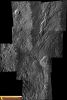
RHEA2-Panoramic-GB.jpgRhea (Image-Mosaic; credits: Dr G. Barca)54 visiteIn attesa che la NASA faccia di meglio (se non altro pubblicamente)...MareKromium
|
|
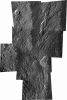
RHEA1-Panoramic-GB.jpgRhea (Image-Mosaic; credits: Dr G. Barca)54 visiteIn attesa che la NASA faccia di meglio (se non altro pubblicamente)...MareKromium
|
|
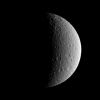
Rhea-PIA11630.jpgCrescent Rhea54 visiteCaption NASA:"The Cassini Spacecraft looks toward the battered Surface of the moon Rhea.
This view looks toward the Leading Hemisphere of Rhea. North on Rhea is up.
The image was taken in Visible Light with the Cassini Spacecraft wide-angle camera on Oct. 13, 2009. The view was acquired at a distance of approx. 44.000 Km (about 27.000 miles) from Rhea and at a Sun-Rhea-Spacecraft, or Phase, Angle of 103°.
Image scale is roughly 3 Km (a little less than 2 miles) per pixel".MareKromium
|
|
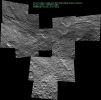
RHEA-ImageMosaic-GB2.jpgRhea (Image-Mosaic; credits: Dr G. Barca)54 visiteDedicato ai Ragazzi di Pasadena ed allo Space Science Institute (che ci offre, quest'ultimo, dei prodotti fotografici - spesso - inguardabili).MareKromium
|
|
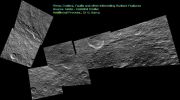
RHEA-ImageMosaic-GB1.jpgRhea (Image-Mosaic; credits: Dr G. Barca)54 visiteDedicato ai Ragazzi di Pasadena ed allo Space Science Institute (che ci offre, quest'ultimo, dei prodotti fotografici - spesso - inguardabili).MareKromium
|
|

Rhea-N00146883_to_938-MF.jpgRhea (Image-Mosaic and Natural Colors; credits: Dr M. Faccin)54 visiteE questo image-mosaic, infine, oltre che ai Ragazzi di Pasadena ed allo Space Science Institute, lo dedichiamo anche ai Curatori della prestigiosa Rubrica "NASA - Picture of the Day" (caso mai avessero voglia di pubblicare qualcosa di VERAMENTE spettacolare, eseguito a Regola d'Arte e, soprattutto, di grandissimo valore tecnico e didattico).
Grandissimi Complimenti a Marco Faccin e Gianluigi Barca per i loro grandissimi sforzi (questo mosaico è costato poco più di due ore di lavoro), i quali vengono SEMPRE coronati da - a dire poco - grandissimi risultati (ancorchè detti risultati sono conosciuti e riconosciuti, purtroppo, solo da pochissimi...).MareKromium
|
|
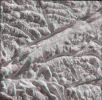
Enceladus-3D-MF.jpgTiger Stripes (High-Def-3D; credits: Dr M. Faccin)54 visiteDa guardare...MareKromium
|
|
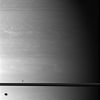
Saturn-PIA11633.jpgShadows...54 visiteCaption NASA:"The shadows of two moons appear on Saturn, above and below the plane of the Planet's Rings.
North on Saturn is up in this image, and the shadow of Dione can be seen south of the Planet's Equator. The smaller shadow of Mimas is north of the Equator.
Dione and Mimas both have orbits that are slightly inclined in relation to the Planet's Equatorial Plane, so, depending upon the orientation of their orbits, their shadows may appear North or South of Saturn's Equator. The moons themselves do not appear in this image.
This view looks toward the Northern, sunlit side of the Rings from about 1° above the Ring-Plane. Scale in the original image was about 100 Km (approx. 62 miles) per pixel. The image has been magnified by a factor of 1.5 and contrast-enhanced to aid visibility.
The image was taken with the Cassini Spacecraft wide-angle camera on Oct. 15, 2009 using a spectral filter sensitive to wavelengths of Near-InfraRed Light centered at 752 nanometers. The view was acquired at a distance of approx. 899.000 Km (about 558.000 miles) from Saturn and at a Sun-Saturn-Spacecraft, or Phase, angle of 65°".MareKromium
|
|

TheRings-PIA11635.jpgAegaeon and the G-Ring54 visiteCaption NASA:"The bright arc within Saturn's G-Ring is shown truncated by the shadow of the Planet at the bottom of this image.
Although it can't be seen here, the tiny moonlet Aegaeon (formerly known as S/2008 S 1) orbits within the bright arc.
This view looks toward the northern, sunlit side of the Rings from about 4° above the Ring-Plane. Many background stars are visible elongated by the motion of the Spacecraft during the image's exposure.
The image was taken in Visible Light with the Cassini Spacecraft narrow-angle camera on Oct. 9, 2009. The view was obtained at a distance of approx. 2,1 MKM (about 1,3 MMs) from Saturn. Image scale is roughly 12 Km (a little more than 7 miles) per pixel".MareKromium
|
|
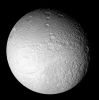
Tethys-CASSINI.jpgTethys54 visiteWhat processes formed the unusual Surface of Saturn's moon Tethys? To help find out, NASA sent the robotic Cassini Spacecraft right past the enigmatic ice moon in 2005. Pictured above is one of the HR images of an entire face of Tethys yet created. The pervasive white color of Tethys is thought to be created by fresh ice particles continually falling onto the moon from Saturn's diffuse E-Ring - particles expelled by Saturn's moon Enceladus. Some of the unusual cratering patterns on Tethys remain less well understood, however. Close inspection of the above image of Tethys' South Pole will reveal a great rift running diagonally down from the middle: Ithaca Chasma. A leading theory for the creation of this great canyon is anchored in the tremendous moon-wide surface cracking that likely occurred when Tethys' internal oceans froze.
If so, Tethys may once have harbored internal oceans, possibly similar to the underground oceans some hypothesize to exist under the surface of Enceladus today. Might ancient life be frozen down there?MareKromium
|
|

Saturn-Exagon.jpgThe "Exagon" of Saturn's North Pole54 visiteIt is unclear how an unusual Hexagonal Cloud System that surrounds Saturn's North Pole was created, keeps its shape, or how long it will last.
Originally discovered during the Voyager flybys of Saturn in the 80s, nobody has ever seen anything like it elsewhere in the Solar System.
Although its IR glow was visible previously to the Cassini Spacecraft now orbiting Saturn, over the past year the mysterious Hexagonal Vortex became fully illuminated by Sunlight for the first time during the Cassini's visit. Since then, Cassini has imaged the rotating Hexagon in Visible Light enough times to create this full-view. (the North Pole center was not well imaged and has been excluded)
Planetary scientists are sure to continue to study this most unusual cloud formation for quite some time.MareKromium
|
|

Saturnian_Sky.gifIn the Sky of Saturn (GIF-Movie; credits: Dr M. Faccin)54 visitenessun commentoMareKromium
|
|
| 2245 immagini su 188 pagina(e) |
 |
|
|
|
|
181 | |
|
|
|
|





