| Piú viste - Saturn: the "Ringed Beauty" and His Moons |

Dione-EB-LXTT1.jpgIn the "Scars" of Dione... (an Image-Mosaic in possible Absolute Natural Colors by Elisabetta Bonora - Lunexit Team)87 visitenessun commentoMareKromium
|
|

Dione_and_Tethys-MF-LXTT.jpgNightlights in the Sky of Saturn (Natural Colors; credits for the additonal process. and color.: Dr Marco Faccin - Lunexit Team)87 visitenessun commentoMareKromium
|
|

Saturn-Vortex-EB-MF-LXTT-IPF-1.jpgNorth Polar Vortex (CTX Frame: Calibrated Natural Colors; credits for the additional process. and color.: Elisabetta Bonora and Marco Faccin/Lunar Explorer Italia/Italian Planetary Foundation; EDM: Absolute Natural Colors; credits: Dr Paolo C. Fienga)87 visiteThe NASA - Cassini Spacecraft has recently been travelling the Saturnian System in a set of inclined (or "tilted"), orbits that were fit to give to the Mission Scientists a vertigo-inducing view of Saturn's North Polar Regions. This (kind of "new") perspective has brought to light quite a few images of roiling Storm Clouds and a swirling Vortex, located at the center of Saturn's famed North Polar "Hexagon" (being tha latter an Atmospherical Feature whose origin and visual configuration are still a mistery).
These North Polar Phenomena, however, basically mimic what Cassini found at Saturn's South Pole, a number of years ago. As a matter of fact, the NASA - Cassini Spacecraft had also seen several Storms circling the North Polar Regions of Saturn in the past, but the vision had come only in InfraRed Wavelengths, since the North Pole of the Ringed Gas-Giant Planet was in complete darkness. Now, with the change of the Saturnian Season, the Sun has once again begun to creep over the North Pole of Saturn, and this frame (that was obtained in Visible Light) shows us what Cassini has actually seen...
This picture (which is an Original NASA - Cassini Spacecraft b/w frame) was taken on November, 27th, 2012, with the Cassini's Wide-Angle Imaging Camera. The Camera, at the time that the picture was taken, was pointing at the North Polar Regions of Saturn from approx. 233.742 miles (such as about 376.170 Km) away.
The resulting frame (in its CTX Version) has been additionally processed and then colorized in Natural Colors (such as the colors that a perfect human eye - or an Electronic Eye - would have perceived while looking at Saturn from Cassini's vantage point); the EDM Version (in the upper right corner of the image), on the other hand, has been obtained by re-processing and then re-colorizing the picture - according to an informed speculation carried out by Dr Paolo C. Fienga (LXTT-IPF) - in Absolute Natural Colors (such as the colors that a normal - meaning: in the average - human eye would have actually caught if someone would have been onboard the NASA - Cassini Spacecraft and then had looked outside, towards the North Pole of Saturn), by using an original technique created - and, in time, dramatically improved - by the Lunar Explorer Italia Team. Different colors, as well as different shades of the same color, mean, among others, the existence of different Elements present in the Atmosphere of Saturn, each having a different Albedo (---> Reflectivity) and Chemical Composition.MareKromium
|
|

Enceladus-N00043480.jpgEnceladus, Rings and...photoartifact?86 visiteAttenzione: lo streak bianco che abbiamo evidenziato in questo frame è, con ogni probabilità, un artefatto fotografico. Questa immagine, tuttavia, ci serve per rammentare e rammentarVi che, nell'espressione di giudizi, teorie e/o sensazioni su quanto taluni frames mostrano (o sembrano mostrare), occorre usare sempre la massima cautela e la più grande prudenza, se si vuole rimanere credibili. Gli UFO, a nostro avviso, sono un argomento delicato ed importante che richiede, per essere analizzato in maniera adeguata, prudenza e competenza. In una parola: l'Ufologia è materia da trattare con estrema serietà ed attenzione.
Una serietà ed un'attenzione che, tuttavia, nei media e, ahinoi..., anche nella grande maggioranza degli Appassionati (Siti e Forum pieni di ufologi da strapazzo ce ne sono a migliaia), non si vede.
|
|
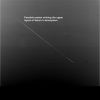
Saturn-N00063521-00.jpgIncredible "Meteor" (?) strikes the upper layers of Saturn's atmosphere (context image)86 visiteUn frame, questa volta davvero incredibile (inserire Saturn-N00063521-00) e, riteniamo, di straordinario valore, ci arriva - in data 7 Luglio 2006 - dallo Spazio di Saturno per mostrare un lungo "streak in the sky": una Scia Luminosa che attraversa quasi la totalità del campo visivo di una delle fotocamere poste a bordo della Sonda Cassini.
Circa due anni fa, avevamo già rilevato uno "streak" similare il quale, in due frames Cassini consecutivi, aveva attraversato una modesta porzione del campo visivo di una delle telecamere della Sonda (ben visibili, sullo sfondo dell'immagine ed oltre alla Striscia Luminosa, anche alcune stelle ed i segni del transito di qualche raggio cosmico.
Oggi, 7 Luglio 2006, lo streak è diverso: questa volta non si tratta di una luce fissa in (lento?) movimento nello spazio; adesso lo streak, come potrete meglio valutare Voi stessi nei detail magnifications di cui ai frames 2 e 3, appare diretto verso le profondità di Saturno - il frame Cassini originale, infatti, raffigura il lato notturno del Gigante Anellato.
Di che cosa si può trattare?
Questa volta, dopo aver esperito le analisi del caso, abbiamo una teoria.
|
|

UFO-Saturn-N00084958-1.gifA "UFO" in the Space of Saturn? (1)86 visiteGrazie allo splendido lavoro del Dr Gianluigi Barca (Presidente di Lunar Explorer Italia, Sez. Piemonte e Liguria - http://www.lunarexplorer.it/) - il quale ha isolato ed analizzato in dettaglio una serie di 13 frames che, ad un'occhiata superficiale, sembravano non possedere alcun valore particolare - siamo in condizione di proporVi una straordinaria ripresa di quello che sembra essere un autentico UFO il quale attraversa il campo visivo di una delle fotocamere a bordo della Sonda Cassini mentre quest'ultima è impegnata a riprendere la debole luminescenza che caratterizza l'Anello "G" del Gigante Gassoso.
I frames adottati dal Dr Barca per la realizzazione del GIF-movie vanno dal n. N00084958 al n. N00084971.
Le informazioni contestuali ai frames NASA impiegati, purtroppo, non ci forniscono indicazioni per poter calcolare in alcun modo (neppure in maniera del tutto approssimativa) nè il tempo intercorso fra scatto e scatto, nè la distanza percorsa dalla Sonda Cassini nello Spazio di Saturno fra il primo e l'ultimo scatto considerati ai fini della realizzazione del GIF-movie.
Comunque, usando la Logica, il Buon Senso, la Prudenza e l'Esperienza, possiamo dire che l'oggetto in movimento, anche se (teoricamente) potrebbe essere solo una shepherd-moon (ossìa una luna-pastore) il cui scopo è quello di mantenere gravitazionalmente in equilibrio l'Anello "G" di Saturno e che SEMBRA scappare via veloce solo perchè i frames che la riprendono potrebbero, a loro volta, essere stati ottenuti a grande distanza di tempo - ergo di spazio - l'uno dall'altro, è pur vero che l'effetto "striscia" il quale, a volte, caratterizza le fotografie "mosse" dei satelliti minori di Saturno (un effetto che deve la sua causa al concorso di circostanze quali la lunghezza della esposizione in rapporto alla distanza Sonda/Target ed alla velocità relativa dei due corpi) non si è MAI presentato (a nostra memoria) in una forma così accentuata ed ingannevole.
MareKromium
|
|

Rhea-PIA08402.jpgRayed Crater on Rhea (3D)86 visiteRhea's surface gains some depth in this stereo image, or anaglyph, which features the bright and geologically young-looking rayed crater on the moon's Leading Hemisphere. The view was created from images taken during Cassini's close encounter with Rhea on Aug. 30, 2007.
The crater is about 48 Km (approx. 30 miles) wide, and its rays extend several hundred kilometers outward. The rim of this crater is quite sharply defined, and there are few small craters overprinted onto it. These characteristics, along with the brightness of the crater and its rays are indicative of a feature formed relatively recently in geologic history.
The hummocky floor of the crater possesses a central peak and clusters of small craters. The little craters may be secondary impact sites, formed by ejecta from the primary impact that landed in the crater, or they could have been formed by material that had broken off of the body that struck Rhea.
This stereo image is a mosaic consisting of seven Cassini spacecraft narrow-angle camera images. The view is an orthographic projection centered on 12° South Latitude, 112° West Longitude and has a resolution of 45 meters (148 feet) per pixel. An orthographic view is most like the view seen by a distant observer looking through a telescope. North is up.
The clear filter images for this stereo image were taken from distances ranging from about 17.000 Km (approx. 10.600 miles, for the red-colored image) to 7.500 Km (such as about 4.700 miles, for the blue/green-colored image) from Rhea.MareKromium
|
|

Enceladus-N00161054-55-EB-LXTT.jpgIs there any "Luminescence" over the "Tiger Stripes"? (1 - Superdefinition; credits for the additional process. and color.: Elisabetta Bonora - Lunexit Team)86 visitenessun commentoMareKromium
|
|

Enceladus-MF1-LXTT.jpgThe "Blue Scars" of Enceladus (an Image-Mosaic in Absolute Natural Colors; credits for the additional process. and color.: Dr Marco Faccin - Lunexit Team)86 visitenessun commentoMareKromium
|
|

Enceladus-FullColor-MF-PCF1.jpgEnceladus (an Image-Mosaic in Natural Colors; credits for the additional process. and color.: Drr Marco Faccin and Paolo C. Fienga - Lunexit Team)86 visitenessun commentoMareKromium
|
|

PHOEBE-PIA06068_modest.jpgPhoebe's Fly-By (1)85 visitenessun commento
|
|

AI-Saturn-Streak in the Sky-N00018041.jpgA new "Bright Streak" in the Sky of Saturn85 visiteUna nuova "striscia luminosa" (bright streak) nel Cielo di Saturno, ripresa il giorno 14 Settembre 2004. Che dire? Secondo noi - anche se accettassimo acriticamente la teoria che spiega alcune (comunque brevi e piuttosto deboli) striature di luce che, spesso, appaiono nelle immagini scattate guardando verso lo spazio come "raggi cosmici" - questa specifica "striscia" sembra qualcosa di molto particolare. Qualcosa che non può essere semplicemente ricondotto all'emissione luminosa di una micro-particella che schizza nello spazio a velocità relativistica.
Secondo noi, questa striscia (come anche altre, riprese dalla superficie di Marte) è causata da qualcosa di diverso.
Cosa?
E se lo sapessimo...
|
|
| 2245 immagini su 188 pagina(e) |
 |
|
|
|
|
17 | |
|
|
|
|





