| Piú viste - Saturn: the "Ringed Beauty" and His Moons |

Tethys-N00065796.jpgTethys (HR)54 visitenessun commento
|
|
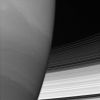
Saturn-PIA08265.jpgThe limb of Saturn54 visiteCaption NASA originale."Saturn's B and C-Rings disappear behind the immense Planet. Where they meet the limb, the Rings appear to bend slightly owing to upper-atmospheric refraction.
Crenulations - such as the irregularly wavy or serrated features - in the Planet's clouds denote the locations of turbulent belt/zone boundaries.
The image was taken using a spectral filter sensitive to wavelengths of infrared light centered at 728 nanometers. The view was obtained with the Cassini spacecraft wide-angle camera on Aug. 16, 2006 at a distance of approx. 256.000 Km (about 159.000 miles) from Saturn. Image scale is roughly 12 Km (about 7 miles) per pixel".
|
|

Mimas-PIA08264.jpgMimas54 visiteCaption NASA originale:"Mimas plows along in its orbit, its pockmarked surface in crisp relief. The bright, steep walls of the enormous crater, Herschel (130 Km, or 80 miles wide), gleam in the Sunlight.
The lit terrain seen here is on the Leading Hemisphere of Mimas (about 397 Km, or 247 miles across). North is up.
The image was taken in visible light with the Cassini spacecraft narrow-angle camera on Aug. 16, 2006 at a distance of approx. 221.000 Km (about 137.000 miles) from Mimas and at a Sun-Mimas-spacecraft, or phase, angle of 80°.
The image scale is roughly 1 Km (about 0,6 mile) per pixel".
|
|
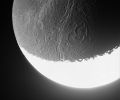
Dione-PIA08266.jpgThe Night-Side of Dione, in the Saturnshine54 visiteCaption NASA originale:"Cassini whizzed past Dione on Aug. 16, 2006, capturing this slightly motion-blurred view of the moon's fractured and broken landscape in reflected light from Saturn. The motion blur is a result of the long exposure time used to capture dim light from the moon's night side.
The many canyons on Dione rip through more ancient craters. Some medium-sized craters, like the one right of center, have several others overprinted onto them. This view shows southern terrain on the moon's Trailing Hemisphere. The gleaming, sunlit crescent is overexposed at bottom. North is up.
The image was taken in visible light with the Cassini spacecraft narrow-angle camera at a distance of approx. 157.000 Km (about 98.000 miles) from Dione and at a Sun-Dione-spacecraft angle of 129°.
Image scale is about 935 mt (roughly 3.067 feet) per pixel".
|
|

Saturn-PIA08734.jpgInner Warmth, Hidden Light...54 visiteCaption NASA originale:"This false-color image of Saturn shows Ring shadows running across the upper portion of the Planet, and sunlight illuminating the lower portion of the Planet.
The upper area, in the Ring shadow, would be black in visible light but glows red in infrared because Saturn is warm inside. This light shines out through the clouds, giving scientists a look at some of Saturn's interesting atmospheric structure.
This image was taken on June 30, 2006, with Cassini's VIMS. It was constructed from images taken at wavelengths of 0,91 microns (blue); 2,25 microns (green) and at 5,01 (red).
The distance from Cassini to Saturn's center in this image is aspprox. 335.000 Km (about 208.159 miles)".
|
|

Saturn-W00017924.jpgRising Sun...54 visiteCaption NASA:"W00017924.jpg was taken on September 15, 2006 and received on Earth September 17, 2006. The camera was pointing toward Saturn that, at the time, was approximately 2.092.473 Km away.
The image was taken using the CB3 and CL2 filters. This image has not been validated or calibrated".
|
|

The Rings-W00017896.jpgAn enormous "clump" in Saturn's Rings? No: that's Enceladus!54 visiteCaption NASA:"W00017896.jpg was taken on September 15, 2006 and received on Earth September 17, 2006. The camera was pointing toward the Rings of Saturn that, at the time, were approximately 2.227.319 Km away.
The image was taken using the CL1 and IRP90 filters. This image has not been validated or calibrated".
Wispy fingers of bright, icy material reach tens of thousands of kilometers outward from Saturn's moon Enceladus into the E-Ring, while the moon's active South Polar jets continue to fire away. This astonishing, never-before-seen structure is made visible with the Sun almost directly behind the Saturn System from Cassini's vantage point. The phase angle here is 175°, a viewing geometry in which structures made of tiny particles brighten substantially. These features are very likely the result of particles injected into Saturn orbit by the Enceladus geysers: those injected in the direction of the moon's orbital motion end up on larger, slower orbits and trail Enceladus in its orbit, and those injected into the opposite direction end up smaller, faster orbits and lead Enceladus. (Orbital motion is counter-clockwise.) In addition, the configuration of wisps may hint at an interaction between Saturn's magnetosphere and the torrent of particles issuing from Enceladus.
In addition to the wisps, another unexpected detail is the dark gore in the center of the ring, following the moon in its orbit, likely brought about by the sweeping action of Enceladus as it orbits in the center of the E ring.
The view looks down onto Enceladus (505 kilometers, or 314 miles across) from about 15 degrees above the ringplane. Tethys (1,071 kilometers, or 665 miles across) is visible to the left of Enceladus.
The image was taken in visible light with the Cassini spacecraft wide-angle camera on Sept. 15, 2006, at a distance of approximately 2.1 million kilometers (1.3 million miles) from Enceladus. Image scale is 128 kilometers (80 miles) per pixel.
|
|

Saturn-PIA08271.jpgThe "Ringed Beauty" in natural colors54 visiteCaption NASA originale:"This moody true color portrait of Saturn shows a world that can, at times, seem as serene and peaceful as it is frigid and hostile. Saturn's unlit-side Rings embrace the Planet while their shadows caress the Northern Hemisphere.
The view was obtained from about 15° above the Ring-Plane as Cassini continued its climb to higher orbital inclinations.
Images taken using red, green and blue spectral filters were combined to create this natural color view. The image was acquired with the Cassini spacecraft wide-angle camera on Aug. 18, 2006 at a distance of approximately 1,3 MKM (such as about 800.000 miles) from Saturn and at a Sun-Saturn-spacecraft, or phase, angle of 137°.
Image scale is roughly 76 Km (about 47 miles) per pixel".
|
|

Saturn-PIA08270.jpgNight-flight around Saturn...54 visiteCaption NASA originale:"Saturn's shadow cuts sharply across the Rings in this remarkable night side view.
The Planet's Northern Latitudes are in darkness in the upper portion of this scene, while the Southern reaches are bathed in Ringshine. On the left, Sunlight filters through the Rings, and on the right the Rings are blocking the reflected Ringshine in the shadow of Saturn. The overexposed, sunlit crescent at lower left marks the transition from Saturnian day to night.
Mimas hovers below center - a tiny bauble, ornamenting the Ringed Giant.
The image was taken in visible green light with the Cassini spacecraft wide-angle camera on August 19, 2006 at a distance of approx. 1,5 MKM (about 1 MMs) from Mimas and 1,7 MKM (about 1,1 MMs) from Saturn.
Image scale is roughly 92 Km (about 57 miles) per pixel on Mimas and approx. 103 Km (about 64 miles) on Saturn".
|
|
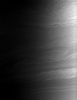
Saturn-PIA08263.jpgSaturn's Terminator54 visiteCaption NASA originale:"Saturn's clouds billow and swirl in the turbulent zones of shear between Eastward- and Westward-flowing jets. This view looks toward the Terminator on Saturn, where night gives way to day.
The image was taken using a spectral filter sensitive to wavelengths of infrared light centered at 728 nanometers.
The image was obtained with the Cassini spacecraft wide-angle camera on Aug. 16, 2006 at a distance of approx. 338.000 Km (about 210.000 miles) from Saturn and at a Sun-Saturn-spacecraft, or phase, angle of 67°.
Image scale is roughly 17 Km (about 10 miles) per pixel".
|
|

Saturn-PIA08272.jpgA "Clash of Clouds" in Saturn's upper atmosphere54 visiteCaption NASA originale:"The Cassini spacecraft presents a tempestuous scene in which the clouds of Saturn's bright Equatorial Region entwine with those in darker, Southerly Latitudes.
The image was taken using a filter sensitive to wavelengths of infrared light centered at 890 nanometers. The image was acquired with the Cassini spacecraft wide-angle camera on Aug. 16, 2006 at a distance of approx. 289.000 Km (about 180.000 miles) from Saturn. Image scale is roughly 14 Km (such as about 8 miles) per pixel".
|
|
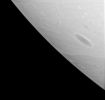
Saturn-PIA08274.jpgSaturnian turbulences...54 visiteCaption NASA originale:"With no solid land to obstruct their progress, dark vortices often roll through Saturn's Atmosphere for months or years, before merging with other vortices. On Earth, the continents usually halt the progress of large storms, like hurricanes. Vortices like these are part of the general circulation pattern of East-West flowing cloud bands, called jets, on Saturn.
The image was taken using a spectral filter sensitive to wavelengths of infrared light centered at 939 nanometers. The image was obtained with the Cassini spacecraft wide-angle camera on Aug. 16, 2006 at a distance of approximately 259.000 Km (about 161.000 miles) from Saturn. Image scale is roughly 12 Km (about 7 miles) per pixel".
Nota: quando la NASA parla di "distanza da Saturno" (come da Giove, Urano e Nettuno) essa fa convenzionalmente riferimento alla distanza che intercorre fra Sonda e "clouds' top", ovvero lo strato più alto (e l'ultimo) di nuvole, superato il quale inizia lo spazio esterno. In caso di corpi rocciosi, invece, la distanza è riferita allo spazio esistente fra Sonda e "datum" (o altitudine zero) del corpo celeste considerato.
|
|
| 2245 immagini su 188 pagina(e) |
 |
|
|
|
|
168 | |
|
|
|
|





