| Piú viste - Saturn: the "Ringed Beauty" and His Moons |

The_Rings-PIA11662.jpgAnother "Vertical Structure" in the "F"-Ring56 visiteCaption NASA:"As Saturn approaches its August 2009 Equinox, a shadow is cast by a narrow, vertically extended feature in the F-Ring.
Scientists are working to understand the origin of structures such as this one, but they think this image may show the shadow of an object on an inclined orbit which has punched through the F-Ring and dragged material along in its path.
The second (bottom) version of the image has been brightened to enhance the visibility of the ring and shadow. Background stars appear elongated in the image because of the camera's exposure time.
This image and others like it (see PIA11663) are only possible around the time of Saturn's Equinox which occurs every half-Saturn-year (equivalent to about 15 Earth years). The illumination geometry that accompanies Equinox lowers the Sun's angle to the Ring-Plane and causes out-of-plane structures to cast long shadows across the Rings. Cassini's cameras have spotted not only the predictable shadows of some of Saturn's moons (see PIA11657), but also the shadows of newly revealed vertical structures in the Rings themselves (see PIA11654).
This view looks toward the unilluminated side of the Rings from about 27° above the RingPlane.
The image was taken in Visible Light with the Cassini Spacecraft narrow-angle camera on June 11, 2009. The view was acquired at a distance of approx. 866.000 Km (about 538.000 miles) from Saturn and at a Sun-Saturn-Spacecraft, or Phase, Angle of 30°. Image scale is roughly 5 Km (a little more than 3 miles) per pixel".MareKromium
|
|

Tethys-N00126733.jpgCrescent Tethys (Natural Colors; credits: Lunexit)56 visiteN00126733.jpg was taken on December 17, 2008 and received on Earth December 17, 2008. The camera was pointing toward TETHYS that, at the time, was approximately 527.571 Km away. This image was taken using the CL1 and CL2 filters and it has not been validated or calibrated.MareKromium
|
|

Propeller-PIA11672-b.jpgGiant "Propeller" in the A-Ring (EDM)56 visiteIt has since become a growing realization resulting from Cassini’s exploration of Saturn that the objects forming Saturn’s Rings very likely span the full spectrum of sizes, from the smallest dust-sized ring particles to the ring-moons like Daphnis and 29-Km-wide (18-mile-wide) Pan - a significant advance in divining the origin of Saturn’s Rings.
The novel illumination geometry that accompanies equinox lowers the Sun’s angle to the Ring-Plane, significantly darkens the Rings and causes out-of-plane structures to cast long shadows across the Rings. (The Rings have been brightened in this image to enhance visibility)
These scenes are possible only during the few months before and after Saturn’s Equinox which occurs only once in about 15 Earth years.
This view looks toward the Northern Side of the Rings from about 20° above the Ring-Plane.
The image was taken in Visible Light with the Cassini Spacecraft narrow-angle camera on Aug. 13, 2009.
This view was acquired at a distance of approx. 1,2 MKM (about 746.000 miles) from Saturn and at a Sun-Saturn-Spacecraft, or Phase, Angle of 87°.
Image scale is roughly 7 Km (about 4,5 miles) per pixel.MareKromium
|
|
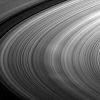
The_Rings-PIA11587.jpgSpokes on the B-Ring56 visiteCaption NASA:"Saturn's B-Ring shows off bright Spokes in the middle of this image taken at high phase.
This image was captured at a Phase Angle of 119°. To learn more about these ghostly radial markings, see PIA10567 and PIA11144.
This view looks toward the northern, sunlit side of the Rings from about 10° above the Ring-Plane. The image was taken in Visible Light with the Cassini Spacecraft narrow-angle camera on Aug. 20, 2009. The view was acquired at a distance of approx. 2,3 MKM (such as about 1,4 MMs) from Saturn.
Image scale is roughly 13 Km (about 8 miles) per pixel".MareKromium
|
|
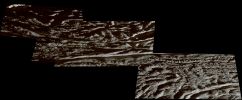
Enceladus-N00118361to64-MF.jpgEnceladus: South Polar Panorama (Image-Mosaic; credits: Dr M. Faccin - Natural Colors; credits: Lunexit)56 visitenessun commentoMareKromium
|
|
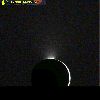
Enceladus-N00145354-N00145358.gifFountains of Light (GIF-Movie; credits: Dr G. Barca)56 visiteNota Lunexit: l'improvviso bagliore che esalta le Fontane di Encelado dovrebbe essere stato provocato, a nostro parere, da un particolare momentum di CASSINI, durante il suo passaggio attraverso un Angolo di Fase davvero ottimale (ricordiamo che è "Angolo di Fase" quell'angolo ottenuto ponendo in semplice correlazione geometrica il Sole, lOggetto Ripreso (o Target) e l'Osservatore (o Subject).MareKromium
|
|
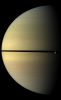
Saturn-PIA12513.jpgCrescent Saturn (Natural Colors; credits: NASA/JPL/Space Science Institute)56 visiteCaption NASA:"Saturn, stately and resplendent in this Natural Color view, dwarfs the icy moon Rhea.
Rhea orbits beyond the Rings on the right of the image. The moon Tethys is not shown here, but its shadow is visible on the Planet on the left of the image. This view looks toward the Northern, sunlit side of the Rings from just above the Ring-Plane.
Images taken using red, green and blue spectral filters were combined to create this Natural Color view. The images were obtained with the Cassini Spacecraft wide-angle camera on Nov. 4, 2009 at a distance of approx. 1,3 MKM (about 808.000 miles) from Saturn.
Image scale is roughly 72 Km (about 45 miles) per pixel".MareKromium
|
|

The_Rings-091227-W00062195-96-98-EB-LXTT.jpgRings on Parade! (possible Natural Colors; credits: Elisabetta Bonora - Lunexit Team)56 visiteMareKromium
|
|

Prometheus-4220346220_c47de906a1_o.jpgPrometheus adrift... (possible True Colors; credits: Dr M. Faccin - Lunexit Team)56 visitenessun commentoMareKromium
|
|

Mimas-PIA12532.jpgLost in the Dark (Natural Colors; credits: Dr Paolo C. Fienga - Lunexit Team)56 visiteCaption NASA:"Lit terrain seen here is on the Trailing Hemisphere of Mimas. This view looks toward the Northern, sunlit side of the Rings, from just above the Ring-Plane.
The image was taken in Visible Light with the Cassini Spacecraft narrow-angle camera on Nov. 3, 2009. The view was obtained at a distance of approx. 760.000 Km (about 472.000 miles) from Mimas and at a Sun-Mimas-Spacecraft, or Phase, Angle of 61°.
Image scale is roughly 5 Km (a little more than 3 miles) per pixel. MareKromium
|
|

The_Rings-MF-N00150070_to_N00150100.jpgGlowing in the Darkness... (Image Mosaic - Possible True Colors; credits: Dr M. Faccin - Lunexit Team)56 visitenessun commentoMareKromium
|
|
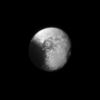
Japetus-PIA12556.jpgPlanet or Planetoid?56 visiteCaption NASA:"The oblate shape of the moon Japetus is particularly noticeable in this portrait.
The two-toned surface of the moon Japetus also stands out against the darkness of space in this image.
This view looks toward the Saturn-facing Side of Japetus. North is up and rotated 26° to the left.
Scale in the original image was about 22 Km (approx. 14 miles) per pixel.
The image was contrast enhanced and magnified by a factor of three to enhance the visibility of surface features.
The image was taken in Visible Light with the Cassini Spacecraft narrow-angle camera on Dec. 16, 2009. The view was acquired at a distance of approx. 3,6 MKM (about 2,2 MMs) from Japetus and at a Sun-Japetus-Spacecraft, or Phase, Angle of 27°".MareKromium
|
|
| 2245 immagini su 188 pagina(e) |
 |
|
|
|
|
158 | |
|
|
|
|





