| Piú viste - Saturn: the "Ringed Beauty" and His Moons |

Enceladus-PIA11113.jpgDamascus Sulcus (possible True Colors; credits: Lunexit)56 visiteCaption NASA:"The yellow circles on this mosaic, showing the fracture known as Damascus Sulcus, indicate the Jets' Source Locations II and III, as identified in PIA08385.
This mosaic consists of two images obtained with the clear spectral filters on Cassini's narrow-angle camera. The view is an orthographic projection with an image scale of 24 meters (79 feet) per pixel. The area shown here is centered on 81,2° South Latitude and 309,9° West Longitude. The original images ranged in resolution from 27 to 30 meters (89 to 98 feet) per pixel and were taken at distances ranging from 4200 to 4742 Km (such as from about 2610 to approx. 2947 miles) from Enceladus".MareKromium
|
|

PHOEBE-PIA06064_modest.jpgPhoebe (Extremely Ehnanced and Saturated Natural Colors; credits: Lunexit Team)56 visitenessun commentoMareKromium
|
|

PHOEBE-PIA06068_modest.jpgPhoebe (Extremely Ehnanced and Saturated Natural Colors; credits: Lunexit Team)56 visitenessun commentoMareKromium
|
|
Rhea-N00118981.jpgRhea's Eclipse56 visiteCaption NASA:"N00118981.jpg was taken on August 19, 2008 and received on Earth August 21, 2008. The camera was pointing toward RHEA that, at the time, was approx. 457.502 Km away; the image was taken using the CL1 and CL2 filters. This image has not been validated or calibrated".MareKromium
|
|
Rhea-N00118973.jpgRhea's Eclipse56 visiteCaption NASA:"N00118981.jpg was taken on August 19, 2008 and received on Earth August 21, 2008. The camera was pointing toward RHEA that, at the time, was approx. 453.710 Km away; the image was taken using the CL1 and CL2 filters. This image has not been validated or calibrated".MareKromium
|
|
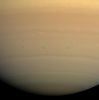
Saturn-PIA10457.jpgSouthern Turbulence (natural colors; credits: NASA)56 visiteCaption NASA:"A line of vortices rolls through the turbulent region on Saturn nicknamed "Storm Alley" by Cassini scientists. This latitude band, centered around 35° South, has displayed persistent, intensive storm activity since Cassini began its approach to Saturn in early 2004.
Images taken using red, green and blue spectral filters were combined to create this natural color view. The images were obtained with the Cassini Spacecraft wide-angle camera on July 23, 2008 at a distance of approximately 1 MKM (such as about 622.000 miles) from Saturn.
Image scale is roughly 56 Km (about 35 miles) per pixel".MareKromium
|
|

Anthe_Methone-PIA11102.jpgSmall - but VERY bright - Companions: Anthe and Methone56 visiteCaption NASA:"Recent Cassini images show Arcs of Material co-orbiting with the Saturnian moons Anthe and Methone.
Arrows indicate the positions of Anthe, at top left, and Methone, at bottom right. Micrometeoroid impacts on the moons are the likely source of the Arc Material.
Cassini imaging scientists believe the process that maintains the Anthe and Methone arcs is similar to that which maintains the Arc in the G-Ring (see PIA08327). The general brightness of the image (along with the faint horizontal banding pattern) results from the long exposure time of 15" required to capture the extremely faint ring arc and the processing needed to enhance its visibility (which also enhances the digital background noise in the image).
The image was digitally processed to remove most of the background noise. This view looks toward the un-illuminated side of the Rings from about 2° above the Ring-Plane.
The image was taken in visible light with the Cassini Spacecraft narrow-angle camera on Oct. 29, 2007. The view was acquired at a distance of approx. 2,3 MKM (about 1,4 MMs) from Anthe and 2,2 MKM (approx. 1,4 MMs) from Methone.
Image scale is roughly 14 Km (about 9 miles) per pixel on Anthe and 13 Km (approx. 8 miles) on Methone".MareKromium
|
|

Dione-N00119793.jpgCross-Worlds! (9)56 visitenessun commentoMareKromium
|
|

Dione-N00119790.jpgCross-Worlds! (6)56 visitenessun commentoMareKromium
|
|

Streak-N00119706.jpgStreak or Star-trail?56 visitePoco al di sotto di Encelado (totalmente sovraesposto), una "Striscia di Luce" dalla forma curiosa e non regolarissima. Di che si tratta?
Sarà un fantomatico "streak", sulla cui origine si potrebbe discutere per secoli senza però arrivare a nulla, oppure si tratta di una semplicissima "star-trail"?
Voi che dite?MareKromium
|
|

Reflections-N00119726.jpgReflections, in the Space of Saturn56 visiteEffetti prismatici (ancora una volta causati dalla ripresa - sovraesposta - di Encelado) nel Cielo di Saturno: immagini suggestive ed affascinanti, da guardare e da comprendere, le quali, però, NON RAPPRESENTANO astronavi aliene in transito o altri fenomeni "esotici".MareKromium
|
|

Streak-N00119705-N00119709-GIF.gifStreak or Star-trail? (GIF-Movie; credits: Dr G. Barca)56 visiteOsservando questo splendido GIF-Movie del Dr Barca, le risposte mancano e le domande - almeno, a nostro parere... - aumentano!
Cassini, rispetto ad Encelado, è quasi ferma (ed anche le stelle sullo sfondo lo dimostrano). E tuttavia, qualcosa "si fugge" davanti agli occhi elettronici della Sonda...
Probabilmente si tratta solo di una delle tante "Lune Minori" di Saturno oppure - chissà - si potrebbe trattare di un "Corpo Errante". Ma la Verità...La Verità era (e resta) elusiva.
Voi che ne pensate?MareKromium
|
|
| 2245 immagini su 188 pagina(e) |
 |
|
|
|
|
145 | |
|
|
|
|





