| Piú viste - Saturn: the "Ringed Beauty" and His Moons |

Alpha_Centauri-PIA10406.jpgStellar Horizon (MULTISPECTRUM; credits: Lunexit)55 visiteCaption NASA:"The nearest Star System, the Trinary Star Alpha Centauri, hangs above the horizon of Saturn. Both Alpha Centauri A and B -- stars very similar to our own -- are clearly distinguishable in this image. (The third star in the Alpha Centauri System, the red dwarf Proxima Centauri, is not visible here).
From the orbit of Saturn, light (as well as Cassini's radio signal) takes a little more than an hour travel to Earth. The distance to Alpha Centauri is so great that light from these stars takes more than 4 years to reach our Solar System.
Thus, although Saturn seems a distant frontier, the nearest star is almost 30.000 times farther away.
This image is part of a stellar occultation sequence, during which Cassini watches as a star (or stars) as it passes behind Saturn. Light from the stars is attenuated by the uppermost reaches of Saturn's gaseous envelope, revealing information about the structure and composition of the Planet's Atmosphere.
The view was captured from about 66° above the Ring-Plane and faces southward on Saturn. Ring shadows mask the Planet's Northern Latitudes at bottom.
The image was taken in visible red light with the Cassini spacecraft narrow-angle camera on May 17, 2008. The view was obtained at a distance of approx. 534.000 Km (such as about 332000 miles) from Saturn. Image scale on Saturn is about 3 Km (approx. 2 miles) per pixel".MareKromium
|
|

Star_Trails-N00099969.jpgStar-Trails...55 visitenessun commentoMareKromium
|
|

Methone-N00111933.jpgStar-Trails and Methone55 visitenessun commentoMareKromium
|
|

Janus-PIA10417-1.JPGRugged Janus (Saturated Natural Colors; credits for the additional process. and color.: Dr Paolo C. Fienga - Lunexit Team)55 visiteCaption NASA:"Craters large and small cover the rugged surface of Saturn's moon Janus.
This view looks toward the Southern Hemisphere of Janus (about 179 Km, or approx. 111 miles across at its widest point). The moon's South Pole is at center.
The image was taken with the Cassini Spacecraft narrow-angle camera on May 26, 2008 using a spectral filter sensitive to wavelengths of IR light centered at 930 nanometers. The view was acquired at a distance of approx. 186.000 Km (such as about 115.000 miles) from Janus and at a Sun-Janus-Spacecraft, or Phase, angle of 83°.
Image scale is roughly 1 Km (about 0,6 miles) per pixel".MareKromium
|
|
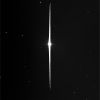
Enceladus-W00048456.jpgJust like a "Star"!55 visiteUno strabiliante "effetto goccia" (da over-saturation) per l'oggetto celeste la cui albedo è la più alta nell'intero Sistema Solare: Encelado, la "Luna di Neve".
Caption NASA:"W00048456.jpg was taken on August 11, 2008 and received on Earth August 11, 2008. The camera was pointing toward ENCELADUS that, at the time, was approx. 444.673 Km away.
The image was taken using the CL1 and CL2 filters and it has not been validated or calibrated".MareKromium
|
|
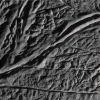
Enceladus-N00118365.jpgThe Unbelievable Surface of Enceladus, from about 2000 Km!55 visiteCaption NASA:"N00118365.jpg was taken on August 11, 2008 and received on Earth August 12, 2008. The camera was pointing toward ENCELADUS that, at the time, was approximately 2628 Km away.
The image was taken using the CL1 and CL2 filters and it has not been validated or calibrated".MareKromium
|
|
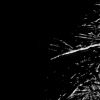
Enceladus-W00048467.jpgThe Unbelievable Surface of Enceladus, from ONLY 545 Km: the bright (and icy) walls of a Canyon55 visiteCaption NASA:"W00048467.jpg was taken on August 11, 2008 and received on Earth August 12, 2008. The camera was pointing toward ENCELADUS that, at the time, was approximately 545 kilometers away.
The image was taken using the CL1 and CL2 filters and it has not been validated or calibrated". MareKromium
|
|
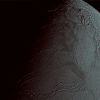
Enceladus-W00048468.jpgApproaching Enceladus (natural colors; credits: Lunexit)55 visiteCaption NASA:"W00048468.jpg was taken on August 11, 2008 and received on Earth August 12, 2008. The camera was pointing toward ENCELADUS that, at the time, was approximately 4748 kilometers away.
The image was taken using the CL1 and CL2 filters and it has not been validated or calibrated".MareKromium
|
|
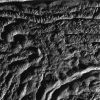
Enceladus-PIA11109.jpgCairo Sulcus55 visiteCaption NASA:"This image is the 4th skeet-shoot footprint taken during Cassini's very close flyby of Enceladus on Aug. 11, 2008. Cairo Sulcus is shown crossing the upper left portion of the image. An unnamed fracture curves around the lower right corner.
The image was taken with the Cassini Spacecraft narrow-angle camera on Aug. 11, 2008, a distance of approx. 3027 Km (such as about 1881 miles) above the surface of Enceladus.
Image scale is approximately 20 meters (66 feet) per pixel". MareKromium
|
|

Enceladus-PIA11113.jpgDamascus Sulcus (possible True Colors; credits: Lunexit)55 visiteCaption NASA:"The yellow circles on this mosaic, showing the fracture known as Damascus Sulcus, indicate the Jets' Source Locations II and III, as identified in PIA08385.
This mosaic consists of two images obtained with the clear spectral filters on Cassini's narrow-angle camera. The view is an orthographic projection with an image scale of 24 meters (79 feet) per pixel. The area shown here is centered on 81,2° South Latitude and 309,9° West Longitude. The original images ranged in resolution from 27 to 30 meters (89 to 98 feet) per pixel and were taken at distances ranging from 4200 to 4742 Km (such as from about 2610 to approx. 2947 miles) from Enceladus".MareKromium
|
|

PHOEBE-PIA06068_modest.jpgPhoebe (Extremely Ehnanced and Saturated Natural Colors; credits: Lunexit Team)55 visitenessun commentoMareKromium
|
|
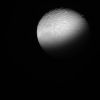
Rhea-N00118975.jpgRhea's Eclipse55 visiteCaption NASA:"N00118981.jpg was taken on August 19, 2008 and received on Earth August 21, 2008. The camera was pointing toward RHEA that, at the time, was approx. 455.227 Km away; the image was taken using the CL1 and CL2 filters. This image has not been validated or calibrated".MareKromium
|
|
| 2245 immagini su 188 pagina(e) |
 |
|
|
|
|
135 | |
|
|
|
|





