| Piú viste - Saturn: the "Ringed Beauty" and His Moons |

Rhea from approx. 6.077.000 Km.jpgRhea from approx. 6.077.584 Km56 visitenessun commento
|
|

Saturn from approx. 9.000.000 Km.jpgWhat is this?!? (2)56 visiteUn'immagine curiosa, misteriosa ed affascinante: gli strumenti di bordo della Sonda Cassini-Huygens dicono che questa ripresa si riferisce all'Anello "E"; in pratica diremmo che la fotocamera in questione stava riprendendo (come è già accaduto tante volte) lo Spazio di Saturno. Il chiarore rotondeggiante che vediamo in basso non sembra l'alone di luce che l'Anello "E" emana intorno a sè. E allora di che cosa si tratta?
|
|

Saturn-HST-Oct1998-PIA03160_modest.jpgSaturn from Hubble Space Telescope (Oct. 1998)56 visitenessun commento
|
|

Saturn_s Clouds-HST-PIA01464_modest.jpgSaturn's Clouds from Hubble Space Telescope56 visiteCaption NASA originale:"This NASA Hubble Space Telescope image of the ringed planet Saturn shows a rare storm that appears as a white arrowhead-shaped feature near the planet's equator. The storm is generated by an upwelling of warmer air, similar to a terrestrial thunderhead. The east-west extent of this storm is equal to the diameter of the Earth (about 7,900 miles). Hubble provides new details about the effects of Saturn's prevailing winds on the storm. The new image shows that the storm's motion and size have changed little since its discovery in September, 1994".
|
|

Japetus from 2.900.000 Km - PIA06466_modest.jpgTwo-faced Japetus56 visiteCaption NASA originale:"The dark material that coats one hemisphere of Saturn's moon Iapetus is very dark, as these two processed views of the same frame can demonstrate.
The image on the left has been cleaned of cosmic rays and magnified; in this otherwise un-enhanced view, only a small part of the moon's surface, at the bottom, is visible because it is part of the bright side of Iapetus. (Only the right hand side of Iapetus is illuminated by sunlight.) The same image, shown on the right, has been contrast-enhanced to make visible the part of the illuminated side of Iapetus that is coated with dark material".
|
|

Saturn_s South-Pole.jpgSaturn's South-Pole from approx. 8.900.000 Km56 visiteMacchie di nuvole bianche e svariate tempeste "scure" dominano le regioni polari dell'emisfero sud di Saturno in questa immagine ripresa il 18 Agosto 2004 da una distanza di circa 8.9 milioni di Km e con l'uso di un filtro sensibile alle lunghezze d'onda proprie della luce infrarossa. La scala dell'immagine è di 54 Km (33 miglia) per pixel.
|
|
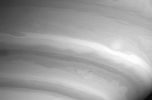
Saturn-PIA06491_modest.jpgSaturn's swirls and ribbons56 visiteCaption NASA originale:"This Cassini image shows mesmerizing detail in the swirls and ribbons of air in Saturn's atmosphere. The view was obtained at a distance of 8.5 million Km from Saturn and is but a taste of what the spacecraft's powerful cameras will show when Cassini draws nearer to the planet. The limb of the planet is visible at lower right.
The image was taken with the Cassini spacecraft narrow angle camera on Sept. 15, 2004, through a filter sensitive to wavelengths of infrared light. The image scale is 101 Km per pixel. The image was magnified by a factor of two and slightly contrast enhanced to improve visibility of features in the atmosphere".
|
|

Prometheus-N00021431.jpgRings and Prometheus56 visitenessun commento
|
|

Saturn-N00021916.jpgSaturn from about 4.000.000 Km56 visiteSaturno è sempre più vicino ed i dettagli che caratterizzano i suoi anelli si fanno sempre più chiari. Purtroppo non siamo in grado di dire se le sorgenti luminose puntiformi visibili in questa immagine sono degli oggetti reali o dei difetti emersi durante l'attività di processo dei dati. Si tratta comunque di "punti luminosi ripetitivi" (ossìa essi appaiono, più o meno allo stesso punto, in più frames) e questo ci fa propendere per l'ipotesi che si tratti di oggetti reali. La seconda domanda attiene la natura di questi oggetti: si tratta di corpi appartenenti al Sistema di Saturno o di stelle fisse che si vedono in campo lungo? La risposta, in questo caso - tenendo ferma la premessa secondo cui siamo davanti ad oggetti reali -, è relativamente semplice: si dovrebbe trattare di oggetti appartenenti al Sistema di Saturno. Le stelle, infatti (anche le più luminose), dovrebbero essere cancellate (washed-away) dalla elevata luminosità (glare) che promana dal disco stesso di Saturno.
|
|

Saturn-N00021884.jpgSaturn56 visiteAlcune immagini, a volte, le selezioniamo "a caso" (per esempio quando il soggetto ripreso è interessante ma ce ne sono davvero un'infinità di altre simili); altre volte, invece - ed in tutta sincerità - le prendiamo solo perchè sono "belle". Questa immagine di Saturno, ripresa da una distanza di circa 4,7 milioni di Km, è - secondo noi - molto bella. Saturno ed il suo imponente - ancorchè delicato - sistema di anelli si vedono benissimo, così come molto bene si vedono due tracce lasciate - forse - da raggi cosmici: la prima, piuttosto piccola e debole, la potete distinguere in alto, appena all'esterno dell'F-Ring, e la seconda, davvero molto lunga e luminosa (e che pare "tagliare" gli Anelli), appena più sotto rispetto alla prima, verso la Dx dell'Osservatore.
|
|

Saturn-W00002414.jpgSaturn and his Rings from approx. 590.000 Km56 visitenessun commento
|
|
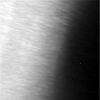
The E-Ring - W00002680.jpgThe "E-Ring" from approx. 412.000 Km56 visiteUn'immagine davvero ravvicinata (sempre in termini spaziali, come ovvio...) dell'Anello "E" di Saturno, inquadrato da una distanza inferiore al mezzo milione di Km.
Una visione decisamente spettacolare ed enigmatica, davvero.
|
|
| 2245 immagini su 188 pagina(e) |
 |
|
|
|
|
120 | |
|
|
|
|





