| |

| Piú viste - Saturn: the "Ringed Beauty" and His Moons |

Unusual_Phenomenon-N00143386_to_425_detail.gifUnusual Phenomenon in the Space of Saturn (GIF-Movie; credits: Dr M. Faccin)100 visiteNel ringraziare il nostro Grande Amico e Partner, Marco Faccin, per i Lavori che produce OGNI GIORNO, Vi invitiamo a visionare l'intero filmato (Space Migration) che potete trovare al nostro nuovo indirizzo su Flickr.com (http : / / www . flickr . com / photos / lunexit / 4092732540/).
Buona Visione e, se volete, scriveteci quella che credete che possa essere la causa (o una delle cause) dell'Unusual Phenomenon "emerso", letteralmente, dal buio dello Spazio circum-Saturniano...
MareKromium
|
|

Enceladus-N00145377-N00145387.gifFountains of Light and possible UFO (GIF-Movie; credits: Dr G. Barca)100 visiteQuesto splendido (e, per l'ennesima volta, assai intrigante) GIF-Movie realizzato dal nostro Dr Barca è stato ottenuto dal montaggio di 11 frames.
Qui di seguito, troverete le captions NASA originali relative a questi 11 quadri ed una nostra (assolutamente approssimativa, ce ne rendiamo conto) interpretazione del fenomeno.
Le captions in questione (inclusive dell'indirizzo http) sono le seguenti:
http://saturn.jpl.nasa.gov/photos/raw/rawimagedetails/index.cfm?imageID=205400
N00145377.jpg was taken on November 01, 2009 and received on Earth November 03, 2009. The camera was pointing toward ENCELADUS at approximately 200,423 kilometers away, and the image was taken using the CL1 and CL2 filters. This image has not been validated or calibrated. A validated/calibrated image will be archived with the NASA Planetary Data System in 2010.
http://saturn.jpl.nasa.gov/photos/raw/rawimagedetails/index.cfm?imageID=205401
N00145378.jpg was taken on November 01, 2009 and received on Earth November 03, 2009. The camera was pointing toward ENCELADUS at approximately 200,130 kilometers away, and the image was taken using the BL1 and CL2 filters. This image has not been validated or calibrated. A validated/calibrated image will be archived with the NASA Planetary Data System in 2010.
http://saturn.jpl.nasa.gov/photos/raw/rawimagedetails/index.cfm?imageID=205402
N00145379.jpg was taken on November 01, 2009 and received on Earth November 03, 2009. The camera was pointing toward ENCELADUS at approximately 199,946 kilometers away, and the image was taken using the RED and CL2 filters. This image has not been validated or calibrated. A validated/calibrated image will be archived with the NASA Planetary Data System in 2010.
http://saturn.jpl.nasa.gov/photos/raw/rawimagedetails/index.cfm?imageID=205403
N00145380.jpg was taken on November 01, 2009 and received on Earth November 03, 2009. The camera was pointing toward ENCELADUS at approximately 199,688 kilometers away, and the image was taken using the CL1 and IR1 filters. This image has not been validated or calibrated. A validated/calibrated image will be archived with the NASA Planetary Data System in 2010.
http://saturn.jpl.nasa.gov/photos/raw/rawimagedetails/index.cfm?imageID=205404
N00145381.jpg was taken on November 01, 2009 and received on Earth November 03, 2009. The camera was pointing toward ENCELADUS at approximately 199,385 kilometers away, and the image was taken using the CL1 and IR3 filters. This image has not been validated or calibrated. A validated/calibrated image will be archived with the NASA Planetary Data System in 2010
http://saturn.jpl.nasa.gov/photos/raw/rawimagedetails/index.cfm?imageID=205405
N00145382.jpg was taken on November 01, 2009 and received on Earth November 03, 2009. The camera was pointing toward ENCELADUS at approximately 198,621 kilometers away, and the image was taken using the CL1 and CL2 filters. This image has not been validated or calibrated. A validated/calibrated image will be archived with the NASA Planetary Data System in 2010.
http://saturn.jpl.nasa.gov/photos/raw/rawimagedetails/index.cfm?imageID=205406
N00145383.jpg was taken on November 01, 2009 and received on Earth November 03, 2009. The camera was pointing toward ENCELADUS at approximately 198,431 kilometers away, and the image was taken using the BL1 and CL2 filters. This image has not been validated or calibrated. A validated/calibrated image will be archived with the NASA Planetary Data System in 2010.
http://saturn.jpl.nasa.gov/photos/raw/rawimagedetails/index.cfm?imageID=205407
N00145384.jpg was taken on November 01, 2009 and received on Earth November 03, 2009. The camera was pointing toward ENCELADUS at approximately 198,090 kilometers away, and the image was taken using the RED and CL2 filters. This image has not been validated or calibrated. A validated/calibrated image will be archived with the NASA Planetary Data System in 201
http://saturn.jpl.nasa.gov/photos/raw/rawimagedetails/index.cfm?imageID=205408
N00145385.jpg was taken on November 01, 2009 and received on Earth November 03, 2009. The camera was pointing toward ENCELADUS at approximately 197,950 kilometers away, and the image was taken using the CL1 and IR1 filters. This image has not been validated or calibrated. A validated/calibrated image will be archived with the NASA Planetary Data System in 2010.
http://saturn.jpl.nasa.gov/photos/raw/rawimagedetails/index.cfm?imageID=205409
N00145386.jpg was taken on November 01, 2009 and received on Earth November 03, 2009. The camera was pointing toward ENCELADUS at approximately 197,494 kilometers away, and the image was taken using the CL1 and IR3 filters. This image has not been validated or calibrated. A validated/calibrated image will be archived with the NASA Planetary Data System in 2010.
http://saturn.jpl.nasa.gov/photos/raw/rawimagedetails/index.cfm?imageID=205410
N00145387.jpg was taken on November 01, 2009 and received on Earth November 03, 2009. The camera was pointing toward ENCELADUS at approximately 197,115 kilometers away, and the image was taken using the CL1 and CL2 filters. This image has not been validated or calibrated. A validated/calibrated image will be archived with the NASA Planetary Data System in 2010.
CONSIDERAZIONI
Come potete verificare Voi stessi, tra il primo frame (ottenuto quando CASSINI si trovava a 200.423 Km da Encelado) e l'ultimo (che vedeva CASSINI a 197.115 Km dalla "Luna di Neve") esiste uno scarto di 3.308 Km i quali, supponendo (la nostra è una valutazione arbitraria, lo sappiamo, ma è comunque una valutazione razionale) che la Sonda viaggiasse assecondando una traiettoria (sostanzialmente) lineare muovendosi nello Spazio ad una velocità media di circa 6 Km/sec., dovrebbero essere stati percorsi in circa 551”.
Se quanto sopra è vero (anche solo approssimativamnte), ne consegue che l'intera sequenza dovrebbe coprire un intervallo di tempo pari a poco più di 9 minuti.
L'oggetto scintillante (il Light Streak) appare in 6 frames (da 00145382 a 00145387), ergo da quando CASSINI era a 198.621 Km di distanza da Encelado e sino a quando la Sonda si è trovata a 197.115 Km dalla Luna Saturniana.
Lo spazio percorso da CASSINI durante l'ottenimento di questi frames è dunque fatto pari a (circa) 1506 Km, il che significa - in termini di tempo - che i frames rappresentativi del Light Streak sono stati ottenuti in un arco di tempo pari a (circa) 4 minuti.
Domanda: date queste premesse, è ammissibile che il Light Streak costituisca l'espressione visibile del transito - nello spazio visuale di CASSINI - di un'altra Luna Saturniana?
Ebbene la risposta è: NO.
Non è possibile poichè, qualora si fosse trattato - ragionando per assurdo - di un'altra Luna Saturniana (il che non è, dato che conosciamo la geometria esistente fra CASSINI ed il Sistema di Saturno durante la ripresa), allora aremmo dovuto supporre una sua Velocità Orbitale semplicemente impossibile (troppo elevata, alle soglie della "Fuga").
Questa riflessione si basa sulla circostanza per cui l'eventuale Luna Saturniana "responsabile" del Light Streak andrebbe collocata, visto il diametro angolare apparente dell'oggetto, ad una distanza pari o superiore ai 3/3,5 milioni di Km da CASSINI.
E, come Vi apparirà ovvio, osservando l'oggetto sconosciuto da una distanza simile, l'effetto "Light Streak", considerati i 4 minuti di intervallo di tempo tra l'inizio e la fine del transito, è un effetto impossibile - laddove riferito al (teorico) movimento di un Corpo Celeste appartenente al Sistema di Saturno (in altre parole: da oltre 3 miloni di Km di distanza, il transito completo di una Luna Saturniana QUALSIASI nello spazio visivo della Sonda CASSINI NON PUO' AVVENIRE in un intervallo di tempo di soli 4 minuti e, per giunta, producendo un fenomeno di aberrazione dell'immagine quale è il Light-Streak).
L'effetto Light Streak, inoltre, non è neppure imputabile ad un movimento brusco della Sonda CASSINI la quale, come il filmato mostra benissimo, procede in modalità steady, senza evidenziare oscillazioni o repentini mutamenti di velocità e/o di rotta.
Un'ultima considerazione (ma certo non la meno importante): se ingrandite il Light Streak, vedrete che esso è formato da un oggetto luminoso in movimento e da un artefatto da sovrasaturazione cagionato dall'oggetto stesso (il quale, ovviamente, è luminosissimo).
Ora, dato e premesso che l'oggetto più luminoso del Sistema Saturniano è proprio Encelado ed Encelado - che, durante questa ripresa, era (relativamente, come ovvio, ma) sicuramente più VICINO a CASSINI di quanto non lo fosse nè lo potesse essere un'altra ed ipotetica Luna Saturniana esistente sullo sfondo ed in transito nel campo visivo dell'Orbiter - NON PRESENTA l'esistenza di artifact da sovrasaturazione (sovraesposizione) su di sè, COME SARA' MAI POSSIBILE GIUSTIFICARE (logicamente e fisicamente, ergo "otticamente") l'esistenza di questi artifacts in un ALTRO OGGETTO CELESTE, DIVERSO DA ENCELADO - ma comunque roccioso -, MOLTO PIU' LONTANO E DI ALBEDO PER FORZA INFERIORE?
Risposta: NON E' POSSIBILE.
Conclusioni: il Light Streak è l'evidenza del transito, nel campo visivo della Sonda CASSINI (ed a distanza indeterminata dalla medesima), di un Oggetto Sconosciuto (OVNI o UFO, come volete) avente una luminosità elevatissima ed una traiettoria, come si può vedere esaminando il GIF ed i singoli frames che lo formano, NON lineare (non regolare).MareKromium
|
|

Enceladus-N00161060-61-MF-PCF-LXTT.jpgFlying over the "Tiger Stripes" (an Image-Mosaic in Natural Colors; credits for the additional process. and color.: Drr Marco Faccin and Paolo C. Fienga - Lunexit Team)100 visitenessun commentoMareKromium
|
|

Saturn-PIA14656-PCF-LXTT-IPF.jpgThe restless Saturnian Atmosphere (Absolute Natural Colors; credits for the additional process. and color.: Dr Paolo C. Fienga/Lunar Explorer Italia/Italian Planetary Foundation)100 visiteThe always richly dynamic Atmosphere of Saturn rewards - once again - its observers by showing unique and fascinating (even though just temporary) Cloud Structures and Formations. Here, the NASA - Cassini Spacecraft used the Near-InfraRed filters on its Wide-Angle Camera to get a better look at some of Saturn's Cloud Patterns, which are continuously shaped (and re-shaped, restlessly) by the powerful Winds and Storms that keep blowing and forming, respectively, in the Upper Atmosphere of the ringed Gas-Giant Planet.
The view is centered at 30° North Latitude and 42° West Longitude; North is up and rotated 44° to the right. The image was taken with the NASA - Cassini Spacecraft Wide-Angle Camera on December 24, 2012, using a spectral filter sensitive to wavelengths of Near-InfraRed Light centered at 752 nanometers. The image was acquired at a distance of approximately 440.000 miles (such as about 708.000 Km) from the top of Saturn's Clouds and at a Sun-Saturn-CASSINI Spacecraft, or Phase, Angle of 14°. Image scale is roughly 26 miles (such as 41,84 Km) per pixel.
This picture (which is an Original NASA - Cassini Spacecraft b/w frame published on the NASA - Planetary Photojournal and identified by the n. PIA 14656) has been additionally processed and then colorized, according to an educated guess carried out by Dr Paolo C. Fienga (LXTT-IPF), in Absolute Natural Colors (such as the colors that a human eye would actually perceive if someone were onboard the NASA - Cassini Spacecraft and then looked outside, towards the Gas-Giant Planet Saturn), by using an original technique created - and, in time, dramatically improved - by the Lunar Explorer Italia Team. Different colors, as well as different shades of the same color, mean, among others, the existence of different Elements present in the Upper Atmosphere of Saturn, each having a different Albedo (---> Reflectivity) and Chemical Composition.
Note: it is possible (but we, as IPF, have no way to be one-hundred-percent sure of such a circumstance), that the actual luminosity of the Clouds and Hazes (as well as the luminosity of Saturn itself) seen in this frame would appear, to an average human eye, way lower than it has been shown (or, better yet: interpreted) here.MareKromium
|
|

The_Rings-N00191994-N00192059-GB-LXTT-IPF.gifIn the Rings (a GIF-Movie by Dr Gianluigi Barca - Lunar Explorer Italia/Italian Planetary Foundation)99 visiteThe densest Regions of the Saturnian Ring System consist of the A and B-Rings, which are separated by the so-called "Cassini Division" (which was discovered in the AD 1675 by the Italian Astronomer Giovanni Domenico Cassini). Along with the C-Ring, which was discovered 75 years later (such as in the AD 1850), these three Regions together form the Main Rings of the Giant Gas Planet Saturn.
The Main Rings are denser and contain larger Water Ice and Rocky Particles than the very tenuous so-called Dusty Rings, which include the D-Ring (extending inward, towards Saturn's Cloud Tops), the G and E-Rings, as well as other and even more tenuous (or also "diffuse") Rings and Ringlets (and, perhaps, even some Ring Arcs) which are all located beyond the three Main Rings (which can also be named as the "Main Ring System").
These "Diffuse Rings" are known as "dusty" because of the extremely small size of the Water Ice and Dust Particles which form them (and whose size can often be in the order of just one or two micrometers). Last, but not least, the narrow F-Ring - which rotates just off the Outer Edge of the A-Ring - is the most difficult one to be categorized, and that is because some parts of it are very dense, while others are extremely tenuous.
The brightness and purity of the Water Ice contained in the Rings has been often cited as evidence that they should (and could very well be) much younger than Saturn (some Scientists say - but this is, of course, just a speculation - that their age could be of approx. 100 Million Years only, since the infall of Meteoric Dust would have led to some very obvious darkening of the Rings themselves, if they had been older. However, a new research also indicates that the B-Ring may be massive enough to have diluted the infalling Meteoric Dust Material and thus avoided any substantial darkening of the entire Ring System. In addition to the above, the material forming the Rings may also be periodically recycled, as "Clumps" form within the Rings and then are disrupted by occasional Impacts. This last theory, if proven correct, could substantially explain the apparent youth of some of the Material existing within the whole Ring System.
The NASA - Cassini - UVIS Team, led by Dr Larry Esposito, used the so-called "Stellar Occultation Method" to discover something like 13 (thirteen) new Celestial Objects, ranging from approx. 27 metres to about 10 Km across, and all located within the F-Ring. These Objects appear to be translucent, thus suggesting that they could be temporary aggregates of Water Ice Boulders, each one of them being a few meters across. Dr Esposito believes that this could be the Basic (Mechanical) Structure that allows the formation and (somehow periodic) renewal of the entire Saturnian Ring System, such as Water Ice and Rocky Dust Particles first clumping together, and then being - as we suggested, maybe occasionally, maybe periodically - blasted apart.MareKromium
|
|

Japetus-N00022351.jpgJapetus and "something" else? (2)98 visiteUn secondo frame, consecutivo al precedente: l'oggetto (o l'artifact) sembra comunque essersi leggermente spostato. Certo è che si riesce a vedere con chiarezza una buona porzione di questo controverso "corpo scuro", qualunque cosa essa sia. Un piccolo dato (sconcertante): la porzione di sagoma che si lascia vedere sembra avvicinarsi molto al tipico "disco volante"; un disco volante molto simile a quello che un certo Robert "Bob" Lazar (uno Scienziato americano assai controverso che salì all'onore delle cronache mondiali qualche anno fa, dopo aver dichiarato di essersi occupato di alcuni studi - retroingegneria? - su un UFO precipitato a Terra e custodito in Nevada, nella "famosa" Area 51) chiamò "Sport Model", ossìa il "Modello Base" di tutta una serie di velivoli circolari di asserita origine non terrestre.
Che dire? Gli elementi che possediamo sono davanti ai Vostri occhi: provate ad elaborare l'immagine ed a farVi un'idea. Se vorrete, poi, potrete comunicarcela e noi ne parleremo.
|
|

Enceladus-N00153894-97-EB-LXTT.jpgSubtle Color Variations on Enceladus (Enhanced Natural Colors; credits forb the additional process. and color.: Elisabetta Bonora - Lunexit Team)98 visitenessun commentoMareKromium
|
|

Enceladus-PIA07800f-2.jpgEnceladus (3) - detail mgnf and HR97 visiteEncelado è dunque "vivo e vegeto" e, dalla sua gelida superficie, in area Sud Polare, ciclopici geysers spruzzano (ma lo fanno continuativamente o di quando in quando?) fango, vapore e cristalli di ghiaccio d'acqua verso lo spazio che circonda questa piccola Luna.
Alla NASA, come potete vedere nel Modello "Cold Geyser", sono convinti che queste "fontane" trovino la loro origine in un sottosuolo NON attivo - in senso geologico - ma "caldo" (per motivi ancora da chiarire), il quale agirebbe come una sorta di "miccia" (o iniettore) su grandi sacche d'acqua (le cosiddette water pockets, contenenti acqua allo stato liquido, a circa 0°C, ed in pressione) le quali, una volta giunte ad ebollizione, spingono fanghi, cristalli d’acqua e vapore acqueo attraverso degli stretti condotti (vents) che, dalle profondità del pianeta, arrivano sino alla superficie (posta sul fondo delle Tiger Stripes) e quindi si aprono verso lo spazio circum-enceladiano, consentendo lo sfogo di quanto emerso e mantenendo l’intero sistema in un sostanziale equilibrio.
Ora, anche ammettendo che questo modello esplicativo delle "Fontane di Encelado" abbia una qualche attendibilità e sostanza, ci domandiamo: dato che Encelado è una luna molto piccola e che le sue "riserve d'acqua" (water-pockets) devono essere – logicamente – molto piccole, non è irragionevole supporre che tali geysers abbiano una vita – tutto sommato – molto breve e che, una volta finita l'acqua, finirà anche il fenomeno delle fontane di fango, ghiaccio e vapore. La logica direbbe questo.
Tuttavia, a quanto si deduce osservando la superficie di Encelado (la quale sembra proprio "fresca e giovane") dobbiamo invece supporre che un siffatto fenomeno stia andando avanti da ere.
Deduzioni (e domande): allora l'acqua delle water-pockets di Encelado si riforma, nel tempo?
E, se si (come la logica ci farebbe supporre), quest'acqua da dove viene?
Forse l’intero Encelado si sta “sciogliendo”, precipitando i ghiacci di superficie nel sottosuolo dove vengono scaldati, quindi liquefatti ed infine “sparati” nello spazio?
Oppure i geysers di Encelado si sono attivati "recentemente", ed è solo per questo che essi stanno vivendo questa stagione di splendore?
E se la risposta a questo ultimo quesito fosse "si", che cosa avrebbe innescato il riscaldamento delle viscere del pianeta?
Forse un'attività solare anomala e particolarmente intensa (la stessa che, secondo alcuni, sta aiutando Marte a scaldarsi)?
O magari la causa del fenomeno è nelle ondate di radiazioni che arrivano costantemente da Saturno?
I Giganti Gassosi, in fondo, in qualità di “stelline mancate”, non potrebbero operare come “riscaldatori” dei minuscoli corpi che li circondano?
Non è in fondo questa la costruzione che ha fatto pensarea molti Scienziati e Ricercatori – sin dagli Anni ’80 – che alcune Lune Gioviane potrebbero essere “mantenute in vita” proprio dall’energia termica (e non solo) che gli perviene dal loro Pianeta-Genitore e non certo dal Sole (troppo lontano)?
Conclusione: creare “modelli” interpretativi dei fenomeni anomali è, come avete notato, relativamente semplice. Analizzare le implicazioni proprie di ciascun modello, invece, non lo è affatto.
Noi, in fondo, possiamo anche permetterci, di tanto in tanto, di “inventarci un modello” e di proporlo (anche se non siamo scienziati, abbiamo comunque una testa e qualche capacità di ragionamento logico); ma quando ci accorgiamo che i nostri modelli, in fondo, hanno le stesse (purtroppo deboli e fortemente speculative) basi dei modelli NASA...Allora un pizzico di perplessità ci coglie.
Non credete?!?
|
|

The_Rings-PIA12766.jpgClump or Impact in the F-Ring97 visiteCaption NASA:"A bright Clump of material within Saturn's tenuous F-Ring stands out near the center top of this Cassini Spacecraft image. This view looks toward the southern, unilluminated side of the Rings from about 1° below the Ring-Plane.
The image was taken in Visible Light with the Cassini Spacecraft narrow-angle camera on Oct. 16, 2010. The view was acquired at a distance of approx. 320.000 Km (about 199.000 miles) from the F-Ring. Image scale is roughly 2 Km (1,242 mile) per pixel".MareKromium
|
|

Enceladus-N00185224_to_N00185282-EB-MF-LXTT-IPF.gifFountains of Light (a GIF-Movie by Elisabetta Bonora and Marco Faccin - Lunexit Team)97 visitenessun commentoMareKromium
|
|
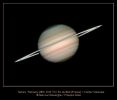
Saturn.jpgThe Lord of the Rings96 visiteCaption NASA, da "NASA - Picture of the Day" del giorno 4 Marzo 2009:"Very good telescopic views of Saturn can be expected in the coming days as the Ringed Planet nears "Opposition" on March 8th, its closest approach to Earth in 2009.
Of course, "Opposition" means opposite the Sun in planet Earth's sky - an arrangement that occurs almost yearly for Saturn. But while Saturn itself grows larger in telescopic images, Saturn's Rings seem to be vanishing as their tilt to our line-of-sight decreases.
In fact, the rings will be nearly invisible, edge-on from our perspective, by September 4, 2009.
Recorded on February 28, this sharp image was made with the 1 meter telescope at Pic Du Midi, a mountain top observatory in the French Pyrenees. The Rings are seen to be tilted nearly edge-on, but remarkable details are visible in the gas giant's cloud bands. The icy moon Tethys appears just beyond the Rings at the lower left".MareKromium
|
|

The_Rings-N00191724-N00191763-GB-LXTT-IPF.gifIn the Rings (a GIF-Movie by Dr Gianluigi Barca - Lunar Explorer Italia/Italian Planetary Foundation)96 visiteOnce (actually, only a few decades ago...), we used to think that the Rings of the Gas-Giant Planet Saturn were something unique in the Universe. Now, after we have seen Rings and/or Ring-Arcs and Ringlets around each and every one of the other three Gas-Giant Planets Jupiter, Uranus and Neptune, we do know that the Rings of Saturn are just the Most Extensive (---> i.e.: the Widest) Planetary Ring System in the Solar System. The Rings of Saturn - according to the majority of the Planetary Scientists - mostly consist of countless, small particles of Ice and Dust (ranging, in size, from micrometres to a few metres), which orbit around Saturn. As a matter of fact, the Ring Particles are made almost entirely of Water Ice, with some contamination from Dust and - maybe - other (minor) Elements.
As everybody should know, although reflection from the Rings increases the brightness of Saturn, the Rings themselves are not visible from Earth with unaided vision. In the AD 1610, however (such as one year after the Italian Astronomer Galileo Galilei first turned a telescope to the Sky), the Rings of Saturn appeared in all their beauty and Galileo Galilei became the very first person to observe them, even though he could not see them well enough to discern their true nature. Afterwards, in the AD 1655, the Dutch Mathematician and Astronomer Christiaan Huygens was the first one to describe them as a Disk made by (some kind of) Material surrounding (---> orbiting around) Saturn. Although many people still believe that the Rings of Saturn are made by a series of tiny Ringlets (a concept that goes back to Laplace), it is way more correct to think of them (like some NASA Scientists recently suggested) as an Annular Disk with concentric Local Maxima and Minima in both Density and Brightness. The Rings have numerous Gaps where the Particles' Density drops sharply: two of these Gaps opened because of the action of small (and known) really small moons which are actually "embedded" within them, while many others are located in specific places where the Tidal Forces exercized by (resonating) Saturnian moons create a phenomenon of Gravitational Destabilization of entire regions of the Rings themselves. Stabilizing resonances, on the other hand, can be considered responsible for the stability (and longevity) of several Rings (think about, for instance, to the Titanian Ringlet and the G-Ring). Well beyond the Main Rings, there is the so-called "Phoebe Ring", which is tilted at an angle of 27° as to the other Rings and, just like Phoebe, orbits in a Retrograde fashion.
Furthermore, and just out of Intellectual Curiosity, we wish to highlight that we believe, as IPF, after we examined (in extreme detail) several hundreds of close-up pictures of the Rings which were all obtained during the last Saturnian Equinox, that there should (and could well) be a few (relatively wide) Regions of the Rings themselves that are NOT made by Orbiting Ice and Dust Particles, but rather by orbiting "Pavings", such as by Aggregated Particles of Ring Material that, since they were positioned/located in specific regions within the Rings where they neither did nor do suffer any - or, maybe, just a negligible - Tidal Stress, in time joined together and formed something like "Floating Rocky Slates" (which means, in other words, the "flat" equivalent of a so-called "rubble-pile" Asteroid).MareKromium
|
|
| 2245 immagini su 188 pagina(e) |
|
|
|
|
|
12 | |
|
|
|
|
|
|





