| Piú viste - Saturn: the "Ringed Beauty" and His Moons |
The_Rings-N00139376_to_97.gifSurfing through the Rings... (GIF-Movie; credits: Dr M. Faccin)57 visitenessun commentoMareKromium
|
|

Rhea-PIA11550.jpgRhea (Natural Colors; credits: Lunexit)57 visiteCaption NASA:"The battered features of the moon Rhea, seen at low phase, appear washed out by the Sun.
This view looks toward the Saturn-facing side of Rhea at a Sun-Rhea-Spacecraft, or Phase, Angle of 15°. To see Rhea at an even lower phase angle -- near opposition -- see PIA10542.
North on Rhea is up and rotated 7° to the left.
The image was taken in Visible Light with the Cassini spacecraft narrow-angle camera on May 26, 2009. The view was obtained from a distance of approx. 1,4 MKM (such as about 870.000 miles) from Rhea.
Image scale is roughly 9 Km (approx. 5,5 miles) per pixel".MareKromium
|
|
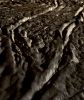
Enceladus-PIA12208.jpgPerspective view of Baghdad Sulcus, Enceladus (Natural Colors; credits: Lunexit)57 visiteThis perspective view of Baghdad Sulcus was generated using high resolution images of Enceladus acquired in August 2008 at 12 to 30 meters (40 to 100 feet) resolution, together with a new topographic map of the region produced by Dr. Paul Schenk (http://www.lpi.usra.edu/lpi/schenk/) at the Lunar and Planetary Institute in Houston, TX. Lower resolution images to either side were acquired at 50 to 80 meter (165 to 260 feet) resolution.
Baghdad Sulcus is one of several prominent linear structures, dubbed “Tiger Stripes”, within the geologically active South Polar Region of Enceladus. This view shows a wedge-shaped area between two prominent branches of Baghdad Sulcus. Each branch consists of two large parallel ridges up to 2 Km (approx. 1,2 mile) across separated by a deep V-shaped medial trough.
The ridges are 80 to 100 meters (approximately 260 to 325 feet) high. The medial troughs between the ridges are 200 to 250 meters (650 to 820 feet) deep. The maximum separation between the two branches is about 12 Km (about 7.5 miles).
Troughs such as those shown here are probably the source of numerous jets making up the large active water vapor plume over the South Pole of Enceladus. The floors of the medial troughs are often broken up into smaller ridges. These could be blocks of crust that have slid down the walls of the trough or fractured blocks pushed up from below. Relief has been exaggerated by a factor of ~10 to enhance clarity.
The raw data from which this product was developed were retrieved from the Planetary Data System's Cassini archives. The Cassini-Huygens mission is a cooperative project of NASA, the European Space Agency and the Italian Space Agency. The Jet Propulsion Laboratory, a division of the California Institute of Technology in Pasadena, manages the mission for NASA's Science Mission Directorate, Washington, D.C. The Cassini orbiter and its two onboard cameras were designed, developed and assembled at JPL. The imaging operations center is based at the Space Science Institute in Boulder, Colo. (http://ciclops.org)MareKromium
|
|

The_Rings-PIA11600.jpgShadows on the Islands...57 visiteCaption NASA:"The shadows cast by Daphnis' attendant edge waves create a dark, jagged pattern on the A-Ring in this image taken as Saturn approached its August 2009 Equinox.
Daphnis (approx. 8 Km, or about 5 miles across) is a bright dot in the Keeler Gap of the A-Ring just below the center of the image. The moon has an inclined orbit, and its gravitational pull perturbs the orbits of the particles forming the Keeler Gap's edges and sculpts both edges into waves having both horizontal (radial) and out-of-plane components. Material on the inner edge of the gap orbits faster than the moon so that the waves there lead the moon in its orbit. Material on the outer edge moves slower than the moon, so waves there trail the moon. (See also PIA11656 to learn more about this process)
The novel illumination geometry that accompanies Equinox lowers the Sun's angle to the Ring-Plane, significantly darkens the Rings, and causes out-of-plane structures to look anomalously bright and cast shadows across the Rings. These scenes are possible only during the few months before and after Saturn's Equinox, which occurs only once in about 15 Earth years. Before and after Equinox, Cassini's cameras have spotted not only the predictable shadows of some of Saturn's moons (see also PIA11657), but also the shadows of newly revealed vertical structures in the Rings themselves (see, for example, the frame PIA11665).
This view looks toward the Northern, unilluminated side of the Rings, from about 36° above the Ring-Plane.
The image was taken in Visible Light with the Cassini Spacecraft narrow-angle camera on July 28, 2009. The view was obtained at a distance of approx. 1 MKM (about 621.000 miles) from Daphnis.
Image scale is roughly 6 Km (a little less than 4 miles) per pixel".MareKromium
|
|

Hyperion-PIA11617.jpgTumbling Hyperion (Natural Colors; credits: Lunexit)57 visiteCaption NASA:"The Cassini Spacecraft peers at the pitted Surface of the small and irregularly-shaped moon Hyperion.
See PIA09728 to learn how these pits are created on low-density Hyperion (about 270 Km, or approx. 168 miles across). To watch a movie of this "tumbling moon", see PIA07683.
Scale in the original image was 9 Km (approx. 5,5 miles) per pixel. The image has been magnified by a factor of three and contrast-enhanced to aid visibility.
The image was taken in Visible Light with the Cassini Spacecraft narrow-angle camera on Sept. 5, 2009. The view was obtained at a distance of approx. 1,4 MKM (such as about 870.000 miles) from Hyperion and at a Phase Angle of 91°".MareKromium
|
|

Tethys-N00143707_to_09.jpgTethys (Superdefinition; credits: Dr M. Faccin)57 visiteIl Cratere che ben si distingue in questa spettacolare immagine di Tethys (frame processato in Superdefinzione dal nostro eccezionale Marco Faccin) , è "Penelope": un notevole bacino da impatto che, mutatis mutandis, ci ricorda tantissimo il Cratere Odysseus (sempre su Tethys); il Cratere Herschel (noto anche come "L'Occhio di Mimas") ed il Cratere Stickney (un enorme bacino d'impatto che si trova sulla Luna Marziana "Phobos").MareKromium
|
|

Enceladus-PIA11678.jpgEnceladus: North Polar Map57 visiteThe Northern and Southern Hemispheres of Enceladus are seen in these Polar Stereographic Maps, mosaicked from the best-available Cassini and Voyager clear-filter images. This image shows the North Polar Regions.
Each map is centered on one of the Poles and surface coverage extends to the Equator. Grid lines show Latitude and Longitude in 30-degree increments. The scale in the full-size versions of these maps is 110 meters (360 feet) per pixel.
These two maps show that the character of Terrains near the North Pole differs strongly from those near the South Pole. Terrain near the North Pole is among the most heavily cratered and oldest on the Surface of Enceladus.
The Northern Hemisphere map shows that a broad band of cratered terrain extends from the Equator on the Saturn-facing side (centered on 0-degrees Longitude), over the Pole and to the Equator on the anti-Saturn side (centered on 180-degrees Longitude). Terrains near the Equator and Mid-Latitudes on the Leading (90° West) and Trailing (270° West) sides of Enceladus are much less heavily cratered and are characterized by intense zones of fracturing and faulting.
As seen in the Southern Hemisphere map, the band of cratered terrain at 0 and 180° Longitude extends southward from the Equator. However, poleward of about 55° South Latitude, the cratered terrain is interrupted and replaced by a conspicuously fractured circumpolar terrain that is nearly devoid of impact craters.
In contrast to the very old North Polar Terrains, the South Circumpolar Terrains are among the youngest on the Surface of Enceladus.
Within the South Circumpolar Region is a group of prominent parallel "Stripes" made up of fractures that are delineated by relatively dark albedo markings flanking the sides of each fracture.
An interesting property of the parallel fracture system is that each appears to turn back at its westernmost segment as if it has been "bent" or "folded" into a hook-like curve. Similar patterns of folded or kinked fractures can be found throughout the region -- a unique feature of the South Polar Terrains.MareKromium
|
|

Japetus-PIA11620.jpgJapetus, from far away... (Natural Colors; credits: Lunexit)57 visiteCaption NASA:"A crescent Japetus shows, at the top right of this image, some of the dark terrain characterizing this unusual Saturnian moon.
Scientists continue to investigate the nature of the moon's surface.
Lit Terrain seen here is on the Saturn-facing side of Japetus (about 1471 KM, or approx. 914 miles across). North on Japetus is up and rotated 5° to the left.
Scale in the original image was 7 Km (about 4,5 miles) per pixel. The image has been magnified by a factor of two and contrast-enhanced to aid visibility.The image was taken in Visible Green Light with the Cassini Spacecraft narrow-angle camera on Sept. 11, 2009.
The view was acquired at a distance of approx. 1,2 MKM (about 746.000 miles) from Japetus and at Phase Angle of 125°".MareKromium
|
|

Tethys-N00143729-N00143747.gifTethys and "The Runners" (GIF-Movie; credits: Dr G. Barca)57 visitenessun commentoMareKromium
|
|

Enceladus-N00145388-N00145409.gifFountains of Light (GIF-Movie; credits: Dr G. Barca)57 visitenessun commentoMareKromium
|
|
Tethys_and_Enceladus-N00144766-N00144785.gifOrbit after Orbit... (GIF-Movie; credits: Dr G. Barca)57 visitenessun commentoMareKromium
|
|
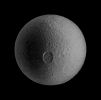
Tethys-PIA11624.jpgPenelope (additional process. by Lunexit)57 visiteCaption NASA:"The Cassini Spacecraft spies the large Penelope Crater on Tethys.
This view looks toward the Trailing Hemisphere of Tethys (approx. 1062 Km - or about 660 miles across). North on Tethys is up.
The image was taken with the Cassini Spacecraft narrow-angle camera on Oct. 14, 2009 using a spectral filter sensitive to wavelengths of UltraViolet Light centered at 338 nanometers.
The view was obtained at a distance of approx. 256.000 Km (about 159.000 miles) from Tethys and at a Sun-Tethys-Spacecraft, or Phase, Angle of 1°.
Image scale is roughly 2 Km (about 1,25 mile) per pixel".MareKromium
|
|
| 2245 immagini su 188 pagina(e) |
 |
|
|
|
|
115 | |
|
|
|
|





