| Piú viste - Saturn: the "Ringed Beauty" and His Moons |

Enceladus-PIA10562.jpgCrescent Enceladus57 visiteCaption NASA:"In the boundary between light and shadow on Enceladus, run the Anbar Fossae — a series of narrow, shallow depressions.
Like other features on this geologically active moon, the fossae are named after a location in The Arabian Nights. In this case, they are named after Anbar, Iraq.
Another Iraqi namesake, the Baghdad Sulcus, is one of several warm `Tiger Stripe' fractures at the moon's South Pole from which emanate heat and icy particles (see also PIA11114).
North is up in this image, and Julnar is the largest crater visible in the Northern Hemisphere. One of the women in The Arabian Nights lends her name to this crater which is about 20 Km (about 12 miles) wide.
Fewer craters mark the Southern Hemisphere because they have been erased by later tectonic forces.
The image was taken in Visible Light with the Cassini Spacecraft narrow-angle camera on Dec. 17, 2008. The view was obtained at a distance of approx. 385.000 Km (about 239.000 miles) from Enceladus and at a Phase Angle of 104°.
Image scale is roughly 2,5 Km (about 1,6 miles) per pixel".MareKromium
|
|
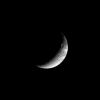
Dione-PIA10577.jpgCrescent Dione57 visiteCaption NASA:"This high-phase view of Dione shows the great contrast between the highly reflective "wisps" and the surrounding terrain. These wispy lines are geologically young fractures exposing the icy surface of the moon.
Lit terrain seen here is on the Trailing Hemisphere of Dione (about 1123 Km, or approx. 698 miles, across). North on Dione is up.
The view was acquired from a position 39° South of the moon's Equator. The image was taken in Visible Light with the Cassini Spacecraft narrow-angle camera on Dec. 26, 2008. The view was obtained at a distance of approx. 789.000 Km (about 490.000 miles) from Dione and at a Sun-Dione-spacecraft, or Phase, Angle of 124°
Image scale is roughly 5 Km (about 3 miles) per pixel".MareKromium
|
|

Tethys-PIA10582.jpgGibbous Tethys57 visiteCaption NASA:"Like the lengthy story of its Greek king namesake, the humongous Odysseus Impact Basin stretches on and on across Tethys.
The approx. 450-Km (about 280-mile) wide Odysseus Crater is a well-preserved example of an ancient multi-ringed Impact Basin. The Outer Ring's steep, cliff-like walls descend to broad internal terraces. The Inner Ring consists of a circular band of icy mountains creating a crown shape with a diameter of about 140 Km (approx. 87-miles).
This view looks toward the leading hemisphere of Tethys (1062 kilometers, or 660 miles across). North on Tethys is up and rotated 2 degrees to the right.
The image was taken in visible light with the Cassini Spacecraft narrow-angle camera on Jan. 2, 2009. The view was obtained at a distance of approx. 816.000 Km (about 507.000 miles) from Tethys and at a Sun-Tethys-Spacecraft, or Phase, Angle of 58°.
Image scale is roughly 5 Km (about 3 miles) per pixel".MareKromium
|
|

Saturn-W00051968-70-71.jpgThe North Pole of Saturn (Natural Colors; credits: Dr M. Faccin)57 visiteCon calma, abbiamo "rivelato" quelli che, se non altro a nostro parere (ed in accordo alla nostra tecnica di colorizzazione delle immagini RAW), erano e sono i "True" e "Natural" colors di Marte.
Adesso è la volta di Saturno e delle sue mutevoli lune. In questa elaborazione, un esempio (il primo, di fatto) di processing RGB per i Colori Naturali realizzato dal nostro ECCEZIONALE Dr Faccin.
Guardate e valutate Voi.MareKromium
|
|

Janus-PIA10599.jpgJanus (Natural Colors; credits: Lunar Explorer Italia)57 visiteCaption NASA:"Janus imitates its two-faced Greek god namesake by catching light on two sides. The brighter side of Janus is lit by the Sun while light reflected off Saturn dimly illuminates the rest of the moon and reveals the non-spherical shape of this small satellite.
This image has been scaled to twice its original size.
This view looks toward the Leading Hemisphere of the Janus (about 179 Km, or approx. 111 miles across).
North on Janus is up and rotated 22° to the left.
The image was taken in visible light with the Cassini spacecraft narrow-angle camera on Feb. 12, 2009.
The view was obtained at a distance of approx. 1 MKM (such as about 621.000 miles) from Janus and at a Sun-Janus-Spacecraft, or Phase, Angle of 112°.
Image scale is roughly 6 Km (about 4 miles) per pixel".MareKromium
|
|

Saturn-HST-2009-12-a-full_jpg.jpgThe Ringed Beauty and (some of) His Companions (Natural Colors; credits: NASA)57 visiteCaption NASA:"On February 24, 2009, the Hubble Space Telescope took a photo of 4 moons of Saturn passing in front of their Parent Planet. In this view, the giant orange moon Titan casts a large shadow onto Saturn's North Polar hood. Below Titan, near the Ring-Plane and to the left is the moon Mimas, casting a much smaller shadow onto Saturn's equatorial cloud tops. Farther to the left, and off Saturn's disk, are the bright moon Dione and the fainter moon Enceladus.
These rare moon transits only happen when the tilt of Saturn's Ring-Plane is nearly "edge on" as seen from the Earth. Saturn's Rings will be perfectly edge on to our line of sight on August 10, 2009, and September 4, 2009. Unfortunately, Saturn will be too close to the Sun to be seen by viewers on Earth at that time.
This "Ring-Plane Crossing" occurs every 14-15 years. In 1995-96 Hubble witnessed the Ring-Plane Crossing Event, as well as many moon transits, and even helped discover several new moons of Saturn.
The banded structure in Saturn's Atmosphere is similar to Jupiter's.
Early 2009 was a favorable time for viewers with small telescopes to watch moon and shadow transits crossing the face of Saturn.
Titan, Saturn's largest moon, crossed (and shall cross) Saturn on 4 separate occasions: January 24, February 9, February 24, and March 12, although not all events were visible from all locations on Earth.
These pictures were taken with Hubble's Wide Field Planetary Camera 2 on February 24, 2009, when Saturn was at a distance of roughly 775 MMs (such as about 1,25 BKM) from Earth. Hubble can see details as small as 190 miles (such as about 300 km) across on Saturn. The dark band running across the face of the Planet slightly above the Rings is the shadow of the Rings cast on the Planet".MareKromium
|
|

PIA07966-112203-1.wavAudio Signals from the the Space of Saturn (by Dr M. Faccin)57 visitenessun commentoMareKromium
|
|

Rhea-PIA11458.jpgRhea (Natural Colors; credits: Lunar Explorer Italia)57 visiteCaption NASA:"The Terminator between light and dark throws Rhea's cratered surface into stark relief while the Southern Hemisphere is scored by bright icy cliffs.
North on Rhea is up and rotated 42° to the right in this 2-tile mosaic. This view looks toward the Leading Hemisphere of Rhea (approx. 1528 Km, or about 949 miles across).
The image was taken in visible light with the Cassini spacecraft narrow-angle camera on Feb. 2, 2009. The view was acquired at a distance of approx. 181.000 Km (such as about 112.000 miles) from Rhea and at a Sun-Rhea-Spacecraft, or Phase, Angle of 91°.
Image scale is roughly 1 Km (about 3300 feet) per pixel".MareKromium
|
|
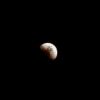
Japetus-PIA11460.jpgJapetus, from far away (Natural Colors; credits: Lunar Explorer Italia)57 visiteCaption NASA:"The Cassini Spacecraft casts its gaze across 4 MKM space for this snapshot of Japetus, Saturn's most distant Major Moon. Japetus — about 1471 Km (914 miles) across — is the 3rd largest moon, but its inclined orbit is much farther out from the other Major Moons, where Cassini spends most of its time. Nonetheless, the moon's distinctive two-tone surface is obvious.
This view looks toward the Leading Hemisphere of Japetus. North on Japetus is up and rotated 2° to the right. The image was taken in visible light with the Cassini Spacecraft narrow-angle camera on March 3, 2008.
The view was acquired at a distance of approx. 4 MKM (such as about 2,5 MMs) from Japetus and at a Sun-Japetus-Spacecraft, or Phase, Angle of 69°.
Image scale is roughly 24 Km (about 15 miles) per pixel".MareKromium
|
|
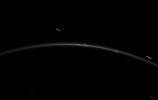
The_Rings-PIA11467.jpgMoonlet in the "G"-Ring57 visiteCaption NASA:"The faint "G"-Ring surrounding Saturn offers up a glimpse of its newfound tiny moonlet. The moonlet is near the center of this image.
A long exposure of 46" was required to capture the light from this tiny object and "G"-Ring, so the moonlet and a few stars have been smeared by motion, the stars showing up as short diagonal dashes.
The moonlet has also been smeared and appears to be a short vertical dash that is aligned with the Ring.
In August 2008 Cassini scientists spotted this moonlet, dubbed S/2008 S 1. It orbits in an arc, or partial ring, within the "G"-Ring. Imaging team scientists estimated the moonlet's diameter at about half a kilometer (one-third mile). For earlier images of this moonlet, see PIA11148.
This view looks toward the unilluminated side of the Rings from about 14° above the Ring-Plane. The image was taken in Visible Light with the Cassini Spacecraft narrow-angle camera on Feb. 20, 2009. The view was acquired at a distance of approx. 1,2 MKM (about 746.000 miles) from Saturn. Image scale is roughly 7 Km (a little more than 4 miles) per pixel".MareKromium
|
|
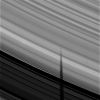
The_Rings-Shadows_cassini_big.jpgA "Wall" on the Rings57 visiteCaption NASA:"What's causing unusual jagged shadows on Saturn's Rings? No one is yet sure. As Saturn nears Equinox, its Rings increasingly show only their thin edge to the Earth and Sun. As a result, Saturn's moons now commonly cast long shadows onto the Rings. An example of this is the elongated vertical shadow of Mimas seen on the above right.
The series of shorter, jagged shadows that run diagonally, however, are more unusual. Now Saturn's Rings have been known to be made of particles for hundreds of years, but these particles have so far escaped direct imaging.
It is therefore particularly exciting that a preliminary hypothesis holds that these jagged shadows are silhouettes of transient groups of ring particles temporarily held close by their own gravity. Future work will surely continue, as the robotic Cassini Spacecraft orbiting Saturn that took the above image will continue to photograph Saturn's magnificent Rings right through Saturn's equinox this August (2009)".MareKromium
|
|

The_Rings-PIA11484.jpgShadow on the Rings57 visiteCaption NASA:"The shadow of the moon Mimas extends elegantly across Saturn's A and F-Rings. As Saturn approaches its August 2009 Equinox, the Planet's moons cast shadows onto the rings. To learn more about this special time and to see a movie of a moon's shadow moving across the Rings, see also PIA11651. Two background stars are visible in the image. Mimas is not shown.
This view looks toward the sunlit side of the rings from about 62° below the Ring-Plane. The image was taken in Visible Light with the Cassini Spacecraft narrow-angle camera on April 7, 2009. The view was acquired at a distance of approx. 1,1 MKM (such as about 684.000 miles) from Saturn and at a Sun-Saturn-Spacecraft, or Phase, Angle of 101°.
Image scale is roughly 6 Km (a little more than 4 miles) per pixel".MareKromium
|
|
| 2245 immagini su 188 pagina(e) |
 |
|
|
|
|
113 | |
|
|
|
|





