| Piú viste - Saturn: the "Ringed Beauty" and His Moons |

Hyperion-PCF-LXTT.jpgHyperion (Absolute Natural Colors; credits for the additional process. and color.: Dr Paolo C. Fienga - Lunexit Team)1640 visitenessun commentoMareKromium
|
|
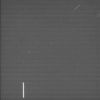
A Streak in the Saturn_s Space (1).jpgA "Streak" in the Sky of Saturn (1) - N00008770501 visiteEcco la prima delle due straordinarie immagini catturate dalla Sonda Cassini/Huygens mentre era impegnata a riprendere scorci dello Spazio di Saturno il giorno 4 Agosto 2004, ad una distanza di poco più di 8 milioni di km dal Pianeta Anellato. Un oggetto luminoso (molto luminoso!) in movimento passa davanti all'obbiettivo della Sonda: gli altri corpi celesti che si vedono sullo sfondo dell'immagine (stelle) sono tutti puntiformi. Proprio a giudicare dal quantitativo di stelle visibili sullo sfondo...
|
|

A Streak in the Saturn_s Space (2)~0.jpgA "Streak" in the Sky of Saturn (2) - N00008771410 visite...(poche) riteniamo che immagini come queste due abbiano richiesto un'esposizione decisamente breve. In ogni caso, preso atto della circostanza per cui è rimasta impressa una striscia di luce mentre le stelle sullo sfondo sono rimaste puntiformi, possiamo ragionevolmente ritenere che l'oggetto luminoso inquadrato ERA IN MOVIMENTO rispetto allo sfondo stellato il quale invece è - per definizione! - FISSO.
Questa striscia è peraltro identica a quella lasciata da un altro corpo luminoso in movimento...
|
|

Enceladus-PIA12765-PCF-LXTT-NASA.jpgThe Surface of Enceladus (Left Side: Absolute Natural Colors; credits for the additional process. and color.: Dr Paolo C. Fienga - Lunexit Team; Right Side: RAW Frame; credits: NASA/JPL Space Science Institute)337 visiteCaption NASA:"The Cassini Spacecraft surveys the surface of Saturn's moon Enceladus in this image, which shows newly Created Terrain in the upper right meeting older, Cratered Terrain in the lower left.
This view is centered on terrain at about 5° South Latitude and 200° West Longitude.
The image was taken in Visible Light with the Cassini Spacecraft narrow-angle camera on Dec. 21, 2010. The view was acquired at a distance of approx. 25.000 Km (such as 15.525 miles) from Enceladus and at a Sun-Enceladus-Spacecraft, or Phase, Angle of 14°. Image scale is roughly 148 meters (486 feet) per pixel".MareKromium
|
|

ZZ-Falling_on_Saturn.jpgEnd of Mission (Artistic View)279 visitenessun commentoMareKromium
|
|

Dione-PIA12752.jpgWispy Terrain on Dione (Absolute Natural Colors; credits for the additional process. and color.: Dr Paolo C. Fienga - Lunexit Team)277 visiteCaption NASA:"Wispy Terrain reflects Sunlight brightly in the lower left of this Cassini image of the Northern Latitudes of Saturn's moon Dione.
These "Wisps" are actually Fractures located on the Trailing Hemisphere of Dione. Lit Terrain seen here is between the Trailing Hemisphere and the Saturn-facing Side of Dione. North is up.
The image was taken in Visible Light with the Cassini spacecraft narrow-angle camera on Dec. 20, 2010. The view was obtained at a distance of approx. 107.000 Km (66.447 miles) from Dione and at a Sun-Dione-Spacecraft, or Phase, Angle of 109°. Image scale is roughly 640 meters (2100 feet) per pixel".MareKromium
|
|

Tethys-PIA14581-PCF-LXTT-1.jpgTethys (Sx: False b/w - credits for the additional process.: Dr Paolo C. Fienga - Lunexit Team - Dx: Original NASA b/w RAW Frame)250 visitenessun commentoMareKromium
|
|

Japetus-N00091967-PCF-LXTT.jpgMountains and Craters of Japetus: proximities of the Transition Zone (Absolute Natural Colors; elab. by Dr Paolo C. Fienga - Lunexit Team) 244 visitenessun commentoMareKromium
|
|

Japetus-W00035193-PCF-LXTT.jpgOver the "Equatorial Ridge" (Absolute Natural Colors; credits for the additional process. and color.: Dr Paolo C. Fienga - Lunexit Team)242 visiteCaption NASA:"W00035193.jpg was taken on September 10, 2007 and received on Earth September 11, 2007. The camera was pointing toward Japetus that, at the time, was approximately 2084 Km away, and the image was taken using the CL1 and CL2 filters. This image has not been validated or calibrated". MareKromium
|
|

Helene-PIA12758-PCF-LXTT.jpgHelene (Absolute Natural Colors; credits for the additional process. and color.: Dr Paolo C. Fienga - Lunexit Team)231 visitenessun commentoMareKromium
|
|

Rhea-PIA12768-PCF-LXTT.jpgIntersecting Lineae on Rhea (Enhanced Natural Colors; credits for the additional process. and color: Dr Paolo C. Fienga - Lunexit Team)224 visiteCaption NASA:"Thin Lineaments cross back and forth on the Surface of Saturn's moon Rhea in this Equatorial View. These Lines can be seen intersecting Craters on Rhea. This view is centered on Terrain at about 0° Latitude and approx. 165° West Longitude.
The image was taken in Visible Light with the Cassini Spacecraft narrow-angle camera on Jan. 11, 2011. The view was acquired at a distance of approx. 41.000 Km (such as 25.461 miles) from Rhea and at a Sun-Rhea-Spacecraft, or Phase, Angle of 15°. Image scale is roughly 238 meters (781 feet) per pixel".MareKromium
|
|

Helene-N00172780-N00172904-GB-LXTT.gifFlying around Helene (a GIF-Movie by Dr Gianluigi Barca - Lunexit Team)223 visitenessun commentoMareKromium
|
|
| 2245 immagini su 188 pagina(e) |
1 |
 |
|
|
|
|
|
|
|
|
|





