| Piú viste - Deep Sky Objects |

IC-1805~1.jpgIC 1805 - The "Heart" Nebula71 visite"…Giovane Teologo non fare
Come in Rue de Fouarre
Dove si produceva Amore,
Si produceva per Dio
E arnesi per dimostrarne l'esistenza, che,
Già mostrava la sola competenza…"
M. Sgalambro e F. Battiato
|
|
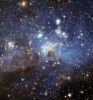
LH-95.jpgLH-95 Star Forming Region71 visite"...How beautiful upon the mountains are the feet of the Messenger who announces Peace..."
- Isaiah, 52:7MareKromium
|
|

NGC-2237_ed_NGC-2244.jpgNGC 2237 - The "Rosette Nebula", and Globular Star Cluster NGC 224471 visite"...Il Primo Amore può anche avere un valore romantico e dolcemente decadente - di questo sono certo - poiché esso, di regola, costituisce l'espressione più travolgente dell'Età dell'Innocenza...Ma il Primo Amore, se ci pensi bene, non conta proprio nulla.
L'Unico Amore che conta davvero...è l'Ultimo".
Paolo Catello Fienga
(frase ripresa dal film "Della Morte Dell'Amore" e liberamente reinterpretata)
|
|
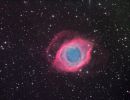
NGC-7293-4.jpgNGC 7293: The "Helix Nebula"71 visite"...Non so che cosa farmene di una Democrazia che non è capace di educare i giovani, di far rispettare le pur minime e più elementari Regole del Vivere Civile, di prevenire i crimini o, al limite, di sanzionarli (...) non so che farmene delle parole di circostanza che accompagnano alla tomba coloro che muoiono per stenti, o per troppo lavoro, o per assurdi eccessi di Fede in un'idea malintesa di Stato. (...)
Sui Giardini della Libertà che hanno edificato i nostri Padri, ed i Padri dei nostri Padri, attraverso ere di oscurità, di stenti, di sangue e di conquiste Sociali, ora si muovono ancora una volta delle vili orde di barbari, capaci solo di distruggere e di disprezzare; creature che nascono immuni da rimorsi e senso comune; esseri senza volto e senza ombra che agiscono nella costante impunità (...) individui che, protetti dalla paura e dall'ipocrisia, ammorbano la terra, l'aria e l'acqua..."
Paolo Catello FiengaMareKromium
|
|

NGC-6960-3.jpgNGC 6960 - The "Veil Nebula"71 visite"...The one who had much, did not have too much,
And the one who had little, did not have too little..."
- 2, Corinthians, 8:15MareKromium
|
|
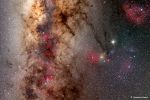
The_Scorpius.jpgThe Scorpius Region71 visite"...Nemo sibi tantummodo errat, sed alieni erroris et causa et auctor est..."
(Seneca)
"...Chi sbaglia, non sbaglia solo in suo danno poiché - sovente - egli è anche causa ed origine di errori altrui..." (trad. libera)MareKromium
|
|

Galaxies-PIA10221.jpgGalaxies of all shapes host Black-Holes71 visite"...Nobody would try anything new if they knew all the consequences of their inventions.
Therefore, all the so-called "Progress" must be based on faulty assumptions..."
Scott Adams - "Build a Better Life by stealing Office Supplies"MareKromium
|
|
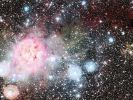
IC_5146.jpgIC 5146 - The "Cocoon Nebula"71 visite"...Ovium non curat numerum lupus..."
(Virgilio)
"...Il lupo non si cura del fatto che le pecore sono contate..." (trad. libera)MareKromium
|
|

NGC-1132.jpgElliptical Galaxy NGC 113271 visite"...A che cosa o a chi può servire una Verità che non sia Patrimonio di tutti?!?..."
Paolo C. Fienga - "Pensieri su Scienza & Dintorni"
MareKromium
|
|

NGC-1499.jpgNGC 1499 and Comet Holmes71 visite"...Levis est Dolor, qui capere consilium potest..."
(Seneca)
"...Non è un grande Dolore quello che ci consente comunque di prendere una decisione (riguardo ad esso)..." (ovvero: se il Dolore è veramente grande, la nostra mente vacilla e quindi il decidere come affrontarlo diviene una cosa impossibile)MareKromium
|
|

HD-189733b-1.jpgExtra-Solar Planet HD 189733b71 visiteNASA's Hubble Space Telescope (HST) has made the first detection ever of an organic molecule in the atmosphere of a Jupiter-sized planet orbiting another star. This breakthrough is an important step in eventually identifying signs of life on a planet outside our Solar System.
The molecule found by Hubble is Methane, which under the right circumstances can play a key role in prebiotic chemistry — the chemical reactions considered necessary to form life as we know it.
This discovery proves that Hubble and upcoming space missions, such as NASA's James Webb Space Telescope, can detect organic molecules on planets around other stars by using spectroscopy, which splits light into its components to reveal the "fingerprints" of various chemicals.
"This is a crucial stepping stone to eventually characterizing prebiotic molecules on planets where life could exist," said Mark Swain of NASA's Jet Propulsion Laboratory (JPL), Pasadena, Calif., who led the team that made the discovery. Swain is lead author of a paper appearing in the March 20 (2008) issue of Nature.
The discovery comes after extensive observations made in May 2007 with Hubble's Near Infrared Camera and Multi-Object Spectrometer (NICMOS). It also confirms the existence of water molecules in the planet's atmosphere, a discovery made originally by NASA's Spitzer Space Telescope in 2007. "With this observation there is no question whether there is water or not — water is present", said Swain.
The planet now known to have Methane and water is located 63 Light-Years away in the constellation Vulpecula. Called HD 189733b, the planet is so massive and so hot it is considered an unlikely host for life. HD 189733b, dubbed a "hot Jupiter", is so close to its parent star it takes just over two days to complete an orbit. These objects are the size of Jupiter but orbit closer to their stars than the tiny innermost planet Mercury in our solar system.
HD 189733b's atmosphere swelters at 1700 degrees Fahrenheit, about the same temperature as the melting point of Silver.
Though the star-hugger planet is too hot for life as we know it, "this observation is proof that spectroscopy can eventually be done on a cooler and potentially habitable Earth-sized planet orbiting a dimmer red dwarf–type star," Swain said. The ultimate goal of studies like these is to identify prebiotic molecules in the atmospheres of planets in the "habitable zones" around other stars, where temperatures are right for water to remain liquid rather than freeze or evaporate away.
The observations were made as the planet HD 189733b passed in front of its parent star in what astronomers call a transit. As the light from the star passed briefly through the atmosphere along the edge of the planet, the gases in the atmosphere imprinted their unique signatures on the starlight from the star HD 189733.
The astronomers were surprised to find that the planet has more Methane than predicted by conventional models for "hot Jupiters".
"This indicates we don't really understand exoplanet atmospheres yet," said Swain. "These measurements are an important step to our ultimate goal of determining the conditions, such as temperature, pressure, winds, clouds, etc., and the chemistry on planets where life could exist. Infrared spectroscopy is really the key to these studies because it is best matched to detecting molecules", said Swain.
Swain's co-authors on the paper include Gautam Vasisht of JPL and Giovanna Tinetti of University College, London/European Space Agency.MareKromium
|
|

NGC-3576.jpgNGC 3576 - Star Forming Region71 visite"...The Earth is the Lord's and all that is in it,
The World, and those who live in it;
For He has founded it on the Seas,
And established it on the Rivers..."
- Psalm 24:1-2MareKromium
|
|
| 1039 immagini su 87 pagina(e) |
 |
|
|
|
|
75 | |
|
|
|
|








