| Piú viste - Curiosity and the Exploration of Gale Crater |

SOL2400-PIA23242.jpgNoctilucent Clouds over Gale Crater - Sol 2400130 visiteCaption NASA Originale:"NASA's Curiosity Mars rover imaged these drifting clouds on May 7, 2019, the 2400th Martian Day, or Sol, of the mission, using its black-and-white Navigation Cameras (NavCams).
These are likely water-ice clouds about 19 miles (such as approx. 31,577 Km) above the Surface. They are also "Noctilucent" Clouds, meaning they are so high that they are still illuminated by the Sun, even when it's night at Mars' surface. Scientists can watch when light leaves the Clouds and use this information to infer their altitude".MareKromium
|
|

SOL0044-EB-MF-LXTT-IPF.jpg'Jake Matijevic' - Sol 44 (Natural Colors; credits for the additional process. and color.: Elisabetta Bonora and Marco Faccin/Lunar Explorer Italia/Italian Planetary Foundation)129 visitenessun commentoMareKromium
|
|
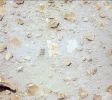
SOL0382-MF-EB-LXTT-IPF.jpg"Laser" effects on Morning "Frost" at Gale? - Sol 382 (Natural Colors; credits for the additional process. and color.: Elisabetta Bonora and Marco Faccin/Lunar Explorer Italia/Italian Planetary Foundation)129 visitenessun commentoMareKromium
|
|
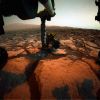
SOL1484.jpgHorizon - Sol 1484 (Credits: Dr Marco Faccin and Elisabetta Bonora)129 visitePure Natural Colors and so...What is the REAL color of the Martian Sky?MareKromium
|
|

SOL3466-mars_nasa_gov_msl-raw-images_msss_03466_mcam_3466MR1019650291602657C00_DXXX-1.jpgInteresting, but this is NOT a "Door"!129 visite...Si, certo, se effettivamente ci fossero dei "roditori" ("rodents") sulla Superficie di Marte, l'idea della "porta" (a quel punto, però, direi "l'ingresso ad una tana", semmai...) mi piacerebbe pure. Ed io, non essendo stato lì, non la posso escludere questa eventualità con certezza matematica.
MA: l'idea della "porta", nel senso Terrestre del termine (ed ho usato le dimensioni del sasso per calcolare - approssimativamente - le dimensioni della comunque curiosa fissurazione) non mi piace. Qui siamo nell'ordine dei 12/15 cm (larghezza) x 20/22 cm (altezza).
Ok. Molte Creature, di lì, potrebbero passare. Mi piace. Però non posso non notare come il "soffitto" della "porta" si abbassi sino a chiudersi in poco più di 10 cm.
Detto facile-facile: riguardateVi le immagini ottenute da Opportunity in quel di Victoria Crater (Soles 1571 e 1572) e di "porte" ne troverete MOLTE di più. E fatte anche meglio...MareKromium
|
|

SOL4992-Turtl_Rock.jpgTurtle Rock (Credits: NASA/JPL-Caltech/MSSS; Processing & License: Thomas Thomopoulos)128 visiteIs this a fossilized turtle on Mars? No. Although resembling a large Earth tortoise, this is a layered rock outcrop on Mars that is estimated to span about 15 meters, making it much larger than turtles on Earth. NASA’s robotic Curiosity rover came across this unusual mound, dubbed Miraflores, last month during its 4922nd Martian day exploring Mars. The small butte may survive because it was somehow more resistant to erosion than surrounding rock. More recent wind has now covered its top with orange Martian sand. Below the top shell, many layers of stratified rock are visible, possibly indicating a long history of intermittent wind-blown sand being deposited and then hardened by ground water. Similar wind-eroded layered landforms, such as yardangs in the Qaidam Desert of China, exist here on Earth. Curiosity and its companion rover Perseverance continue to investigate the ancient history of Mars as well as searching for signs of primeval life.
(Note: It's with great pain that I note the increasingly ridiculous color processing of images coming from Mars. However, if they and the Space Enthusiasts are happy, that's fine...)MareKromium
|
|

SOL0061-PIA16226-PCF-LXTT-IPF.jpgFirst "Scoop" at Gale - Sol 61 (Absolute Natural Colors; credits for the additional process. and color.: Dr Paolo C. Fienga/Lunar Explorer Italia/Italian Planetary Foundation)127 visiteCaption NASA:"This pairing illustrates the first time that the NASA's Mars Exploration Rover Curiosity collected a scoop of Soil on Mars. It combines two raw images taken on the mission's 61st Martian Day, or Sol (such as October, 7, 2012) by the right camera of the Rover's two-camera Mast Camera (Mastcam) instrument. The right Mastcam, or Mastcam-100, has a telephoto, 100-millimeter-focal-length lens.
The image on the left shows the Ground at the location "Rocknest" after the scoop of Sand and Dust had been removed. The image on the right shows the Sandy and Dusty Material inside the Rover's Scoop, which is 1,8" (inches - such as approx. 4,5 centimeters) wide, and 2.8" (about 7 centimeters) long".MareKromium
|
|

SOL0001-PIA16005.jpgThe Ultimate Destination: "Mount Sharp" - Sol 1 (RAW Absolute Natural Colors; credits for the additional process. and color.: Dr Paolo C. Fienga - Lunexit Team)125 visitenessun commentoMareKromium
|
|

SOL0002-676027main_pia16052-color-43_946-710-PCF-LXTT-1.jpgThe very distant Rim of Gale Crater - Sol 2 (Credits: NASA/JPL-Caltech; credits for the additional process. and Absolute Natural Color color process.: Dr Paolo C. Fienga - Lunexit Team)125 visiteSono i nostri stessi Amici di Pasadena a dire che le condizioni di illuminazione di Marte, Regione di Gale Crater, non sono ottimali (meno del 50% dell'Illuminazione Solare Diffusa rispetto alla Terra e TAU elevata), e questo è il risultato della ricalibrazione di un'immagine NASA/JPL-Caltech - MER and Lab. "Curiosity", Original in Natural RAW Colors (il frame che segue).MareKromium
|
|

SOL0003-MF-EB-LXTT-IPF.jpgSundial and Surface - Sol 3 (Natural Colors; credits for the additional process. and color.: Elisabetta Boniora and Marco Faccin/Lunar Explorer Italia/Italian Planetary Foundation)123 visitenessun commentoMareKromium
|
|

SOL3219-E3-PIA23139.jpgKnockfarril Hill - Sol 3219 (Natural Colors)123 visiteCaption NASA Originale:"The Mast Camera (MastCam) on NASA's Curiosity Mars Rover captured this mosaic as it explored the "clay-bearing unit" on Feb. 3, 2019 (Sol 2309). This landscape includes the rocky landmark nicknamed "Knockfarril Hill" (center right) and the edge of Vera Rubin Ridge, which runs along the top of the scene".MareKromium
|
|

SOL3063-2-PIA24661-Curiosity_GIF_Shows_Drifting_Clouds_Over_Mount_Sharp.gifBlowin' in the Wind... - Sol 3063 (GIF-Movie)123 visitenessun commentoMareKromium
|
|
| 261 immagini su 22 pagina(e) |
 |
|
|
|
|
9 | |
|
|
|
|








