| Piú viste - Curiosity and the Exploration of Gale Crater |
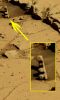
SOL0753-ML0032370000400001E01_DXXX-001.jpgSol 753 - What is "That"?!? (EDM - Color and contrast enhanced)219 visitenessun commentoMareKromium
|
|

SOL0710-0710MR0030150070402501E01_DXXX-002.jpgThe "Crab/Octopus-like Feature": the best image we can have (SEDM) - Sol 710193 visiteAllora: che si tratti di una "Creatura Marziana" non lo possiamo dire ed é pure impossibile dirlo, a questo livello di definizione.
Ma che si tratti di "qualcosa" che SEMBRA essere "attaccata/appiccicata" alla parete rocciosa, non vi sono dubbi. Perché? Perché la "texture" ed il colore é/sono completamente diversa/i (e questo é un fatto).
Noi distinguiamo nettamente una "Struttura Tentacolare" (che ci ricorda "Alien", in verità...). Sembra una sorta di "polpo" (od un "Ragno", od anche un "Granchio", ma di un qualche tipo "Esotico" - NON Terrstre) che sta attaccato alla roccia.
Come sempre: é una svista? Un gioco (pazzesco) di luci ed ombre? E' un'Anomalia della roccia stessa? O é "qualcosa" d'altro?!? Scrivete...MareKromium
|
|

SOL3046-1.jpgCloudy Sky over Curiosity - Sol 3046 (possible Natural Colors)193 visitenessun commentoMareKromium
|
|
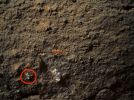
SOL0132-EB-MF-LXTT-IPF.jpgExtremely unusually-looking Surface Feature on the Surface of Gale Crater: the "Martian Flower" - Sol 132 (Credits: Research, additional process. and color.: Elisabetta Bonora and Marco Faccin/Lunar Explorer Italia/Italian Planetary Foundation)192 visiteDopo tantissimo tempo, ecco una nuova e, a nostro parere, assai intrigante Surface Feature individuata dal Rover "Curiosity" all'interno del Cratere Gale. Di che si può trattare? Beh, se rivolgessimo questa domanda ai Tecnici di Pasadena la risposta sarebbe ovvia: "...è un pezzo - l'ennesimo, aggiungeremmo noi... - di Curiosity. Probabilmente un frammento di plastica o il rivestimento di un cavetto...". Ma noi, proprio perchè già conosciamo la risposta degli Amici di Pasadena, questa domanda la rivolgiamo a Voi, Amici Lettori: che cosa stiamo guardando? Qualche piccolo aiuto: l'Albedo (o Riflettività della Luce Solare) dell'oggetto è elevata, la sua apparenza traslucida, la conformazione è irregolare ma, apparentemente, la texture delle sue aree più ampie è liscia. L'oggetto, se osservate attentamente il suo lato alla Vostra Dx, "SEMBRA" essere attaccato al suolo (o comunque pare costituirne parte, il che escluderebbe la sua provenienza da Curiosity) e, in alcuni suoi punti, la polvere giallastra che copre l'intera superficie fotografata, sembra che lo abbia parzialmente intaccato (porzioni superiori ed inferiori a Sx). Questo dato ulteriore ci spinge a ritenere che l'oggetto sia in quella posizione già da un pò di tempo (comunque non tantissimo). Infine (last but not least), Vi suggeriamo di notare l'apparente "sgranatura" ed "apertura secondo linee di frammentazione" delle sue componenti emergenti (una sorta di micro-pistilli - passateci il paragone, please...).
La nostra ipotesi "esotica"? E' un "fiore", oppure il residuo madreperlaceo di una qualche Forma Vitale Indigena. E Voi? Che ne pensate?MareKromium
|
|

SOL3872-raw_images_1226582_site3Dmsl.jpgPanorama - Sol 3872192 visitenessun commentoMareKromium
|
|

SOL2674-49542452901_6a140a9d26_3k.jpgStrange... - Sol 2674190 visiteno commentMareKromium
|
|

SOL2209-31681143988_3b241131a5.jpgSol 2209 - Front View (Enhanced Natural Colors - Credits for the additional process. and color.: E. Bonora & Marco Faccin)184 visitenessun commentoMareKromium
|
|

SOL3344.jpgSol 3344 - Panorama183 visitenessun commentoMareKromium
|
|

SOL3423-PIA25176-8192x2276.jpg"(Alli)Gator Back" Rocks on "Greenheugh" - Sol 3423182 visiteNASA’s Curiosity Mars rover used its Mast Camera, or MastCam, to take this 360° panorama on March 23, 2022, the 3.423th Martian Day, or Sol, of the Mission. The team has informally described the wind-sharpened rocks seen here as “gator-back” rocks because of their scaly appearance.
Wind-sharpened rocks like these are called ventifacts, and are responsible for chewing up Curiosity’s wheels earlier in the mission. Since then, rover engineers have found ways to slow wheel wear, including a traction control algorithm. They also plan rover routes that avoid driving over such rocks, including these latest ventifacts, which are made of sandstone – the hardest type of rock Curiosity has encountered on Mars.
These rocks form the Surface of the “Greenheugh Pediment,” a broad, sloping plain in the foothills of Mount Sharp. The floor of Gale Crater is visible along the edges of the mosaic. When Curiosity’s team saw the gator-back rocks, they ultimately decided to turn the rover around and take an alternative path to continue climbing Mount Sharp, a 3,4-mile-tall (approx. 5,5-Km-tall) mountain that Curiosity has been ascending since 2014. As it climbs, Curiosity is able to study different sedimentary layers shaped by water billions of years ago. These layers help scientists understand whether microscopic life could have survived in the ancient Martian Environment.MareKromium
|
|

SOL1293-02.pngSol 1293 - Extremely Unusually-looking Surface feature in Gale Crater: "The Open Mouth" (CTX Frame)180 visite....Affascinante, ma incommentabile.MareKromium
|
|
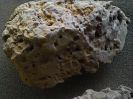
SOL2564-48957940073_219f2783cb_c.jpgSol 2564 - What do you think about the "holes"? (Credits: Marco Faccin and Elisabetta Bonora)178 visite...a me sembra tanto una pietra che viene dal fondo di un qualche tipo di "Mare" (o "Lago"). Con tanto di "Predatory Boreholes".MareKromium
|
|

SOL0034-PIA16134.jpgWheels... - Sol 34 (Natural Colors; credits: NASA/JPL-Caltech/Malin Space Science Systems)176 visiteCaption NASA:"This view of the 3 (three) Left Wheels of NASA's Mars Rover Curiosity combines two images that were taken by the Rover's Mars Hand Lens Imager (MAHLI) during the 34th Martian Day, or Sol, of Curiosity's work on Mars (such as September 9, 2012). In the distance is the lower Slope of Mount Sharp. The camera is located in the turret of tools at the end of Curiosity's Robotic Arm. The Sol 34 imaging by MAHLI was part of a week-long set of activities for characterizing the movement of the Arm in the Mars (Environmental) conditions.
The main purpose of Curiosity's MAHLI camera is to acquire close-up, high-resolution views of Rocks and Soil at the Rover's Gale Crater Field Site. The camera is capable of focusing on any target at distances of about 0,8" (inch), such as 2,1 centimeters, to infinity, providing versatility for other uses, such as views of the Rover itself from different angles".
Nota Lunexit: si poteva fare decisamente di meglio...MareKromium
|
|
| 261 immagini su 22 pagina(e) |
2 |  |
|
|
|
|
|
|
|
|
|








